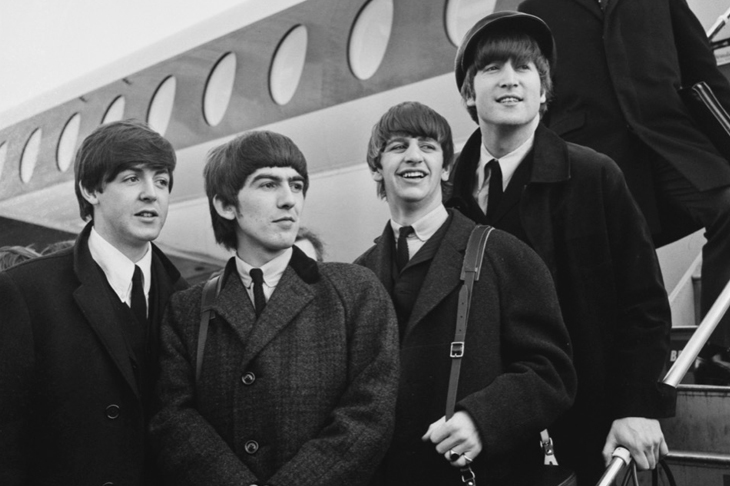
Last week, 6 June, was the 80th anniversary of the D-Day landings. Let me put that into a context you won’t have heard that much. The soldiers who hit those Normandy beaches eighty years ago were closer in time to the assassination of Abraham Lincoln than they were to us right now. Hard to believe but true. Provocative question: Do you think those young men jumping out of boats under heavy artillery fire and hitting the beaches of Juno (Canadians with some Brits), Gold (Brits), Sword (Brits), Utah (Americans) and Omaha (Americans) saw the world in a way that was closer to the outlooks of today’s youth, or to those who fought in the US Civil War? Or take another example: The famous Beatles’ appearance on the Ed Sullivan Show is now almost two-thirds closer in time to the end of the first world war than it is to today. Same sort of query: Did the preponderance of those living in Australia, Canada, Britain and the US in 1964 have worldviews and attitudes and beliefs about their own countries and the West more generally that were closer to the views right now being inculcated into our high school and university students or to those largely ascendant, influential and pervasive at the end of the Great War?
Of course, changing outlooks always involve a mix, some positives and some negatives. And there can be a big difference between majority mores and views and those of the elites. Moreover, it is not today’s young ones who put in place the educational systems, ghastly national curriculum, teaching practices and the rest that ooze cultural self-loathing and under which our young were shaped and moulded. No, it was oldies like me and my generation; we are the ones who let the minority-in-society identity politics, ‘progressive left’ brigade capture the key cultural institutions – just remind yourself about the fact that in last year’s Voice referendum the big corporations, the law societies and bar associations, the charities, the legacy media, the sporting bodies, the universities, heck, even the churches overwhelmingly came out for Yes, with a few staying silent but virtually none coming out as an open and public No supporter (this magazine being a rare exception). That is what capturing the cultural institutions and winning the culture wars looks like in practice – not to mention what cowardice looks like from more than a few who should have known better. And this is what delivers a majority cohort of our young, which surveys show would leave rather than fight for their country; that have a low view of the benefits of democracy and free speech; that believe their countries have uniquely bad histories (rather than ones that have created the best places to live – especially for women and minorities – in the history of the world and in the case of Britain was the only country that spent huge amounts of its own monies to end slavery, an institution that existed everywhere on earth with no other places or cultures making big sacrifices or doing anything at all to end it). In short, having one side of politics wholly refuse to fight the culture wars is what creates a generation with too many members who have been hoodwinked into swallowing the idiocies of a semi-totalitarian identity politics ideology, these days often labelled as ‘wokeness’.
And so more and more of us of the-centre-right are now saying that the most important political battles are not economic but cultural. Was it Mark Steyn or Andrew Breitbart who first said that ‘Everything is downstream of culture’? For instance, you can’t win an argument for smaller government or lower taxes or even hard work and deferred gratification if the listener has no appreciation of the benefits of merit-based decision-making, competition and free speech (not that many in the Coalition party room have any real attachment to the last of those as judged by their actions). That means what we on the centre-right more and more want are political parties that are prepared to fight on these sort of issues, and fight to win – including when it comes to making key appointments when in government. (Take a look at the ones made by the Coalition during its recent nine years in office – from its High Court picks to its Human Rights Commission ones to the eSafety Commissioner and run outside before you puke.)
This takes me to the banal and trite slogan or catchphrase that we hear all the time – that elections are won in the centre. Sure, this is what the wets or moderates in all of the Anglosphere’s main right-of-centre parties say, and say repeatedly. But it’s just wrong. Ludicrous in fact. Take the left side of politics. They often get into power and move considerably to the left. Tony Blair pretended to be a centrist but he basically re-wrote huge swathes of the British constitution, and not in a good way. More powerful unelected judges? Tick. A statutory bill of rights that forced all sorts of social policy calls to be made by unelected lawyerly caste? Tick. A disastrous variant of devolution? Tick. But it was all sold as ‘nothing to see here folks’. Or look at the last three years of Joe Biden’s administration. I would describe it as the most left-wing presidency ever. It sure ain’t Bill Clinton’s set of policies, what with Biden’s deliberate opening up of the borders, embrace of transgender dogmas, hard-line lockdown policies, weaponisation of the justice system against opponents and so on. And who doesn’t see the Albanese government as the most left-wing since Whitlam, maybe more so? He sure is no Bob Hawke. Meanwhile Justin Trudeau in my native Canada and Jacinda Ardern in New Zealand might be the most ‘let’s go hard going left’ of the bunch.
All of this, of course, moves the centre of politics. The idea that there is some stationary political centre is daft. And so the Mark Textor-type strategy of parking yourself a centimetre to the right of Labor just sees conservative parties continually drift ever more to the left as they chase the red-shift displacement of the political spectrum. This is not a winning political strategy, not if you want to advance core conservative or classical liberal positions. Instead, your party just slowly transforms into a social democrat one.
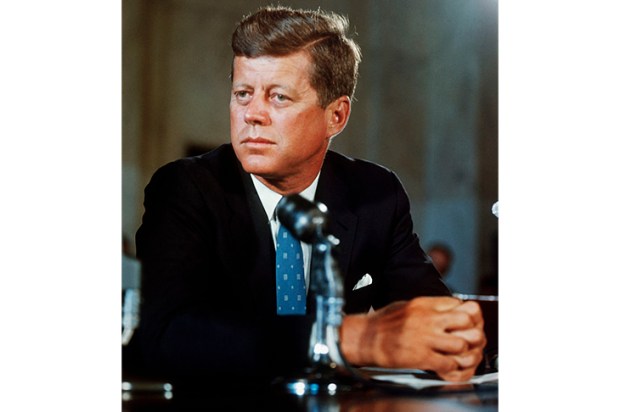
And that is what the wets and so-called moderates in the British Conservative party did to the world’s oldest political party. As a result the Tories (hopefully) will be obliterated in next month’s UK election. It is what Canada’s Conservative party was like until Pierre Poilievre took over as opposition leader and started advancing real value-based positions and, yes, fighting culture issues such as promising to cut the budget of the national broadcaster in half. If the established right-of-centre partes won’t do this, new parties will. They will be disparaged as ‘populists’ though the Melonis, Farages, Orbans and Trumps of the world are standing for policies and positions that JFK would have endorsed. They just are fighters. They dislike the current elites and their orthodoxies. Remember, the centre of politics is always a moveable feast. You don’t win elections there, you try to move it to a better place. Some voting systems make that harder than others but that’s why you go into politics. Right?
Got something to add? Join the discussion and comment below.
You might disagree with half of it, but you’ll enjoy reading all of it. Try your first month for free, then just $2 a week for the remainder of your first year.