Only yesterday, I was reading about the website Worth it or Woke created by cinephile James Carrick, whose mission is to offer movie-goers an alternative to the US left-leaning review-aggregation website Rotten Tomatoes.
Worth it or Woke serves up ‘red-pilled movie reviews’ for conservative audiences. The site assesses each film, giving it a rating of ‘woke’, ‘woke-ish’, or ‘non-woke’ to help guide right-wing viewers. In May, Carrick told Rolling Stone magazine that a ‘woke’ rating [on his website] indicates a strong emphasis on activism over narrative.
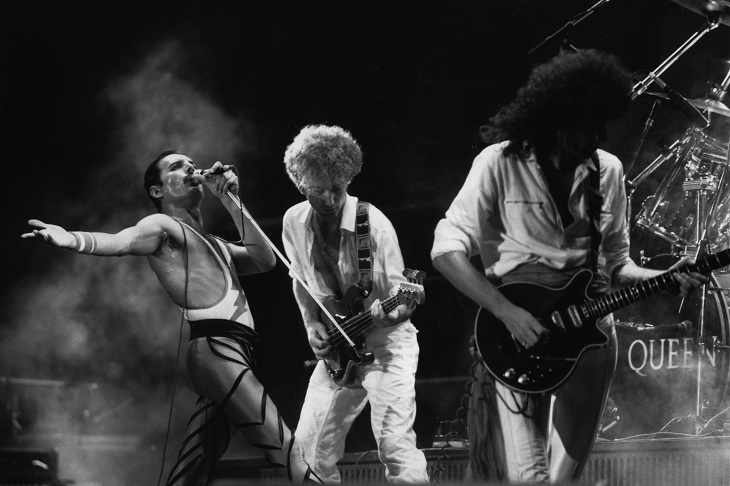
When I woke up this morning to the news that the 1978 hit Fat Bottomed Girls had been given the arse from Queen’s greatest hits album to appease a younger audience – the ‘Worth it or Woke’ website came to mind.
Perhaps we need more websites like this? Rating books, music, artists, publishers, festivals, and politicians who have been sucked down the plughole of wokeism.
Queen’s new album (released by Universal Music) was made available on Yoto – a screen-free audio player for children. A cautionary disclaimer on the Yoto website reads:
Vanessa de Largie is a freelance writer based in Melbourne. You can learn more about her work at vanessadelargie.net
Please note that the lyrics in some of these songs contain adult themes, including occasional references to violence and drugs. These are the original and unedited recordings. Whilst no swear words are used parental discretion is advised when playing this content to or around younger children.So references to adult themes, violence, and drugs in Queen’s songs are perfectly acceptable for children yet they oppose the celebration of a woman’s BIG, beautiful booty? Are you kidding me? And whilst Yoto are getting all prudish and self-righteous about Fat Bottomed Girls 45-years after the fact. Why wasn’t Killer Queen (which is about a high-class escort) or Another One Bites The Dust (which is about a deadly massacre) cut from the greatest hits album? I’m pretty sure the ‘meaning’ of the latter is a lot worse for kids than a sexy rock song about a boner-causing rump. Anyway, it turns out Sir Brian May wrote the song for Freddie Mercury to sing because he knew that Mercury had a penchant for big-bottomed girls and boys. During an interview with Mojo Magazine, May states:
On the face of it, it’s a heterosexual song because it’s called ‘Fat Bottomed Girls’, but I was totally aware of Freddie’s proclivities and the fact he was going to sing it. Plus, some of the inspiration for the song came from stuff that I saw in Freddie’s life as well as my own. So it’s actually not so much of a heterosexual song as you might think. It’s a sort of pansexual song. There are so many ways you can take it.The removal of Fat Bottomed Girls is just so baseless whether it’s for a child-audience or not. Children don’t spend their days analysing song lyrics. Kids live in the present moment and are more interested in the melody and the beat. I had heard Fat Bottomed Girls hundreds of times (by the time I was 12) blaring from my brother Damian’s bedroom in the 80s. I never thought about whether the song was sexist or misogynistic or body-shaming because I didn’t know what any of those words meant. I was just a child. All I knew is that the tune made me want to dance and TURN UP THE VOLUME. And dance I did…
Vanessa de Largie is a freelance writer based in Melbourne. You can learn more about her work at vanessadelargie.net