Shortly after the end of the second world war, Labor immigration minister Arthur Calwell announced a mass migration program warning that, ‘We have 25 years at most to populate this country before the yellow races are down on us’.
The dictum of populate or perish has driven Australia’s migration policy ever since. The natural increase in the population drove demographic growth during the baby boom but as birth rates dropped below the replacement rate of 2.1 children per woman in 1976 overseas migration has become increasingly important.
This became starkly apparent during the pandemic. In 2020, as a result of the federal government closing the international borders, overseas migration contributed just 3,250 people to Australia’s population. This was a dramatic fall given that migration had contributed around a quarter of a million people each year for more than a decade.
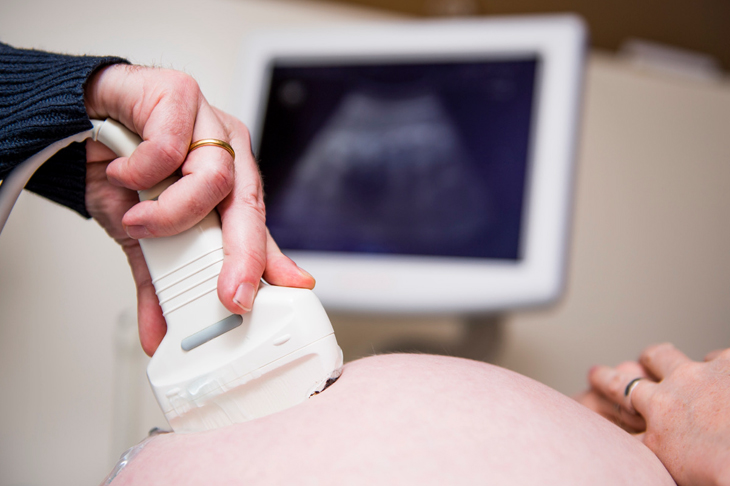
What has aggravated the situation since then is a dramatic decline in the natural increase in the population. The latest data from the Australian Bureau of Statistics (ABS), was released last Friday 15 June. It shows that births fell significantly in Australia in 2022. There were 315,199 births in 2021 and only 300,727 births in 2022. This represents 14,472 fewer births, a decline of 4.6 per cent.
The only time there were fewer births in Australia in the last seven years was in 2020 when births declined by 10,189 or 3.4 per cent to 293,764. Presumably, the economic uncertainty created by the lockdowns persuaded couples to defer having children. There was a healthy bounce back in 2021 with births increasing by 18,200 or 6.2 per cent to 315,199.
It is to be expected that there would not be as many births in 2022 after a big increase in 2021 but a decline of almost 15,000 births or almost 5 per cent is abnormal. For example, there was a decline in the number of births in 2018 compared with 2017, from 305,216 births in 2017 to 304,134 in 2018. That was equal to 1,082 fewer births, less than 0.4 per cent. The following year, in 2019, there were 303,953 births, only 181 fewer births, a decline of a minuscule 0.06 per cent.
Few in the media focussed on the dwindling births. They took their lead from the ABS which headlined the fact that the population grew by 1.9 per cent, the fastest growth rate in population since 2008. This, as the ABS pointed out, was driven by overseas migration. There were 619,600 overseas arrivals and only 232,600 departures, resulting in an increase in Australia’s population of 387,000 from overseas migration. Yet most of this is due to international student arrivals, most of whom will depart when they complete their studies.
The natural increase in the population was only 109,800 people. This was a decrease of 33,500 people compared with 2021, a decline of 23.4 per cent. This was in large part due to the increase in mortality from 171,941 in 2021 to 190,942 in 2022, an additional 19,001 deaths compared with the previous year, an increase of more than 11 per cent. Yet it was also due to the significant fall in births.
So what explains this fall? Unfortunately, there is not much data available at present in Australia to explain what happened. The annual ABS analysis of births comes out at the end of October which will give Australia’s fertility rate for 2022. The Australian Institute of Health and Welfare will not publish data on stillbirths and neonatal deaths in 2022 until the end of November 2024.
According to disturbing data published by the Bureau of Health Information the number of babies born in New South Wales public hospitals in 2023 has dropped to the lowest level in any quarter since records began in 2010. In 2020, the number of babies born per quarter in NSW public hospitals was 17,724. This rose to 18,691 in 2021 but fell to 17,472 in 2022. Even worse, it has fallen to just 15,868 in the first quarter of 2023.
This suggests that the decline in births seen in 2022 may not be just a temporary decrease after the high number of births in 2021. At the very least the decline in births seems to be continuing in the first quarter of 2023.
Australian National University demographer Dr Liz Allen claims that this drop in births is due to concerns about housing, the cost of living, and climate change. This is not a very good explanation since it is hard to argue that any of these factors would drive an increase in 2021 but a decrease in 2022 and 2023. Naturally, she was horrified when it was suggested that perhaps the rollout of Covid vaccines to women of childbearing age and indeed to women who were pregnant or about to become pregnant might have played a role.
Yet how do we know that Covid vaccines do not affect fertility? The Royal Australian and New Zealand College of Obstetrics and Gynaecology (RANZCOG) recommended that Covid vaccination was safe for women at any stage of pregnancy on 9 June 2021 despite the fact that there were no pregnant women included in the trials of any Covid vaccine and before a single woman who had been given a Covid vaccine had completed a pregnancy.
RANZCOG went further and claimed that the fact that there was evidence of vaccine antibodies in cord blood and breast milk ‘might’ offer protection to infants. They had no data from clinical trials to back this up.
What is certain is that Australia’s decline in fertility is part of a larger global trend. As previously reported on these pages, in many heavily vaccinated countries there has been a fall in the birth rate.
In Sweden, live births fell from 114,263 in 2021 to 104,734 in 2022, a decline of 8.3 per cent. In Britain, birth rates have fallen to 1.64 children per woman, the lowest level since records began in 1924. In Italy and Spain, it is 1.2, in Germany it is 1.3, in Greece it is 1.4. In France and Denmark it is 1.7. Even China’s population shrunk in 2022 for the first time in 60 years.
Will Australia’s birth rates recover? No one knows. We seem to be part of a global experiment running in real time. But these days the unspoken policy seems to be to depopulate and perish ‘before the yellow races are down on us’. Calwell would be surprised.
Got something to add? Join the discussion and comment below.
You might disagree with half of it, but you’ll enjoy reading all of it. Try your first month for free, then just $2 a week for the remainder of your first year.