Spare a thought for Britain’s commuters. Endless strikes repeatedly shut down the railways, with more misery planned in the lead-up to Christmas. And on the occasional days when the trains are operating, the ‘Just stop oil’ eco-loons often take over from the unions in trying to cause as much gridlock as possible.
The Tories will lose yet more of their dwindling number of supporters over the shambles. The party promised in its 2019 election manifesto to enact a minimal essential services law. But despite Boris Johnson’s thumping majority, nothing was done. Tories blame Covid, but Johnson found plenty of time to obsess about net zero.
After mounting anger over their gentle and slow response to recent eco-extremist-initiated traffic chaos, Prime Minister Sunak has told the police to end the disruption. But the Supreme Court last year ruled that the right to protest can provide a legal excuse for blocking roads. So when the eco-activists launched their latest tactic of walking slowly along main roads, the police responded by escorting them with what looked like an honour guard. The government could have passed legislation to overrule the judges’ decision but, again, nothing was done.
The Tories have been serial promise-breakers over their twelve years in office. Perhaps most famously, David Cameron’s commitment to reduce annual immigration to the ‘tens of thousands’ was never achieved, and was spectacularly exceeded with net migration in the twelve months to June reaching a record 504,000, the population of Liverpool. And since Boris Johnson in 2019 said to cross-Channel illegal migrants, ‘We will send you back’, some 80,000 have arrived.
Astonishingly, the Conservatives have presided over more mass migration (a net extra 5 million) than Tony Blair and Gordon Brown, who were longer in office. One of the consequences is the British native population increasingly becoming minorities in urban areas. ‘So what?’ asked former Tory Home Secretary Sajid Javid, a comment underlying the vast gulf between much of the political elite and ordinary Britons. YouGov polling shows that 84 per cent of voters think the Tories are handling immigration badly.
The Tories struggle to name anything they’ve achieved in the years they’ve been in power, other than Brexit, which has messily left Northern Ireland within the EU on trade matters. To pay for the Covid lockdowns, they’ve produced the highest taxation burden since Attlee; they preside over 11 per cent inflation, chaotic borders, hopeless police and a collapsing health system; they’ve surrendered to rampant wokeism and they champion Green extremism. The party’s polling is catastrophic – 47 to 22 per cent to Labour, according to the latest YouGov survey – and Sunak’s approval rating of minus 7 per cent is the worst of the past seven prime ministers at the beginning of their terms. Labour’s 61 to 22 per cent win in the 1 December by-election in Chester – historically marginal and held by the Tories between 2010 and 2015 – was the worst result for the Conservatives in the seat since 1832.
Still, there are optimists who think the Tories can turn things around. They point to there being two years until the general election and talk up inflation and interest rates coming down over the next year, so allowing pre-election tax cut sweeteners. Tory strategists claim Sunak will fix immigration, woke policing and the dysfunctional NHS (by throwing yet more billions at it). Another part of the strategy is to maintain the Boris-Carrie eco-zealotry, so neutralising climate as an area of policy difference with Labour. Tory optimists also argue that Keir Starmer, though less scary than Jeremy Corbyn, still presides over an extremist party which doesn’t believe in borders and is more fanatical than even the wettest Tories on transgender and climate issues.
And yet expectations are steadily shifting towards disaster for the Tories. That’s despite signs that Sunak for the moment is backing the radical plans of Home Secretary Suella Braverman – one of the few genuine conservatives in his government – to stop the boats. She’s pushing for Australian-style measures including unlimited mandatory detention of illegal arrivals, offshore assessment of all asylum claims and a ban on residency for anyone who’s paid a people-smuggler to enter the country. She also wants reform of human rights laws used by lawyers to thwart deportations and for Britain ‘if necessary’ to leave the Council of Europe’s Convention of Human Rights, whose judges ruled the Rwanda offshore-processing plan illegal. But she faces unremitting hostility from the Home Office, the human rights industry, much of the media and from Tory wets and it’s unclear whether the legislation Braverman needs would get through parliament. Given the number of previous times Tory efforts to stop illegal immigration have stalled, it’s hard to be optimistic they’ll work this time. But the stakes couldn’t be higher. Any chance of the Tories have of surviving in office depends on their solving this key issue for voters.
The Tories’ other great vulnerability is net zero. Sunak, while committing to a bit more nuclear, has lurched left from Liz Truss on climate and energy issues, again banning fracking while crippling North Sea oil and gas developments with new taxes. He shows no signs of rethinking unpopular looming bans on gas boilers and non-electric new cars. These issues, together with sky-high energy prices driven by the net-zero agenda, are ticking time-bombs for the Tories.
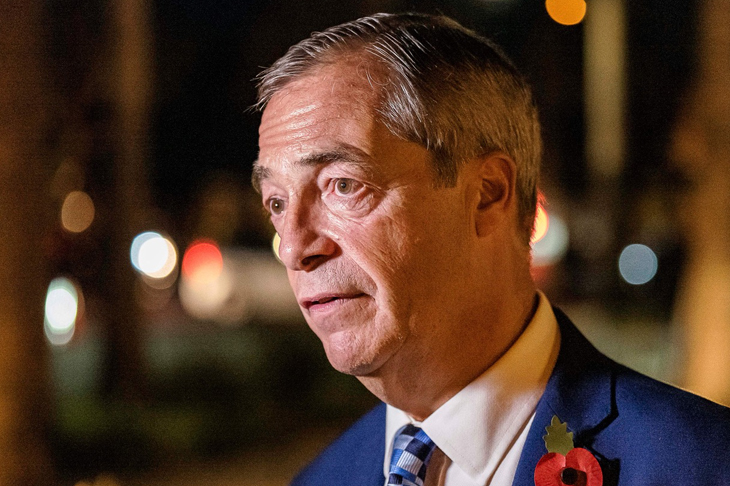
Especially if he fails on borders, Sunak’s overall soggy metropolitan left-centrism offers wide scope for the emergence of a genuinely conservative force. Indeed, in just one week in late November, a YouGov poll showed support for the right-wing Reform UK party – founded and previously led by Nigel Farage – doubling to 9 per cent, only 13 points behind the Tories and level with the Lib-Dems. Another poll shows 62 per cent, when ‘don’t knows’ are excluded, wanting a referendum – which Reform UK supports – on net zero.
Farage hints he could return to full-time politics and is probably exploring Tory defections to Reform UK. If he were to return as leader, its support would expand substantially. Many scoff at the idea of Farage becoming a serious challenge to the Tories. But then many also laughed at his plan to get Britain out of the EU.
Got something to add? Join the discussion and comment below.
Mark Higgie @markhiggie1
You might disagree with half of it, but you’ll enjoy reading all of it. Try your first month for free, then just $2 a week for the remainder of your first year.