If people remember him at all, they may think of John Field (1782-1837) as an Irishman who was often called the Englishman and sometimes the grandfather of Russian music. This was because he taught Mikhail Glinka, who became Russian music’s father. He may also have been the inventor of the Nocturne, the form of piano music that typically has an otherworldly melody in the right hand hovering over a harp-like motif in the left.
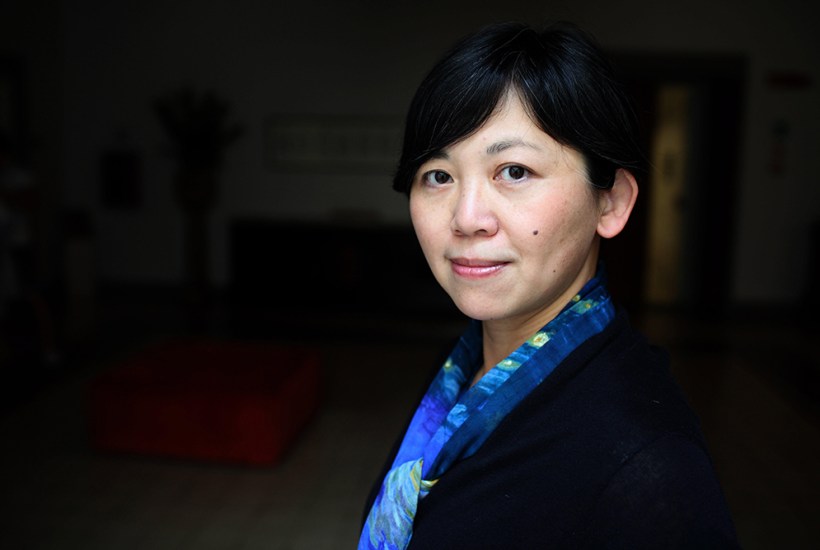
Nocturnes indicate night music, but Yiyun Li’s novel suggests that they are against the night. Early in her story she imagines, with a lyricism of her own, Field’s first attempts to compose: ‘John began to play a tune, wistful with a note of jauntiness, expressing the state of his stomach – not yet famished, but ready for the buns he heard his mother tell Molly to bake that day.’ It’s a kind of eureka moment – the discovery of sounds that express longing and satiety at the same time.
Li crafts parallels between her account of Field’s development and the childhood of the woman who would marry him. Adelaide Percheron, called ‘Percherette’, grew up in French India before making her way to France and ultimately Russia. While Field was learning to charm audiences with his playing, Percherette, as Li tells it, was learning to charm tout simple. She did become a remarkable pianist in real life. But for all the many tales in music history of brilliant women eclipsed by their composer husbands, this isn’t one. Here, Percherette’s genius is for other things: she doesn’t become the grandmother of Russian music, but she is at least the only teacher worth knowing if you want to learn the piano in Smolensk.
This promises to be the first book in a trilogy. One of its many pleasures is the writing, which can be biographical and informative in style, but does not need to fall back on ‘Field must have thought…’ and goes straight to the author’s own compelling empathy. It feels intrusive to suggest what prompts that empathy; but throughout the novel there are regular reflective passages, rich in aphorisms, with allusions to Li’s story. Both of her sons took their lives as teenagers. She published a fictionalised dialogue for the elder boy, Where Reasons End, in 2019. A memoir of the younger, James, appeared last year.
In Music Against the Night, the references are indirect, but not cryptic. As a child in Dublin, ‘John [Field] found a perverse joy in pondering his own death, and in that he was hardly a prodigy’. Much later, when Percherette mourns for the son she had by Field, we read: ‘A child’s death can never feel natural to a parent; a child’s death is a negation of time, which no longer has now and then, now and again, now and later, only now and now and now and now.’ It’s a near exact quotation from the book she wrote for James, where it follows the words: ‘We were and are and will always be their parents.’ In the novel, a chapter ends: ‘A good mother should never admit her defeat to her child’; and the next begins with the words: ‘Things in nature merely grow,’ the title of Li’s devastating memoir for James.
Volumes two and three will surely cover Field’s rise, through applause to champagne and cigars, and his downfall, presumably by the same route. And perhaps, like Music Against the Night, they will be carefully composed and consoling elegies, most likely for Li’s children, and certainly for us.
Got something to add? Join the discussion and comment below.
You might disagree with half of it, but you’ll enjoy reading all of it. Try your first month for free, then just $2 a week for the remainder of your first year.