In defence of Trump
Sir: Your lead article ‘Like the Roman’ (17 October) praised some of Trump’s early achievements but roundly criticised most of his second term. Without doubt the war in Iran was a gamble, but it was also abundantly clear that negotiating with that country’s terrorist-sponsoring regime was going nowhere. As to his unconventional stand against the ‘establishment’, as here, that is much needed and long overdue. I believe that, for all his unconventional ways, his stance against migration to the US and Europe, his insistence that European Nato countries increase defence expenditure and his position on net zero would not have been adopted by anyone else in American politics and that the conventional wisdom on all three needed to be robustly challenged. The reason our own serious problems continue is that we have no politician with enough guts and bloody-mindedness to challenge the ‘blob’.
Major T.N. Warry TD
Westcombe, Somerset
Burnham’s bungling
Sir: Tim Shipman captures the essence of our government’s global strategy (‘Foot-in-mouth syndrome’, 17 October). By turning the Middle East into a stage for domestic political theatre, the Prime Minister has achieved a diplomatic trifecta: infuriating Washington, alienating Berlin and jeopardising Britain’s foothold in East Jerusalem. Burnham may think he can ignore geopolitics while playing to the domestic gallery. Unfortunately, the world has declined to follow his script. If Jonathan Powell departs, the PM may be left with little meaningful influence in Washington.
Federico Forni
London SW15
Books do furnish a mind
Sir: I was pleased to see Lara Brown highlight the growing rebellion against screens in schools and her appeal for an education ‘which cultivates the mind’ (‘Battle for the books’, 17 October). It strikes me that an adequate theory of education is a useful thing. Twenty years ago we set about starting a school in central Cambridge, inspired by the great British educational theorist and reformer Charlotte Mason, founder of the Parents’ National Educational Union (PNEU) in 1887. Central to the PNEU was a view of the person as ‘a spiritual being invested with a body’ with almost limitless powers of expansion.
‘Information is not education’, according to the PNEU, merely something to be ‘got up’ for exams. Rather, an education worthy of a child’s time should be teeming with living ideas. The PNEU also saw, presciently, that the secret to releasing a child’s intellectual potential is the habit of attention. What an asset to the nation it would be, it said, if this power were honed in every child. And upon what does such an education depend? Above all, upon books, living books, and lots of them.
Imagine yourself into this garden. Then ask: EdTech? The gamification of ‘learning’? AI-powered personal tutors? It is a serious failure that we have to wait for the evidence to come in, with so much human potential squandered in the meantime and institutional habits formed that we may lack the vision and power of will to undo. May the rebellion gather pace.
Jason Fletcher
Headmaster, Heritage School, Cambridge
Professor of Practice in Charlotte Mason Studies, University of Cumbria
Pen names
Sir: The Israeli guide who told Charles Moore that Tel Aviv was ‘the only town in the world named after a book’ (by Theodor Herzl) was even more overconfident than it seems (Notes, 17 October). As well as Westward Ho! (after Charles Kingsley), there are at least two dozen towns called Waverley or Waverly in North America, Australia and New Zealand after Scott’s novel – the one in Surrey predates Scott – and plenty of Utopias. (A couple of locations are named Erehwon after Samuel Butler’s novel, too). That is not to touch on towns renamed after fictional towns. Proust’s Illiers has been called Illiers-Combray in his honour since 1971, and since 2001 there has been a Tibetan city called Shangri-La (né Gyolthang) after the idyll in James Hilton’s 1933 Lost Horizon. A 2006 referendum to change the name of Aracataca in Colombia to Gabriel Garcia Marquez’s Macondo narrowly failed.
Philip Hensher
London SW8
Blanket protest
Sir: I fully subscribe to Jacob Rees-Mogg’s aversion to duvets (Diary, 17 October), but it is not only hotels. Dear friends and relations at times provide them, and then in the morning tenderly ask if you slept well (the true answer is invariably not).
In order to be able to accept kind invitations, we now travel with a sheet and a blanket (at times electrical) and surreptitiously remake the bed on arrival.
John Del Mar
Cleobury Mortimer, Shropshire
Renaissance Crotch
Sir: Fiona Thurston does William Crotch an injustice (Letters, 17 October): she fails to mention that he was not only a musician but also an artist. He produced drawings both of his own organ (sic) at Christ Church and also of streets and landscapes in Oxford, London and other locations. I would judge that they come to market with greater frequency than his music is played.
Peter Oppenheimer
Student Emeritus, Christ Church, Oxford
Badly executed
Sir: In his article (‘There’s no such thing as a clean execution’, 17 October) Douglas Murray recalled the case of John ‘Babbacombe’ Lee, who survived three attempts to hang him and saw his sentence commuted to life imprisonment.
Equally fortunate was Maggie Dickson, who was hanged in Edinburgh’s Grassmarket in 1724 for concealing the birth of her illegitimate child. On the way to burial, noises were heard from inside the coffin and the lid was removed, after which Maggie sat upright and fully alive. Under Scots law, she could not be executed a second time for the same crime. Locals gave her the nickname ‘Half-Hangit Maggie’ and she lived for another 40 years. Today, her legend is remembered in Maggie Dickson’s pub in the Grassmarket.
James McDevitt
Edinburgh
Quietly good
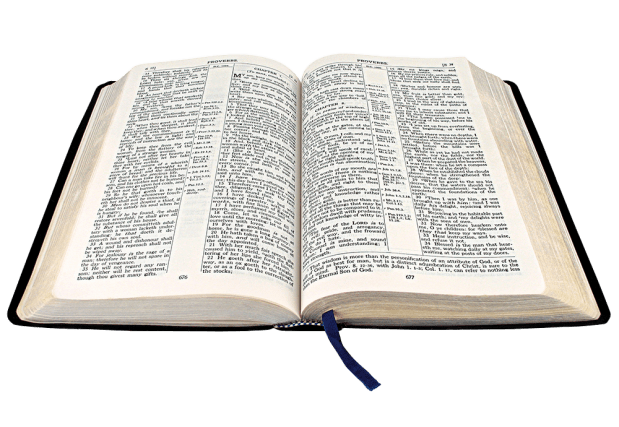
Sir: I was in full agreement with Toby Young (No sacred cows, 10 October) until his unjustified parting barb at the Salvation Army, where he equated them with ‘self-righteous do-gooders’. My late mother was an active member of the Salvation Army and, while she had a deep, Bible-based concern for her fellow men, she was the antithesis of self-righteous. The same could be said of the many such volunteers I have met over the years.
I assiduously avoid the noisy charity chuggers who crowd our high streets, but make a concerted effort to seek out the quiet Salvation Army volunteer. Westminster would be a better place with a few more of these people; my mother never used the internet in her life, but she would probably be no more tech-illiterate than the current Culture Secretary.
Jonathan Moore
Twickenham
Got something to add? Join the discussion and comment below.
You might disagree with half of it, but you’ll enjoy reading all of it. Try your first month for free, then just $2 a week for the remainder of your first year.