Despoiling Suffolk
Sir: There can be few better summaries of government attitude to Britain’s countryside than James Vitali’s: ‘Something to vandalise or extract from, but not to value’ (Diary, 5 September).
Here on East Suffolk’s Heritage Coast, the arrival of Sizewell C – along with the imminence of net zero’s offshore land connections – are transforming an area of outstanding natural beauty into a degraded landscape of stripped-out woodland, destroying thousands of trees and literally miles of hedgerows. The effect on wildlife is incalculable. Despite the area also being designated of Strategic Scientific Interest, there is no defence. Already in place are the HGV-ready roads and urban traffic lighting, while soon a 3,000-employee camp will arrive, with local holiday accommodation taken over for long-term worker rentals. Whatever one’s views on the need for nuclear and renewable power, Mr Vitali’s feeling of ‘a countryside besieged by a class at best indifferent’ rings true.
Mick Wharton
Halesworth, Suffolk
Seeds of doubt
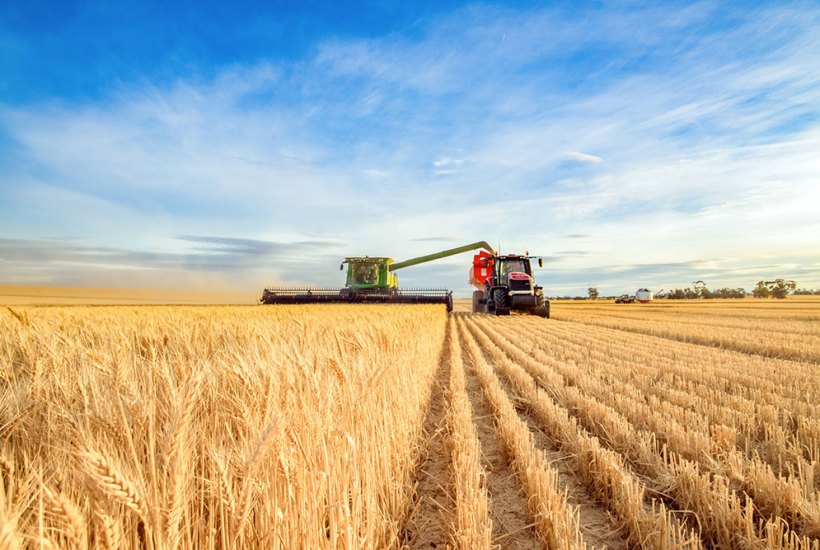
Sir: I feel as if I’m living in a different continent, let along country, up here in Northumberland. I have to confess to being irritated by Patrick Galbraith’s morose article on the state of British farming (‘Scorched earth’, 5 September) – for many, it’s just not true. The media has got itself into a doom loop about the state of UK agriculture which creates a negativity about the industry that is deeply unhelpful. In Northumberland and the Borders, the arable harvest was only bettered by the bumper 2025 crop. The more northern Scots have had to dodge a bit more rain, but for them a bad year is harvesting in late October! Lamb and beef prices are quite frankly fantastic, and have been strong for a couple of years. I spoke to a Yorkshire farmer last week who has had the best pea harvest ever, and I don’t feel too sorry for ‘Norfolk Jimmy’ of the ‘hard peas sorrow’ who has enough capital to build three padel courts.
What the industry needs is more passionate youth coming on board who will grab the opportunities with fresh eyes and vigour. The shock of losing the previously extremely generous inheritance tax reliefs will hopefully be the catalyst required to get the family business passed on before the older incumbents moulder away and grumble in their armchairs about the lost golden days of EU subsidies.
Hugh Fell
West Fleetham, Northumberland
Cruel Barbs
Sir: Charles Moore is wrong to dismiss his wife’s claim that the romantic novelist Barbara Cartland was a model of literary longevity (Notes, 5 September). Of her 723 books, he asks: ‘In what sense did she write them?’ Her biographer is happy to supply the answer: in the sense that she produced every word, dictating a first draft to a secretary, which she then altered and corrected by hand. (Henry James and Edgar Wallace used similar techniques.
The debate between the Moores, I notice, took place after a birthday lunch for Antonia Fraser. Lady Antonia has often cited Cartland as an important influence on her own prose. No one is obliged to share her admiration for seven decades of works such as Jigsaw (1925), A Virgin in Mayfair (1932) and In Love in Lucca (1997), but they should at least give Barbara Cartland the credit for being their sole author.
Matthew Sweet
Author of The Great Dictator: A Life of Barbara Cartland
London SE26
Not cricket
Sir: Francis Pike’s article about Imran Khan evoked my sympathy (‘Fearless’, 5 September). However I feel it is a pity that the latter’s response to the return of the Taliban was a congratulatory one, saying that they had freed themselves from the shackles of western oppression. In view of the Taliban’s treatment of women and Mr Khan’s being agreeably disposed towards women, I wonder if he now regrets that remark. As for the ‘gushing adoration’ for him displayed by Pakistani Uber drivers, one can only hope that they had not heard his remark. I wish Mr Khan a speedy release from prison so that he may deploy some of his ‘charisma’ upon the Taliban in the cause of women being regarded as full human beings.
Mari Williams
Cardiff
Parish, not planet
Sir: In commending Toby Young on his excellent article (No sacred cows, 5 September) questioning the financial priorities of the Church of England, may I add a further dimension to the debate? This autumn, our village community has been summoned to a crisis ‘church at risk’ meeting with the archdeacon. Annual financial losses have brought us to a position where we cannot pay our church’s insurance premium; a prerequisite for keeping our church open. Yet the diocesan newsletter proudly announces that the diocese has met its annual target of spending £250,000 to achieve net zero and that it will continue to expend this sum each year until this nebulous achievement has been fulfilled.
It is rather dispiriting, when pottering around the village with the collection box, to be told that the church must have plenty of money if it can spend £40,000 replacing a perfectly good boiler, in the vicarage, with a ground-source heat pump.
As a local landowner, I have calculated that my woodlands will sequester more carbon from the atmosphere in a single year than our little church will emit during the next 600 years. I await the opportunity to suggest to the archdeacon that she might like to concentrate on ministering to her flock and leave me to save the planet.
John Harris
Plumpton, Cumbria
A worse slave trade
Sir: In his letter (5 September), Professor Alan Lester claims that the transatlantic slave trade was ‘the longest-lasting crime against humanity’. However, the Arab slave trade lasted far longer, and most likely involved the enslavement of a considerably larger number of people.
Nick John
Stretford, Manchester
Spastic and proud
Sir: Good for C.P. Johnston (Letters, 5 September) in his brave attempt at reclaiming the word ‘retard’ as simply an accurate description rather than as an epithet to be avoided. I suffer from multiple sclerosis and hence experience episodes of ‘spasticity’ and use a walking stick to prevent falls. I have frequently described myself as ‘spastic’, mainly (I have to admit) in an attempt to make my wife and children shrink in horror at such antiquated usage.
My argument is that use of the word ‘spastic’ is entirely accurate, used by the Multiple Sclerosis Society, and is only used by me to describe myself. A squeamish response to its use is neither kind nor modern. It is merely avoiding reality – an affliction modern society is currently all too guilty of in the realms of economics (the UK’s £3 trillion outstanding debt) and mental health diagnosis (treating anxiety, and much else, as an illness). So more power to you Johnston, you retard.
James Craven
Sherston, Wiltshire
Write to us: letters@spectator.co.uk
Got something to add? Join the discussion and comment below.
You might disagree with half of it, but you’ll enjoy reading all of it. Try your first month for free, then just $2 a week for the remainder of your first year.