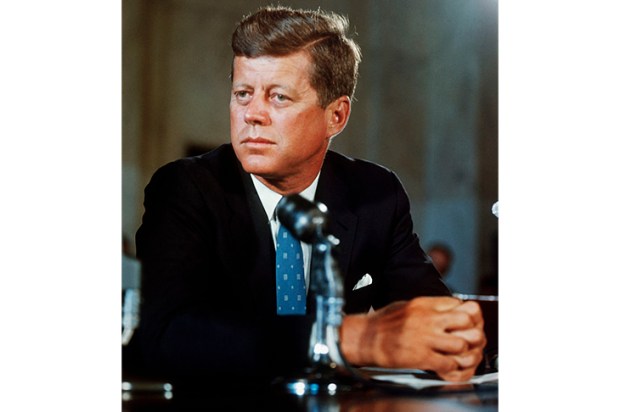
Garry Kasparov’s scintillating victory against Veselin Topalov at the 1999 Wijk aan Zee tournament is often cited as the most brilliant game ever played. And the final game of Kasparov’s professional career was a loss against the same opponent in the last round of the Linares tournament of 2005. Kasparov, already assured of tournament victory and perhaps preoccupied by his imminent retirement, lost with little fight, and Topalov shared first place in the tournament. Later that year, Topalov won the Fide World Championship tournament in San Luis, Argentina.
Clutch Chess: The Legends this month was a nostalgic showcase for these two greats, who played an exhibition match at the St Louis Chess Club earlier in September. The format was a dozen rapid and blitz games of Chess960 (aka Freestyle Chess), where the pieces are shuffled on the back rank before the game begins.
The final scoreline of 16-8 gives the impression that Topalov won the match easily, but the unusual scoring system placed a higher value on later games, which meant the match was still up for grabs right up until the penultimate game. After the match, Topalov highlighted a difference in his approach: ‘Garry tries to find the best moves, and it’s just not practical.’ Indeed, one of the biggest shifts in top-level chess in the decades since Kasparov’s retirement is that elite players are ruthlessly pragmatic, and will have no qualms in choosing a ‘good enough’ move quickly. The style of 51-year-old Topalov (Kasparov’s junior by 12 years) is closer to that modern trend. The game below was characteristic of this tendency, in that Kasparov won the opening battle but ran short of time and failed to capitalise on his chances.
Since this was Chess960, set up the start position as follows: Ra1, Bb1, Nc1, Kd1, Re1, Nf1, Bg1, Qh1. Black’s setup mirrors that: Ra8, Bb8, Nc8, etc.
Garry Kasparov-Veselin Topalov
Clutch Chess: The Legends, Round 5 Rapid, St Louis, September 2026
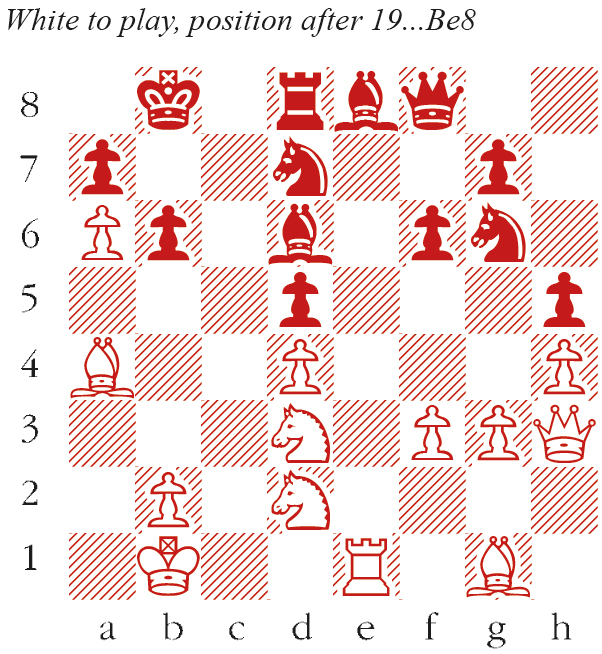
1 c3 c6 2 d4 f6 3 e4 e5 4 f3 Bc7 5 Nd2 Nb6 6 a4 d5 It was wiser to block White’s advance with 6…a5. 7 a5 Nbd7 8 a6 b6 9 Nd3 Bd6 10 Bc2 Despite the position’s superficial symmetry, Kasparov holds a large advantage. The Nd7 is severely lacking scope, and the a6 pawn means that Topalov’s king will never feel safe on that side of the board. Ng6 11 h4 h5 12 exd5 cxd5 13 O-O-O Freestyle chess has quirky castling rules. Here, place the king on c1 and move the rook from a1 to d1. Bf7 14 Kb1 O-O-O Likewide, the Black king moves to c8 and the rook moves from a8 to d8. 15 g3 Qf8 16 Ba4 exd4 17 cxd4 Rxe1 17…Bxg3 18 Rc1+ Kb8 19 Rxe8 Bxe8 20 Bh2 Bd6 21 f4! and Black has no way to meet the dual threats of f4-f5 and Qh1xd5 18 Rxe1 Kb8 19 Qh3 Be8 (see diagram)
20 g4 20 Qf5! was strong, e.g. 20…Ne7 21 Qe6! or 20…Qf7 21 Rxe8! Qxe8 22 Qxd5 are both decisive hxg4 21 fxg4 Nf4 22 Nxf4 Bxf4 23 Bh2 Qd6 24 Bxf4 Qxf4 25 Qc3 25 Qa3! was still good enough to win. The threat is to invade on e7, while 25…Qxd2 26 Qd6+ forces mate. Bg6+ 26 Ka2 Nc5! A strong defensive resource, in view of 27 dxc5 Qxa4+ 27 Bb5 Ne4 28 Qc6 Qc7 29 Qxc7+ Kxc7 30 Rc1+ Kb8 31 Nb1 Nf2 32 h5 Bf7 33 Re1 Ne4 34 Nc3 Be6 35 Ka3 Bxg4 36 Nxe4 dxe4 37 Rxe4 Bxh5 38 Re7 Bf3 39 Rxg7 Rxd4 40 Rg8+ Kc7 41 Rg7+ Kb8 42 Rg8+ Kc7 43 Rg7+ Draw agreed
Got something to add? Join the discussion and comment below.
You might disagree with half of it, but you’ll enjoy reading all of it. Try your first month for free, then just $2 a week for the remainder of your first year.