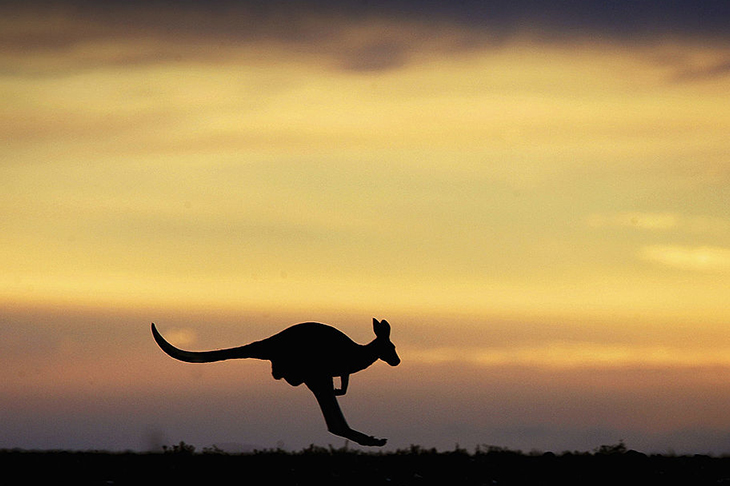
One classic bit of the Aussie verbal culture (with us for many years) is the expression ‘beyond the black stump’. We all understand what this means: beyond the furthest fences, beyond the edges of civilisation. But was there ever a real ‘black stump’? My latest investigating suggests that yes, there was. In fact, more than one. ‘Beyond the black stump’ is recorded from 1895 with the familiar meaning of the remote Outback. But before that ‘black stump’ was used to mean a fire-blackened tree stump that was used as a marker by early surveyors. That usage goes back to 1831. In the barren outback landscape it appears that very early surveyors either found a fire-blackened tree stump (or burnt an available tree stump if they couldn’t find one) in order to have a marker for the start of their measurements. Such blackened stumps served as a starting point from which they could set out with their tripod, compass and theodolite, measuring as they went. An ingenious contribution to Aussie cartography as well as Aussie language!
Speccie reader John writes to ask if there is a word for the fear of being thought racist – not actually racist, he adds (he knows he’s not that), but the fear of people thinking that he’s racist (perhaps from how they interpret his words)? I struggled a bit with his question. But I came to the conclusion that probably the best word is ‘anthropophobia’ – which means ‘fear of other people’ or ‘fear of society’. (It was coined by German philosopher Immanuel Kant in 1799.) Since John knows he’s colour-blind (knows he judges people by the content of their character not the colour of their skin) what he is afraid of is what others think. Which, I believe, is not worth worrying about—but if it does worry you, then you have ‘anthropophobia’.
There was yet another lament for the fading of older Australian words, recently. This one came from James Button writing in the Weekend Australian. He writes: ‘The Australian Language has changed over my lifetime (I’m 64), and the changes reflect how our country has changed. We’ve moved from British to American sourced words’. And he goes on to catalogue a bunch of Aussie expressions that he no longer hears, and a string of Americanisms that crop up now and bother him
Of course, I’ve come across this sort of thing before. Frequently the complaint is put in even stronger words, and we’re told the Australian language is dying. My reply is always to quote Mark Twain’s famous remark that ‘reports of my death have been greatly exaggerated’.
Of course Aussie English is changing! That’s because our language is a living language, not a dead language. It is a living, flowing river not a putrid swamp! We use expressions our grandparents didn’t, and our grandchildren use (or will use) others we don’t recognise. It is nothing to be surprised about, or to lament. Aussie English remains as inventive and as distinctive as ever – but it is alive, not dead and living in the past!
As for the influence of Americanisms – the great Henry Fowler in his Dictionary of Modern English Usage was complaining about the influence of American English on British English way back in 1920. And in my book The Story of Australian English I demonstrate that Aussies are not the dumb language-slaves of America. For a start, we’ve always been selective about which Americanisms we adopt. For a century or more we’ve heard the Yanks call petrol ‘gas’ and not adopted it; and heard them call the chemist shop the ‘drug store’ and just ignored it.
And it is a two-way trade – there is evidence that American English has absorbed expressions coined here in Australia. So, calm down, James Button – there is nothing new here, and nothing to weep about!
Got something to add? Join the discussion and comment below.
Contact Kel at ozwords.com.au
You might disagree with half of it, but you’ll enjoy reading all of it. Try your first month for free, then just $2 a week for the remainder of your first year.