I wonder how many readers have ever heard of the name Kriss Donald? The young Glaswegian was just 15 years old in 2004 when he was kidnapped by a local gang of Pakistani men. The group selected him because he was white and they had some beef with a group of white men with whom Donald had no connection at all. After driving around for hours, the gang – led by one Imran Shahid – stabbed Donald repeatedly before dousing his body in petrol and setting him alight.
I also wonder how many readers have heard of the name Tony Timpa? The white, unarmed Texan was 32 in 2016 when he suffered some sort of mental breakdown in public. Instead of assisting him, police arrived at the scene and restrained him in such a way that he died. Bodycam footage released three years later – thanks to pressure from local journalists – showed officers kneeling on Timpa as he complained that he couldn’t breathe and mocking him as he lay dying.
Some cases seem to be selected for us as learning moments or opportunities to push a wider societal point
I ask these questions because I can predict with a high degree of certainty that neither Kriss Donald nor Tony Timpa are household names. By contrast the names of Stephen Lawrence and George Floyd have been in our collective consciousness for 33 and six years respectively. There was a period after the death of both when it was heavily implied – to put it mildly – that all white people in Britain and America bore collective responsibility for both men’s deaths.
Despite racist killings being exceptionally rare, both the Lawrence and Floyd cases were used by politicians, the media and lobbying groups as a lens through which to analyse and indict entire populations. After the murder of Lawrence, white Britons were made to feel as if they had killed him themselves. Ditto with white Americans after the death of Floyd.
In the wake of Lawrence’s murder and the undoubted police failures that followed, this country saw the publication of the Macpherson Report – perhaps the single most consequential judicial inquiry in modern British history. Among other things, it gave us the term ‘institutional racism’, which has dominated modern political discourse ever since.
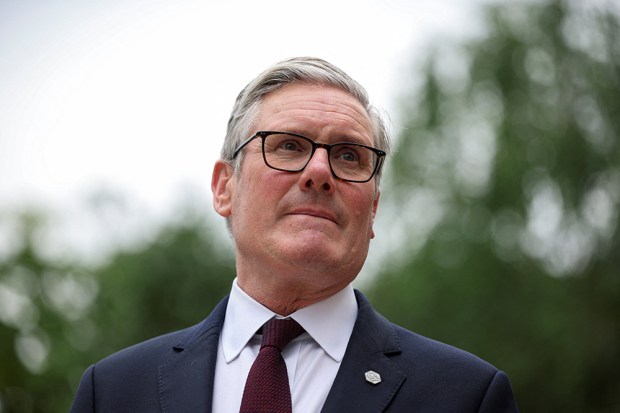
It should be clear by now that our societies choose what we wish to remember. Or, to put it more accurately, some cases seem to be selected for us as learning moments or opportunities to push a wider societal point. Anniversaries of the Lawrence murder are marked with services at St Martin-in-the-Fields, attended by prominent politicians such as Keir Starmer. US senators and presidential candidates – as well as our own current Prime Minister – memorably ‘took the knee’ among other gestures to commemorate the death of Floyd.
By contrast there have never been any remotely similar campaigns to remember Kriss Donald or Tony Timpa. Why? Why should it be that some racist killings and deaths in police custody are commemorated while others are not?
I doubt if any reader can name even one white British girl who, over the course of the past three decades, was abducted, tortured and sexually abused by men of mainly Pakistani origin in this country. These thousands of girls were chosen – as repeated inquiries and court judgments have stated – for the colour of their skin. But Starmer has never taken the knee for them. There have been no national services of remembrance, or anniversaries marked.
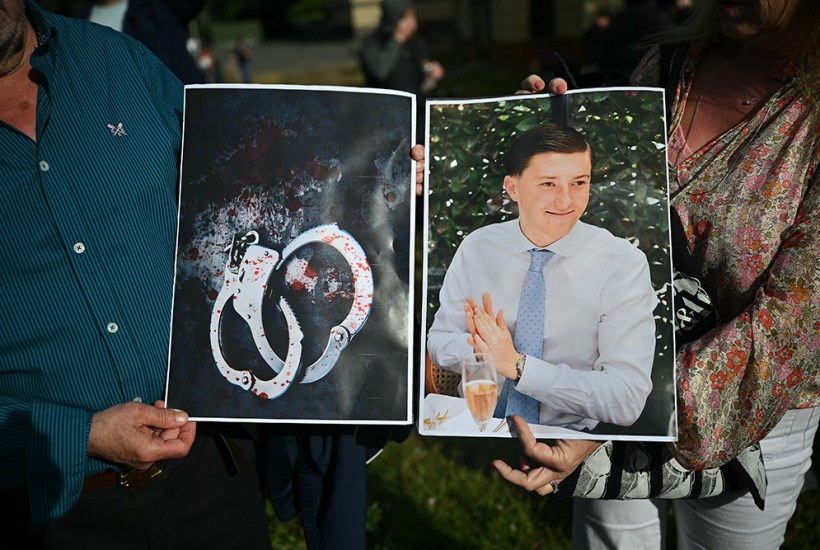
Which brings me to the murder of 18-year-old Henry Nowak and the justified upsurge of anger which has greeted the conviction and sentencing of the man who killed him: Vickrum Digwa. There are many responses. Some people have called for there to be a ban on Sikhs being allowed to carry the traditional kirpan knife. There are pros and cons to this argument. Sikh leaders seem to me to have been largely commendable in their condemnation of the actions of Digwa. Others have pointed out that the weapon used by Nowak’s weapons-obsessed killer was not the kirpan but a larger knife that no one has any right to carry around. On the other hand, several perfectly reasonable and tolerant countries have banned their Sikh population from carrying such weapons, whether they are deemed to be a tenet of their faith or not.
But the larger point is at risk of being missed in all this. A direct line can be drawn between the casual cruelty and inhumanity shown by police officers to young Nowak in his dying moments and the inquiry into the murder of Stephen Lawrence. For three decades the police have lived under the fear of any further claims of ‘institutional racism’. Police training and changes in the law have made it incumbent on officers to believe anyone who claims to have been the victim of a racist crime. That is how Digwa, and even his mother, were initially able to get away with their vicious lies so that Digwa’s victim struggled for life on a cold street pavement, in handcuffs, being read his legal rights as he lay dying.
I have no idea whether the arresting officers are callous by nature or not. But I do know – we all know – that they are the products of post-Macpherson policing in which few crimes are regarded as worthy of serious attention unless the ‘R’ word is introduced into the equation. The officers at the scene were literally blinded by prejudice.
And we also know that ‘racism’ has, for 30 years, been an almost entirely one-way street. Only someone who is a minority can be a victim of racism and only someone who has the misfortune to be from the majority racial group can be the perpetrator of it. Even if the accused – and entirely innocent person so charged – is bleeding out in front of you.
I get the sense that the weather is about to change on all of this. About time.
Got something to add? Join the discussion and comment below.
You might disagree with half of it, but you’ll enjoy reading all of it. Try your first month for free, then just $2 a week for the remainder of your first year.