In the realm of magic and imagination, human nature can be better understood than in the world of our everyday lives: ‘The best of our tales do not lie or die.’ It is a bold claim, which the folklorist Jack Zipes explores across continents and class in a series of essays. He guides the reader from the origin of oral storytelling, through medieval writings, to 17th-century literary salons and finally to today’s cinema screens. In the course of this journey, he focuses on the specific genre of the ‘wonder tale’, in which ‘those who are naive and simple are able to succeed because they are untainted and can recognise the wondrous signs… They have not been spoiled by conventionalism, power or rationalism.’
As Zipes follows the trajectory of these stories, the path twists and turns, moving back and forth between the imagination and lived experience. He combines precise text analysis and historical fact as a means of investigation. Like all good storytellers, he leaves space for the reader to form their own connections from these interwoven narratives.
As such, echoing the motif of the magic mirror in the fairy tale, the truth of our experiences is reflected back to us and questioned. Are we the masters of the stories we tell, in both fiction and our own lives? Or are there patterns that repeat through time, which shape how we view both external society and our internal selves?
The common thread that links fact and fiction is the concept of Utopia. In terms of its literary and philosophical origins ‘it is literally no place… a space of play in which artists and writers experiment… Utopia demands an ideological critique of the status quo without limits, for the utopic know no limits and offer no solutions or resolutions.’
This practice of returning to the root source of language and story motifs is at the core of the book. Zipes cites multiple variations of his selected wonder tales, tracing how the material has been retold and repurposed according to the social framework of the time. We learn how Straparola’s 15th-century trickster cat companion is reimagined as Perrault’s 17th-century moral arbitrator of courtly culture. As the cat evolves within his own story canon, he is rewarded with the status symbols of human clothing, and a legend is born: Puss in Boots.
The tension between the magical world of the story and the moral purpose of the author is often unsettling. The make believe of imagination can be used as a means of instruction to control the moral development of both the child and adult reader. Zipes’s analysis of the development of Hansel and Gretel through the stages of the Grimms’ refinement is especially challenging. The abuse and neglect of children that is the narrative kernel of the original oral fragment, as told by the pharmacist’s daughter Dortchen Wild, becomes sidelined as the story expands through Christian imagery into a tale that rewards obedience to patriarchy and disenfranchises the maternal role in the process.
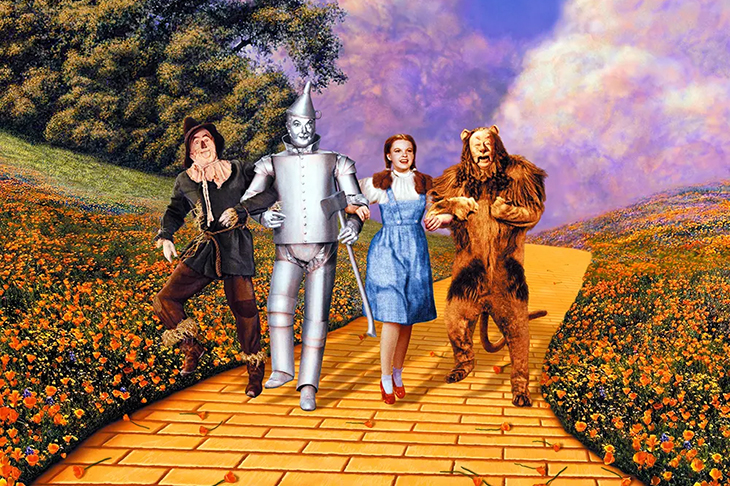
However, there are two sides to every story. In his investigation of the relationship between source material, teller and intention, Zipes offers fascinating insights into the lives of the authors. The Grimms’ need to reinforce the Christian structure of society can be read as a reaction to their personal experience of war, famine and bereavement in the 19th century. L. Frank Baum’s creation in The Wonderful Wizard of Oz (1900) of a magical land where benevolent female rule is at the fore and co-operation and the appreciation of the individual is valued over material wealth can be read as a utopian antidote to emerging American capitalism. The rewriting of a tale reflects an author’s need to interpret the world around them and to believe that it might change. As Zipes says: ‘The fairy tale stems from our hopeful desires.’
As fairy tales translate from page to screen, another question emerges. If these stories have power, what happens when that power is used not to awaken but stultify the individual? Zipes explores this in a commercial context when he discusses Disneyfication. The adaptations and extended franchises from Snow White to Beauty and the Beast repeat the same narrative pattern. The active hero gains status and agency, not least through the acquisition of a princess. Along the way, the ranks of class from dwarfs to teacups are submissive to the hierarchy. The Technicolor fairy tale maintains the status quo rather than challenging it.
True to the traditional form, the book’s epilogue brings us full circle: the end is also the beginning. If the act of make believe is an active contract between teller and listener, between writer and reader, between director and audience, then it is essential to understand how our stories are being rewritten, by whom and why.
We can choose to bow to the court of the king or we can venture beyond the confines of the castle to explore the wild world of wonder and be the champions of our own stories. As Zipes concludes: ‘Glimmers of hope were projected and are projected through the fairy tale. It is our task to seize on them as we tell our tales, and our futures, today.’
Got something to add? Join the discussion and comment below.
You might disagree with half of it, but you’ll enjoy reading all of it. Try your first month for free, then just $2 a week for the remainder of your first year.