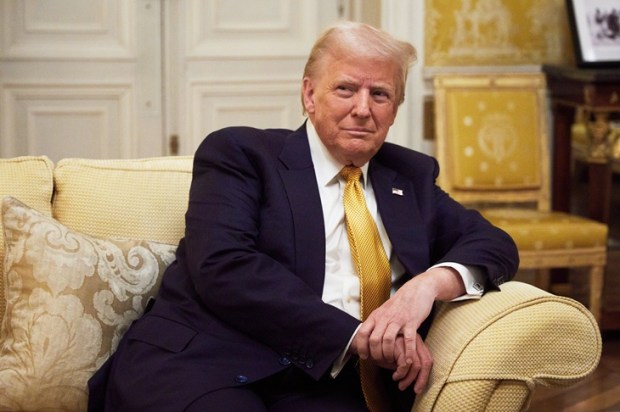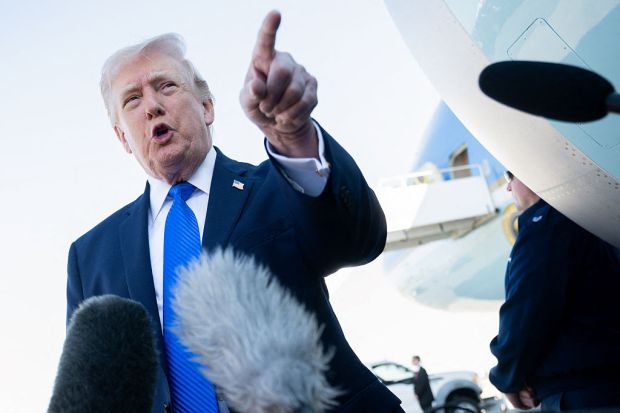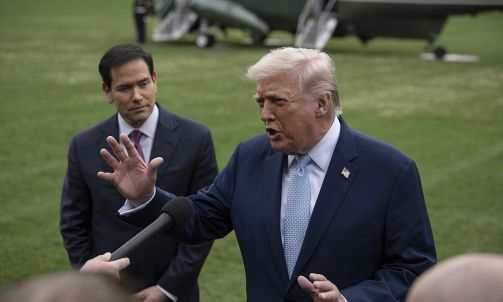
Early this morning, US President Donald Trump effectively told the Albanese government where they can source some desperately needed oil … from America.
Rage-posting on Truth Social, a clearly fed-up Trump wrote:
‘All of those countries that can’t get jet fuel because of the Strait of Hormuz, like the United Kingdom, which refused to get involved in the decapitation of Iran, I have a suggestion for you: Number 1, buy from the US, we have plenty, and Number 2, build up some delayed courage, go to the Strait, and just TAKE IT. You’ll have to start learning how to fight for yourself, the USA won’t be there to help you anymore, just like you weren’t there for us. Iran has been, essentially, decimated. The hard part is done. Go get your own oil!’
This message was folded up and thrown at Keir Starmer, but our Prime Minister can take the hint.
If the US is spruiking its oil supply on social media, it must be open for business.
Shortly after the President’s comments about the UK, he also called out France, writing: ‘The country of France wouldn’t let planes headed to Israel, loaded up with military supplies, fly over French territory. France has been VERY UNHELPFUL with respect to the “butcher of Iran” who has been successfully eliminated! The USA will REMEMBER!!!’
And last week, typing in all-CAPS, the President had this to say about Nato:
‘NATO NATIONS HAVE DONE ABSOLUTELY NOTHING TO HELP WITH THE LUNATIC NATION, NOW MILITARILY DECIMATED, OF IRAN. THE USA NEEDS NOTHING FROM NATO, BUT “NEVER FORGET” THIS VERY IMPORTANT POINT IN TIME!’
What we are seeing is a frustrated superpower that has been carrying the weight of responsibility for global stability since the second world war. European nations, in particular, have used the money they should have assigned to defence to gold-plate their bureaucracy.
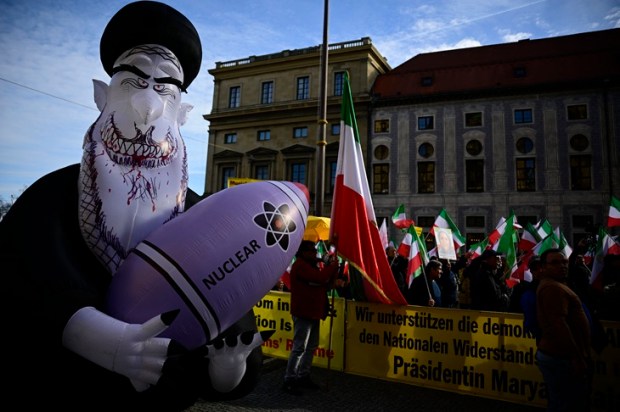
Not only did European nations waste their money and shirk their defence responsibilities, they opened the gates of the West to the third-world. As Trump has warned, nations such as the UK are at risk of becoming Islamic outposts with nuclear weapons.
Trump might be fighting a war (arguably an inevitable one), but the so-called ‘non-interventionalist’ champagne socialists of Europe have been diligently working toward the destruction of the Enlightenment. This has, in turn, put even more pressure on America to hold back China on its own.
The good news for Albanese is that Australia has dropped down the President’s angry tweet list.
For now.
And more good news, our closest ally is effectively in charge of the world’s largest oil reserves in Venezuela. After Nicolás Maduro was hauled off to face charges of narco-terrorism, the US assumed indefinite control of Venezuela’s oil sales.
While not 100 per cent friendly, the current regime is playing nice thanks to the desperately needed investment. Trump has requested firms to put $100 billion toward restoring the oil industry. Venezuelan oil refineries had been run into the ground and were close to collapsing.
The history is complex, but for the purposes of Australia’s predicament, Venezuela has 303 billion barrels.
Indeed, it’s astonishing that Albanese signed a rare earths and minerals deal with the US without first making security arrangements for US oil. There doesn’t seem to be any good reason for this oversight except geopolitical illiteracy.
Critics are right that Venezuela can’t solve the Strait of Hormuz problem overnight due to a lack of infrastructure … but it can solve Australia’s problem.
But not if the Prime Minister sits on his hands and prays everything will sort itself out.
If the government doesn’t pick up the phone and act right now, we’ll be at the back of yet another resources queue.
There is a very concerning map floating around the internet which alleges it shows the day on which Australia’s oil shipments stop – April 20.
As it stands, the only secure future shipments are not coming from our historic partners in Asia, who immediately restricted supply which they source from the Middle East, but from our US panic-buying.
Formalising our arrangement with the US, either from its domestic supply or by cutting a deal with Venezuela, is something that must be done as a matter of urgency.
Albanese, Chalmers, and Bowen appear to be of the opinion that a National Cabinet with emergency powers, watchdogs, price controls, and passive-aggressive messaging can solve this fuel crisis.
It cannot.
Instead of legislating the fallout, it is the government’s responsibility to secure a reliable supply.
Doing so will fix all downstream problems and protect the economic fabric of the country.
Canberra should be doing nothing else except pursuing this goal.