As Everett Dirksen once memorably said, there is an evil party and a stupid party. Sometimes, both parties come together to do something that is both evil and stupid, and this is called ‘bipartisanship’.
Dirksen’s quote, intended to describe US politics, is accurate for Australian politics as well.
Among Anthony Albanese’s more contentious policies is his government’s Under 16 ban – an initiative to forbid anyone beneath the age of sixteen from having a social media account.
Despite unresolved widespread debate over the costs and benefits of this policy, the Liberal Party, or at least the parliamentary establishment of said party, was an enthusiastic supporter.
This eager endorsement of yet another usurpation of Australians’ liberties is yet another vindication of the Liberal Reform Association’s necessity.
By supporting these restrictions, the establishment parliamentary Liberal Party has proven itself once again to be Labor Lite illiberalism.
I admit a temptation towards simply dismissing concern about the potential negative impacts of social media. Remember the days when the primary concern about technology centred around young boys being turned into school shooters by Doom, or carjackers and prostitute-murderers by Grand Theft Auto?
The concern was focused on little boys spending excessive time by themselves and not enough time doing ‘healthy’ things, like socialising.
Now, the moral panic has reversed itself. Parents, educators, and experts are concerned about little girls spending too much time socialising with each other via social networking services.
To be fair, whilst there is effectively zero evidence that boys have been turned into murderers by video games, there is some evidence that adolescent girls who spend a disproportionate amount of time online have fallen prey not just to cyberbullying (which research shows is most commonly committed by adolescent girls against each other) but also to mental health problems via Social Contagion.
About 15 to 20 years ago, several online communities that promoted Anorexia and Bulimia (as ‘alternative lifestyles, not disorders’) became prominent, and more girls started receiving treatment for these ailments. Some evidence suggests that within the last decade, something similar has happened with Gender Dysphoria, and online ‘trans’ subcultures (such as those which developed on platforms dominated by young people during the early 2010s).
However, just because something is potentially risky or potentially hazardous when done to extremes, that is not a reason to ban it.
Sure, one can point out that when things are risky for children, we often forbid children from doing them, and when these things are risky for adults, we often regulate them (see driving, drinking, smoking, and gambling). But not all regulations or restrictions are automatically justified by the mere presence of some risk – a regulation or restriction must at the very least pass basic cost-benefit analysis.
A recent study from the University of South Australia, published in JAMA Pediatrics, found that moderate after-school social media use is correlated with positive outcomes in children (but didn’t substantiate any causative relationships).
Another recent study on British 11- to 14-year-olds that was published in the Journal of Public Health did not find support for the idea that adolescent technology use is a major cause of bad mental health, either.
In brief, the evidence is mixed and inconclusive, and although there is some evidence that adolescent girls may be especially vulnerable, the policy at issue bans social media for under-16s of both sexes. We all know precisely how feminists would respond if a ‘gender-targeted protection’ strategy was put forward.
In short, the benefits of Labor’s social media ban are still uncertain.
What does this legislation actually do?
It prevents people under 16 from having an account on a specific set of internet platforms that facilitate online social interaction. Many platforms are not specifically mentioned, but they can choose to opt in.
In isolation, this doesn’t look like much – children can still watch hours of antifeminist YouTube content, they just can’t post in the comments section. But this law cannot be viewed in isolation from the history that birthed it.
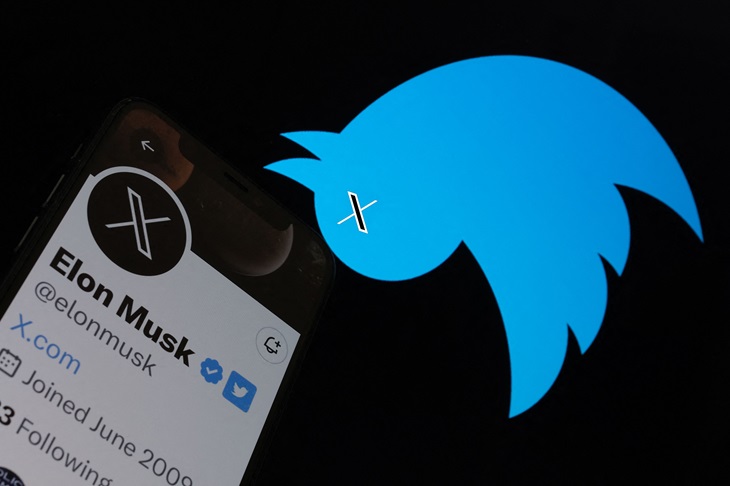
Those who followed the evolution of digital censorship by Western governments have credibly suggested that this law, and others like it around the world, have more to do with targeting X (formerly Twitter) specifically. These laws oppose, in law, Elon Musk’s public endorsement of free speech in a world whose politicians increasingly value censorship and control.
This theory could be backed up by the types of lawsuits running around the social media landscape and by comments and demands issued by the European Union and associated global regulators.
Indeed, laws of this type (including policies concerning ‘online mis-, dis- and mal-information’) across the West only started gaining popularity after Musk bought X.
It is my view that X is targeted due to its unique decision to stop censoring previously supressed conservative thought and mechanisms, such as community notes, which frequently expose people to non-leftist and alternate viewpoints.
For a comparison, one can fairly point out that BlueSky – jokingly described as X for leftists after an initial max exodus – was not originally covered by the age restriction and is not targeted by takedown orders despite comparable problematic content.
This doesn’t appear to matter in a world where the public education system and a supermajority of the mainstream media is dominated by people with the same belief system as the orthodoxy on BlueSky.
One may also be fair to point out that right-wing networks like Gab and Truth Social (where Donald Trump posts) are also covered under the social media ban theoretically, but they are marginal networks that function as echo-chambers for self-selected audience. X has more than half a billion monthly active users, a track record of successful use in political organising, and (unlike the platforms owned by Google and Meta) isn’t controlled by the establishment left.
It should also be pointed out that much of the regulation the Albanese government wants to apply to the internet began as a thought bubble inside the UN and EU. The UN has been promoting internet censorship for quite some time including a blurring of the line between hate speech, religious criticism, and blasphemy.
The UN also dabbles in ideological censorship including in 2015 when there when feminism took an interest in video games citing ‘cyber violence against women and girls’.
Whatever the Liberal Party’s motivation in backing Albo’s social media laws actually is, it doesn’t really matter. Support of this policy is a monumentally stupid move, and yet more proof that the Liberal Party is controlled by illiberals.
This is why the Liberal Party needs reform, in the form of the Liberal Reform Association. Put actual liberals – the rank-and-file membership – in charge of their own party.
Dr Andrew Russell is an economist and philosopher. His substack can be found at www.drcasino.substack.com