A mystery hovers over Labor’s free trade agreement with the EU. Why, in 2023, under pressure from our beef producers, did it walk away from proposed EU import access offers as ‘not good enough’ – and then, in 2026, accept all but the same offers as ‘a good deal for Australian farmers’?
The EU had offered annual tariff-free quotas of around 34,000 tonnes for beef and 31,000 for lamb. Labor’s acceptance of essentially identical offers has left what were supposed to be some of the main winners from the deal furious. Meat and Livestock Australia (MLA) called it the ‘worst ever free trade agreement (FTA) for the Australian red meat industry’, and our sugar and dairy producers are equally scathing. Nationals leader and shadow trade minister Senator Matt Canavan says the Coalition could try to block the deal’s enabling legislation.
Labor has spun the EU’s beef and lamb offers as a triumph in that they are, respectively, ten and five times Australia’s current quotas. That’s more a reflection on their dismal starting point than any achievement by Australian negotiators: EU agricultural protectionism has long essentially shut out Australian meat imports. This has been an outrage considering, for example, that Australia gives the EU essentially open access for pork imports and has allowed up to 100,000 tonnes per year in recent times.
Australia’s FTA with America highlights how pathetic the EU’s offers are: we exported 450,000 tonnes of beef to the US, which has a smaller population than the EU, in 2025. Nevertheless, MLA was prepared to accept a comparatively modest EU beef quota of 50,000 tonnes, about the same as those Brussels finalised with Canada and Brazil in recent trade deals, and, appropriately, a bit bigger than the 38,000 it offered New Zealand. Similarly, New Zealand secured a whopping annual quota of 163,000 tonnes of sheep meat. MLA would have accepted 67,000 tonnes.
Of course the overall estimated boost to Australian exports of A$10 billion and EU import liberalisation on our wine, seafood, horticultural products, critical minerals and access to government procurement contracts would be welcome. If it ever happens. The EU still hasn’t ratified its free trade agreement with Canada, signed in 2016. By the time the Australian deal is considered by the European parliament, it’s conceivable Australia could have a new government which has withdrawn from the Paris climate agreement. This would probably kill the FTA: in a spirit of shared climate evangelism, the EU and Canberra have agreed either side could suspend the deal for ‘serious violations’ of the agreement.
So why has Labor accepted now what it rejected in 2023? It’s not clear that any of our potential export wins wouldn’t have happened under the original package. And the Eurocrats’ gracious concession in allowing our producers of parmesan, prosecco and kransky to continue marketing their products in Australia under these names can hardly have been the reason for the breakthrough.
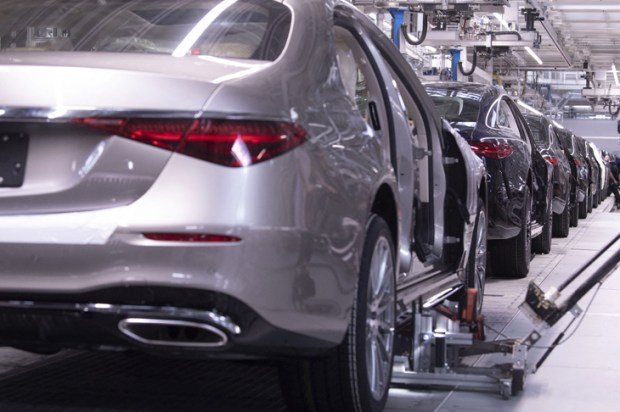
A clue is provided in European Commission President Ursula Von der Leyen’s comment that ‘the EU and Australia… couldn’t be closer in terms of how we see the world’. Translation: while much of Europe has moved to the right in recent times, the EU establishment in Brussels and the Albanese government are political soul mates who share green-woke pieties, including a distaste for Donald Trump. Labor won’t allow the moaning of reactionary, Akubra-wearing cattle farmers to stand in the way of this blossoming romance. The two sides complimented each other on how ‘inclusive’ and committed to saving the planet they are and, naturally, Australia’s increasing of the threshold for payment of the luxury car tax would apply only to politically correct electric vehicles – a detail the net-zero-obsessed Eurocrats would approve of, if not Europe’s struggling car industry (see ‘Europe Reverses on EVs’, The Spectator Australia, 7 March 2026).
All of this ‘shared values’ stuff is much more attractive to the left than the tough slog of hawking what many of them see as our climate-vandalising beef industry. It likely tipped the balance to Labor capitulating to the EU’s dud deal.
Another reason the government urges us to welcome the EU trade deal is that it’s accompanied by a ‘Security and Defence Partnership’ with the EU. This foresees co-operation on cybersecurity, maritime security and counter-terrorism, and strategic dialogue. Albanese and Von der Leyen describe the agreement as ‘groundbreaking’. But nine years ago another ‘groundbreaking’ Australia-EU deal, the Framework Agreement, was finalised. This heralded, er, co-operation on cybersecurity, maritime security and counter-terrorism, and strategic dialogue. Labor anxiously claims that co-operation in this important new agreement will be ‘enhanced’ and ‘more structured’.
There’s a grim irony in this reheated flimflam being spruiked to us by Von der Leyen. Nigel Farage once observed that it’s a requirement for senior EU appointees that they’ve been failed politicians. In this context he paid Von der Leyen, defence minister under Angela Merkel, the backhanded compliment of saying that had she been in charge of Germany’s armed forces in 1939, Hitler wouldn’t have been able to launch a war. She’s especially remembered for none of Germany’s submarines being operational on her watch and troops on exercise using broomsticks instead of guns. Even the doveish Social Democrats described her as Germany’s ‘weakest minister’ and refused to back her to lead the European Commission.
Albanese in his press conference with Von der Leyen naturally didn’t acknowledge that there would be no free trade agreement with Europe had it not been for the efforts of Tony Abbott. It’s often overlooked that in his two years in office, Abbott did more to help Australia’s exporters than any other leader in its history, finalising free trade deals with our three most important markets: Japan, China and Korea. Likewise, after his Labor predecessors had lazily ignored the opportunity of a trade deal with the EU – then the world’s largest economy and Australia’s second-largest trading partner – he committed to negotiate one ahead of the 2013 election and then followed up by persuading European leaders to begin the process. Of one thing we can be sure: unlike Labor, if Abbott had still been in charge, he wouldn’t have sold our farmers down the river.
Got something to add? Join the discussion and comment below.
Mark Higgie was Australia’s ambassador to the EU 2014-2017
You might disagree with half of it, but you’ll enjoy reading all of it. Try your first month for free, then just $2 a week for the remainder of your first year.