Geert Wilders was refused entry to the United Kingdom in 2009. A sitting Dutch MP and leader of the Party for Freedom (PVV), he had travelled to screen his film Fitna in Parliament. Because the film, and Wilders, are critical of Islam, our government judged his visit to be threatening to community security and public order, and he was turned away at Heathrow. Since then, his message has become more mainstream within the UK, and more urgent for all of Europe to hear.
Earlier this year, Eva Vlaardingerbroek, a Dutch right-wing activist, had her UK entry clearance revoked, after her presence was deemed not conducive to the public good, possibly owing to her promotion of the ‘Great Replacement’ theory.
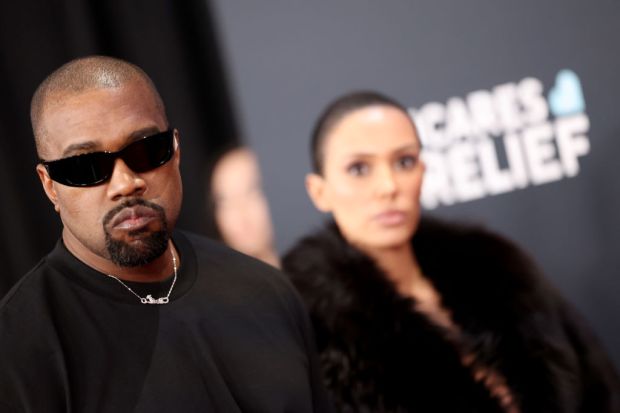
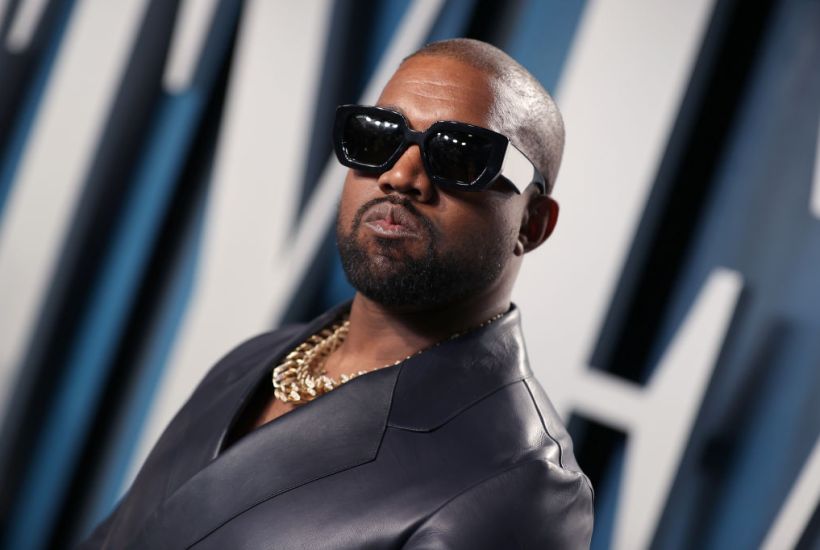
West’s influence over millions is indisputable: he can draw massive crowds of fans who sing along, chant his words and defend his anti-Semitic arguments online
In 2010, Dr Zakir Naik, an Indian preacher who had defended and praised Osama bin Laden, was banned from entering Britain. Of Bin Laden, he is reported to have said ‘If he is terrorising the terrorists, if he is terrorising America the terrorist, the biggest terrorist, I am with him.’ (Naik claimed he made the comments before 9/11 and is a non-violent enemy of extremism.)
Pamela Geller and Robert Spencer, American anti-Islam activists, found themselves excluded in 2013. Their record of producing anti-Islam material was deemed not conducive to the public good.
Even within the last four months, Home Secretary Shabana Mahmood has banned Dr Shadee Elmasry, an Islamic preacher from New Jersey who defended Hamas and praised ‘resistance’ following the 7 October attacks, as well as Tuaha Ibn Jalil, a Pakistani influencer with two million followers on Instagram, who helps run a Muslim youth club in Pakistan. Elmasry, who denies supporting Hamas or extremism and has said his remarks were misrepresented, had been set to deliver three days of talks in Birmingham, Bolton and Ilford, organised by the Global Relief Trust, a Muslim charity. He was due to speak at mosques, community centres, a university and a school.
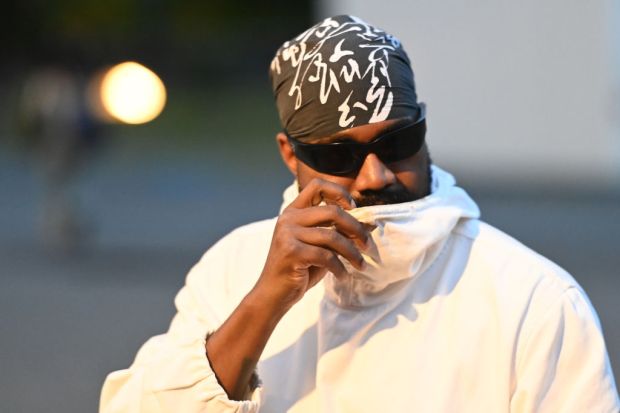
Despite their different ideologies, backgrounds and nationalities, across these cases the pattern is clear. The common factor is their influence and rhetoric which inflames division, appears to justify extremism, or undermines public order. The law has been applied across the board. That is the context in which the question of Kanye West now sits, as he is set to come to the UK to perform at the Wireless festival.
In 2025, West repeatedly described himself publicly as a Nazi. He expressed admiration for Hitler. He released a song built around chants of ‘heil Hitler’, incorporating a sample of Hitler’s own speech. He marketed and sold clothing featuring a swastika, profiting directly from one of the most recognisable symbols of genocidal ideology. He has, over a sustained period from 2022 through 2025, disseminated anti-Semitic conspiracy theories, engaged in Holocaust denial, and used his platform to attribute personal grievances to Jewish people as a group.
We are not discussing an isolated outburst, but conduct which has been repeated, escalated, and monetised. His influence over millions is indisputable: he can draw massive crowds of fans who sing along, chant his words and defend his anti-Semitic arguments online. I know as I have been at the receiving end of their anti-Semitic outbursts online since discussing this issue in recent days on television.
Set that alongside the earlier examples. Wilders was excluded for a film and a political message about Islam. Naik for speeches interpreted as legitimising terrorism. Geller and Spencer for inflammatory activism. Elmasry for rhetoric following a major terrorist attack. Vlaardingerbroek for ideological framing around demographic change. Each case involved speech judged dangerous because of its potential effects.
Kanye West’s conduct goes further in a crucial respect. It is not confined to speech in the conventional sense. He stands before tens of thousands of people, many of them young, who have paid to be there, and leads them in chants. He embeds those messages in music that circulates globally. He attaches them to products that fans purchase, wear, and display. Many of the individuals previously excluded from the UK would struggle to reach a fraction of his audience. Their words travelled through speeches, lectures, or niche media. West has influence in its most potent form.
West’s defence of mental illness is sometimes raised. But regardless of his mental state, the public impact of his message remains the same. If an individual is aware that their behaviour, particularly when unwell, leads them to broadcast racist and extremist material to millions, responsibility demands withdrawal from that platform, not leveraging it for even more income.
Nor do apologies resolve the issue. There have been several, including a high-profile statement in early 2026. Whilst West has not made any anti-Semitic outbursts since then, his past apologies have sat alongside a continuing pattern of explicit Nazi identification, commercially distributed content and mass audience engagement.
Figures like Wilders have been barred for their part in important public debate on the growing presence and influence of Islam as an ideology in the West. This may be controversial for some, but it is not the same as a glorified children’s entertainer fetishising Hitler and creating Nazi themed clothes items. Kanye West does not engage in educated critique of Judaism as a religion or ideology, he peddles in Jew-baiting Hitler fan material. If anything, we need to apply the law more forcefully against that sort of activity and material, rather than using it to silence debate and criticism of religion and ideologies.
The underlying rationale of banning someone from the UK is straightforward: to prevent individuals from entering the country when their presence is likely to inflame tensions, spread extremist ideas or damage community cohesion. On any fair reading of the facts, Kanye West meets that threshold. Indeed, he exceeds it.