We have just about made it out of the doldrums. I’m not talking about Britain’s economic fortune. Nor am I talking about the NHS waiting list. (Both remain dire.) In true British form, I’m talking about the weather.
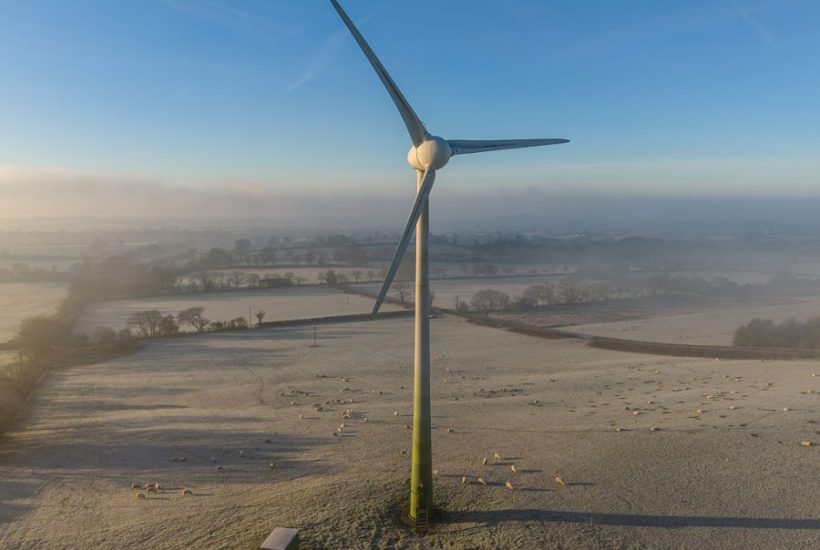
Long our favourite subject of chit-chat, the weather has in recent years become the master of our power supply. At the turn of the new millennium, Britain had essentially no wind power in the grid. But over the past quarter-century, we’ve added 31 gigawatts of capacity. That sounds impressive when you consider our average power demand is something like 37 gigawatts. It sounds less impressive when you remember those wind turbines only generate power when the weather allows. Which, of course, it sometimes doesn’t.
You see, when the renewable lobby trumpets on about how much wind we’ve added to the grid, they sail past an important detail: ‘capacity’ is how much power would be produced under ‘specific conditions’. Those specific conditions for a wind turbine are winds that blow strongly and perpetually. Capacity, therefore, is an unattainable maximum. What really matters is generation – which is how much power is actually produced. The ratio between the two is called the ‘capacity factor’, and it’s here where renewables start to fall flat.
Wind’s jagged profile swings in an almost-perfect reverse lockstep with that of gas
The capacity factor for Britain’s wind power – averaged over a year – is about 30 per cent. (For solar, it’s a dim 10 per cent.) So, the next time you hear a renewable advocate breezing on about how many gigawatts of wind capacity we’ve added to the grid recently, divide the number by three and you’ll get a number more meaningful. (For solar, divide it by ten.) But even then, those annual averages paper over the dreaded spells of calm weather, during which wind generation plummets.
Between Thursday and Sunday just gone, wind’s capacity factor averaged 13 per cent. The corresponding loss in generation compared to the same period a week previously (12.1 gigawatts) was the same as switching off all of Britain’s nuclear power stations (4.7 gigawatts) and cutting the undersea interconnectors to the Netherlands, Belgium, Norway, and France (7.4 gigawatts in total).
The weather did this. Not Putin, corrupt petrostates, or greedy gas companies. Not the closing of the Strait of Hormuz, either. Calm winds can befall us any time because the atmosphere is indifferent to geopolitics. Relying on wind turbines to power a modern economy is self-imposed energy insecurity.
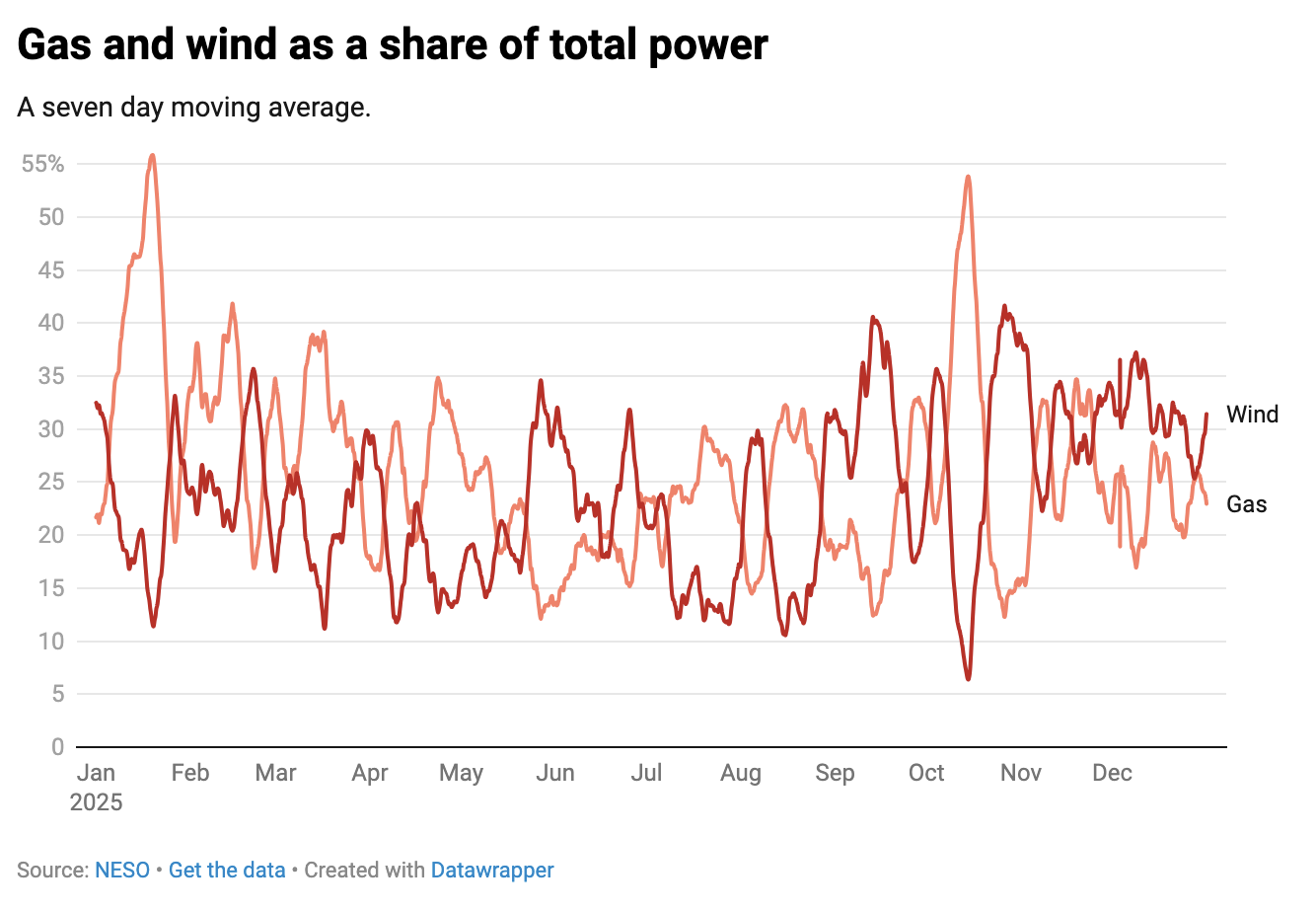
In the meantime, our power demand didn’t budge. And therein lies wind power’s dirty secret: when the wind drops, we rev up the gas-fired power stations to make up the shortfall. Wind’s jagged profile swings in an almost-perfect reverse lockstep with that of gas. We’re in a ludicrous situation where the weather dictates how much gas we burn and, by extension, our carbon emissions.
Twenty-five years ago, we drew almost all our power from weather-independent sources such as nuclear, coal, and gas. We’ve since cut nuclear generation by more than half as our aging fleet partially retired; only one reactor – Sizewell B – will remain by the early 2030s. We eliminated coal completely in 2024. Meanwhile, we’re at risk of losing a third of our gas fleet by the early 2030s, too, as the remaining power stations age towards retirement. It’s hard to see how we’ll get through future doldrums without severe power shortages. This means blackouts, ‘demand side flexibility’ (a euphemism for ‘energy rationing’), or more imports from our European neighbours. Probably a mixture of all three.
The much-vaunted grid-scale storage won’t help, either. Britain currently has about 40 gigawatt-hours of it, enough to keep the lights on for an hour and five minutes. Storage measured on fleeting timescales cannot carry a system through doldrums that stretch on for days or even weeks at a time.
Building wind turbines isn’t a bad thing per se. But without building weather-independent power sources alongside them, it leaves our grid exposed to the elements. We have two realistic choices: build more gas-fired power stations, thereby scrapping our net zero targets or – and this is the far more sensible option – expand our nuclear fleet rapidly, which would give us the reliable power we need without the carbon cost.
The wind has picked up and is generating 20 gigawatts today. Who knows what it will be doing in a fortnight’s time. In the meantime, we’re chasing rainbows instead of the secure grid our society needs.