It is sometimes said that a principled politician can never become a team player because their principles, even if they enjoy popular support, may be incompatible with mainstream ideas promoted by traditional political parties.
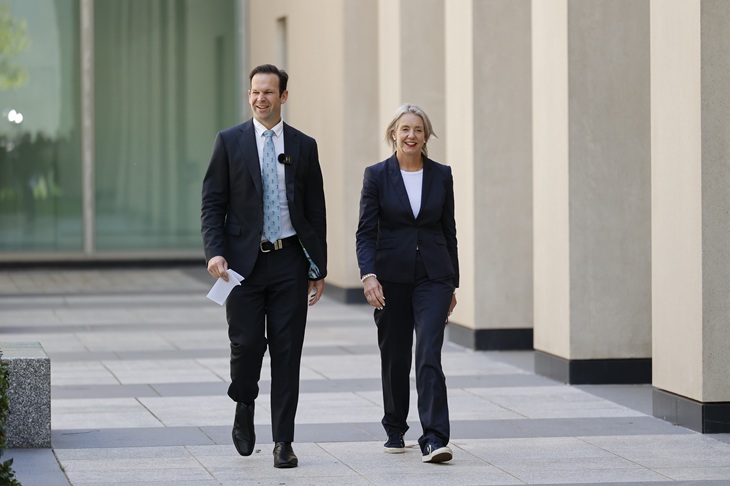
Reminded of this when hearing of the elevation of Matt Canavan to the Leadership of the National Party, it raised the question of how he would fit into the straitjacket of the Coalition’s frontbench…
Unsurprisingly, there has already been much commentary following the shock resignation of David Littleproud. Nevertheless, it may still be useful to add to this flurry of views by reflecting on Canavan’s elevation from a management point of view.
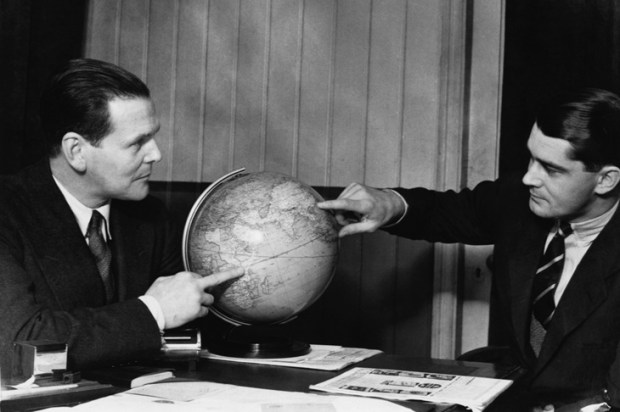
Laurence J Peter and Raymond Hull, in their well-known book, developed the ‘Peter Principle’. That is, ‘in a hierarchy every employee tends to rise to his level of incompetence’. These authors argue that occupational stress and low staff morale can arise, and even worsen, when organisations promote individuals to roles they are not fully prepared for, or for which they lack the necessary qualifications and experience. The ‘Peter Principle’ provides insights into how a mismatch of a person’s position and his or her competence acts as a stressor and is very common in politics.
One thing is beyond doubt, this is not the case for Matt Canavan.
He is a personable, shrewd communicator who understands the political climate of Australia. His formidable qualifications and experience surely align with the qualities necessary to lead a mainstream political party.
Yet any promotion will still bring with it new challenges that a recently promoted person will need to navigate well.
In Canavan’s case, the challenge is to transition his image as a principled politician into a reliable team player on the Coalition’s frontbench. There are a few indications that this transition may not be a smooth process.
Barnaby Joyce, who defected from the National Party to One Nation, pointed out in an interview on Sky News Australia that Canavan will be expected to reconcile his views, freely expressed on the backbench, with the policy positions the Coalition’s frontbench will need to adopt to gain government. Hence, it is appropriate to speculate on how it is possible for a principled politician to become a reliable team player in the Shadow Ministry.
The relevant management literature reveals that the allocation of power most often changes people’s motivations and opinions; this is known as the ‘power paradox’. This change process is not unusual but is often monumental. For example, Joyce himself, when he served as Deputy Prime Minister and therefore bound by Cabinet solidarity, had to subscribe to the Net Zero fantasy of the Morrison government, a stance that he now rejects.
What are these early troubling signs of the transitioning of Canavan as a populist principled politician to an unctuous servant of the Coalition’s frontbench?
First, he attacked One Nation by asking what that party has done for Australia. For example, he asked if they had built any dams. This is a disingenuous approach considering that One Nation has never been in government and, therefore, its political impact was limited or even non-existent.
If the defeat of a bad socialist government is the main objective of the Coalition, it is my view that Canavan should focus on the demise of that government rather than seeking to distance himself and his party from One Nation. Admittedly, he is trying to stem defections to One Nation but, in targeting One Nation, he is benefiting Labor and even ensuring that the defectors will stay with One Nation. Instead, he should consider swapping preferences with One Nation to maximise their chances of ousting Labor. He might also consider forging an informal alliance with One Nation to ensure this party agrees to defeat any no-confidence motion and guarantee supply in a hung Parliament.
Second, Canavan, as a back bencher, was adamant that Australia should leave the 2015 Paris ‘Accord’ on Climate Change. It appears that he might have changed his stance since becoming the Leader of the National Party. Or at least, set it to one side. In an inspiring interview conducted by Sharri Markson on Sky News Australia, Canavan hinted that he would not be advocating for the Coalition to leave the Paris Accord because the Agreement is not binding. Similar comments also appeared on the ABC.
Surely, considering his previously strongly held views, this is a chameleon-type attitude to the issue?
Australia should leave the Paris Agreement.
Ever since we signed up to net zero, we have had soaring prices, skyrocketing interest rates and witnessed most other nations completely ignoring their commitments.
We should take care of Australia's needs first.
— Senator Matt Canavan (@mattjcan) June 9, 2024
The Paris Agreement, even if it is not binding, still imposes a non-legal duty on countries to seek to achieve Net Zero emissions by 2050. Whilst the Liberal Party’s policy of abandoning targets is commendable – targets are meaningless if they cannot be met and their policy approach still favours a meaningless reduction in CO2 emissions. Moreover, it maintains its support for the Paris ‘Accord’, a committee-based fabrication voted upon in annual boondoggles by delegates with no other objective other than to redistribute the wealth created through the productive utilisation of the fossil fuel resources they so denigrate. It is, by any standard, a half-baked policy which satisfies few people, and dissatisfies many.
Sharri Markson made note of Canavan’s ‘waffly’ answers to her questions. This is typical of leaders, even if they had once been direct on the backbench.
Third, in the interview he also seemed to dismiss the suggestion he would be moving to the House of Representatives, indicating it was not unusual for a Leader to come from the Senate. However, this disregards the fact that the House is the place where most political brawling takes place. It would, indeed, be highly unusual if the Coalition were elected to government.
Markson further critiqued him on the views he expressed online compared to the party line on the Iran war and Trump’s military action against the regime.
Thus, although Canavan’s competence is not in doubt, his responses to the Markson interview inevitably remind commentators of the ‘Peter Principle’ that explains why employees, who perform capably at a lower level of authority, do not always perform at a higher level. Applying this to the political sphere, there is no guarantee that a politician who brilliantly and successfully performs as a principled politician on the backbench, will be able to ‘grow’ in their new, elevated, position.
The elevation of Matt Canavan presents the Coalition with its best chance to reclaim its reputation as a credible opposition. But always mindful of the application of the ‘Peter Principle’, the achievement of political success will require an ability to transition successfully from a principled politician to a dependable and committed frontbench team player. Success is never assured.