Whilst Adolf Hitler was adept at blaming everything and everyone except himself for the problems of war, he did make one apposite comment on the German failures of the first world war.
In a memorandum on Autarky in 1936, he lamented that Germany had failed to obtain enough ‘fuel, rubber, copper, or tin’ to continue the war.
This is a blunt strategic statement that industrial war depends on secure access to critical inputs. Eisenhower maintained that ‘battles, campaigns, and even wars have been won or lost primarily because of logistics’.
Perhaps the most pertinent of advice came from Churchill, who noted in 1913 that the British Navy’s duty is to keep open ‘the arteries through which we draw our food supply and our raw materials’.
Never has the meaning of logistical supply been so critical as now when advanced industrial modes require reliance on a portfolio of existential supplies of minerals, gas, and oil.
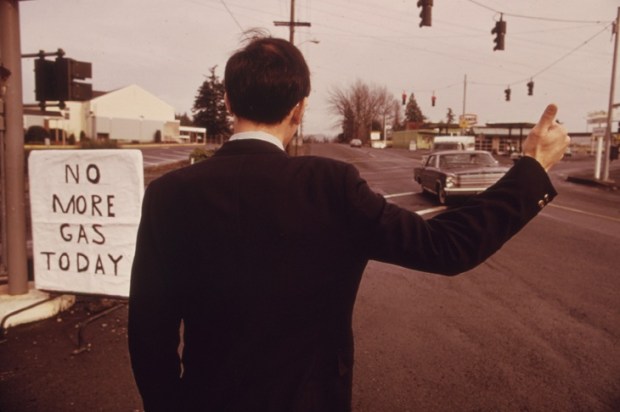
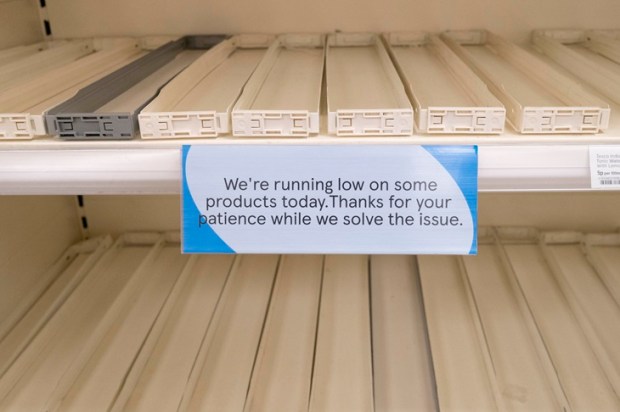
Yet in the grand debate about the Iran war and the strategic necessity to keep the Straits of Hormuz open, all focus is on oil. That is because it is the end product of a smorgasbord of other raw materials, it is the principal signifier as indicated by leaping petrol prices on TV screens and gargantuan snaking queues at petrol pumps.
Strategy now is determined not so much by military success as by the price of oil. War today is more theatre than reality. You can now bet on global markets for the next strike on Beirut, or when the oil reaches $250.
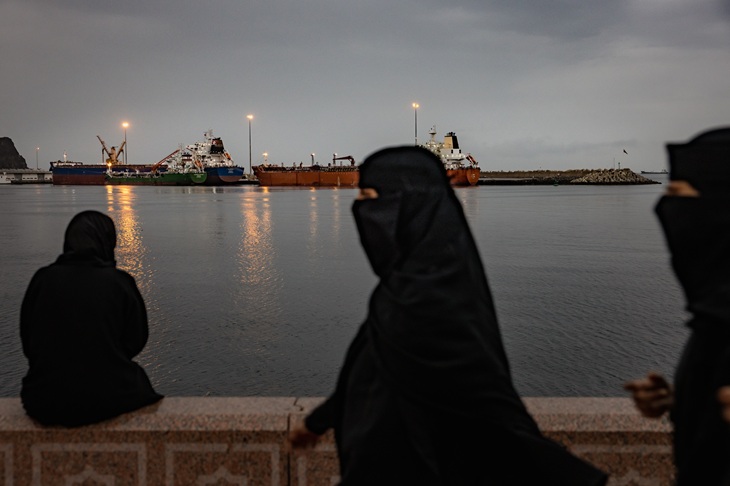
For decades, the Strait of Hormuz has been treated as the world’s most important oil chokepoint.
Roughly a fifth of global energy supply passes through a narrow corridor between Iran and Oman, and every serious military planner has understood that its closure would send oil prices soaring and destabilise the global economy.
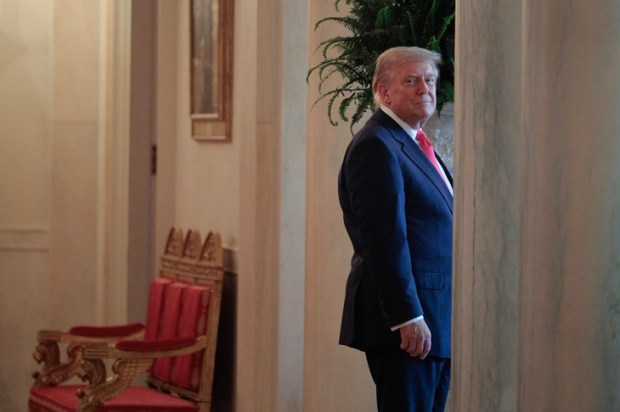
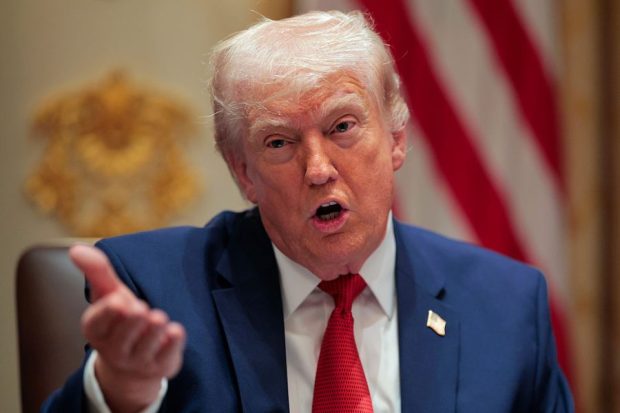
Every serious military planner, unfortunately, does not include Trump or his diplomatic buddies Witkoff and Kushner.
The reality, on a strategic level, is that there are two wars going on. One is the US debacle in trying to bomb regime change in Iran. The other is the war of Israel with their belief in an existential threat to the nation which de facto means endless wars in the region and endless ‘enemies’.
For Israel, any damage to Iran is a win-win. For Trump, it is a ‘zero-sum’ catastrophe.
If Trump was thinking that Iran could be an easy win theatre like Venezuela (i.e. go in, decapitate, retreat, control resources), then he is much mistaken. It will work with Cuba, but not with distant and large enemies.
Now the self-styled ‘Patriarch of the West’ has entered stage two of operation ‘Playstation Epic Fail’. This turns to saving the West, when all about him, like Starmer, have deserted. It is ‘Custer’s Last Stand’, but it’s not the 7th Cavalry, it’s the 82nd Airborne. The 82nd Airborne are adept at taking and holding airports or ports. The plan will most probably be to take a tranche of land on the coast in Iran, a buffer zone. From there, they could control the straits, although the amount of casualties the US would endure is difficult to imagine. It could be done with total air dominance but the theatre of war is always looking over its shoulder at the TV screen. The Maga camp will not like the sight of body bags for very long.
Trump could turn the disaster into a win, but that would mean a permanent force encamped near Bushehr and Kharg Island. And it won’t be the usual wonderful Iranian hospitality of picnics and tea. If Trump was to ensure the world’s oil security, then the hero will live for his next adventure in the world of good and evil.
Nevertheless, even this scenario is half-baked because the war isn’t about oil.
Oil is merely the visible spectre of the Iranian debacle. But the current conflict has exposed a more subtle and arguably more dangerous vulnerability. The real constraint on modern warfare is not oil. It is sulphur.
The closure of Hormuz has not only disrupted fuel shipments; it has choked off a critical industrial input that sits far upstream in the global supply chain. Around half of the world’s seaborne sulphur trade moves through the strait, and that flow has now been severely disrupted. What initially appeared to be an energy crisis is rapidly becoming something else entirely: a materials crisis.
Sulphur rarely features in discussions of war. It is not dramatic, and it does not power tanks or aircraft directly. It doesn’t jump out of the TV screens. Yet it underpins the production of sulphuric acid, the most widely used industrial chemical in the world. That chemical, in turn, is essential for extracting metals such as copper and cobalt from low-grade ores. Without it, modern industry slows down. Without it, modern militaries struggle to function.
The implications are immediate. Copper is embedded in almost every system that makes a military operational: communications hardware, radar systems, motors, and power infrastructure. These are not optional components. They are the nervous system of modern war. As one analysis puts it, these materials ‘dictate how fast things can be built and scaled under the pressure of an ongoing war.’
The result is a cascading effect that begins far from the battlefield. Disrupt sulphur shipments, and the production of sulphuric acid falls. Reduce sulphuric acid, and metal extraction becomes slower and more expensive. Constrain metals, and the manufacture and repair of military equipment begins to stall. What looks like a logistical inconvenience becomes a strategic constraint. Trump, therefore, is blockading the US into a cul-de-sac of its own making.
This is why the crisis has been described as a ‘pre-logistical’ problem. The bottleneck does not occur in factories or supply depots, but earlier still, at the level of raw materials. Modern defence systems are not just built from steel and fuel, but from complex global supply chains that depend on obscure inputs. The great military thinkers from Clausewitz, to Metternich, to Napoleon all recognised this. However, the US has become accustomed to using bombing as a strategy. It never worked in Cambodia or Vietnam. It is the nihilistic side of war, a very expensive strategy of victory through fear. In the long run it won’t work for either the US or Israel. When crucial inputs fail, the entire system becomes brittle.
The consequences are already visible. Sulphur prices have surged, and the disruption is beginning to ripple into other sectors. Analysts warn that ‘the current sulphur shock is becoming a copper problem, and that copper problem risks quickly becoming a readiness and resilience problem.’ This is not a theoretical risk. Replacing damaged equipment now requires vast quantities of metal that are becoming harder to obtain, slower to process, and more expensive to secure. Now, if you live under a system of Autarky or self-sufficiency, then you may have some leverage, but this is not the scenario for the West. We live in deindustrialised modes, realising that the heyday of globalisation is over. Moreso globalised outsourcing has handed over the keys to China.
What makes this particularly dangerous is that it was largely unanticipated. Military planning has traditionally focused on visible constraints such as fuel, transport, and munitions. But modern warfare depends just as heavily on invisible inputs embedded deep within industrial systems. These are harder to track, harder to substitute, and far easier to disrupt. The lesson is uncomfortable but clear.
Wars are not only fought with weapons; they are fought with supply chains.
And those supply chains do not begin with factories or even with energy. They begin with raw materials that are often overlooked until they disappear. China, adept at long-term strategies (the opposite of the zero planning of the UK, for example), now has a diaspora of soft colonies worldwide, through soft loans and trade. China is the de facto winner of the 21st Century.
The Straits of Hormuz remain a chokepoint, but not simply because of oil. Its true strategic importance lies in the way it concentrates multiple layers of dependency into a single fragile corridor. When that corridor closes, the effects are not confined to fuel markets. They reach into the foundations of industrial production and, ultimately, into the capacity of states to sustain war. The conflict in Iran has revealed that modern military power is constrained not just by strategy or firepower, but by the availability of something far less visible. Sulphur, an unremarkable element in ordinary times, has become a decisive factor in extraordinary ones.
Brian Patrick Bolger. He has taught International Law and Political Philosophy at Universities in Europe. His articles have appeared in leading magazines and journals worldwide in the US, the UK, Italy, Canada, etc. His new book- Nowhere Fast: Democracy and Identity in the Twenty First Century is published by Ethics International Press. He is an adviser to several Think Tanks and Corporates on Geopolitical Issues.