Nowruz marks the beginning of the solar year and the first day of the first month of the Persian calendar, Farvardin.
It is a celebration whose roots reach deep into ancient Iranian history and is one of the oldest traditions that has survived to the present day. Its timing coincides with the spring equinox, when day and night become equal and nature awakens after the stillness of winter.
For this reason, Nowruz in Iranian culture is not merely a change of date on the calendar, but a symbol of the renewal of the world, the start of a new cycle of life, and hope for the future.
For Iranians, Nowruz reflects the connection between human beings, nature, and their historical past. There has long been a belief that just as the earth is renewed in spring, people should also begin the year with a refreshed spirit, new thoughts, and a renewed appearance. Therefore, this celebration has both personal and social meaning: a time for reconciliation, visiting loved ones, cleansing both home and heart, and starting again.
In Iranian mythology, the origin of Nowruz is most strongly associated with King Jamshid. In ancient narratives and in Ferdowsi’s Shahnameh, a book that is more than 1,500 years old, Jamshid is described as a ruler who defeated evil forces and brought order to the world. He then sat upon a golden throne and was lifted toward the sky. When sunlight struck his crown, the world was filled with light, and people called that day a ‘new day’. This story symbolises the victory of light over darkness and the beginning of a new era of prosperity and peace.
Some older sources, including the Avesta, which is believed to date back about 8,000 years, attribute the founding of Nowruz to Keyumars, considered the first human and the first mythical king of Iran. Other legendary figures such as Siavash and Kay Khosrow are also connected with Nowruz themes. The story of Siavash, whose innocent death is followed by the growth of plants from his blood, reflects the cycle of death and rebirth in nature. The ascension of Kay Khosrow is seen as a passage from the Earthly world to another realm. These connections show that Nowruz has long been linked to ideas of renewal and the re-creation of life.
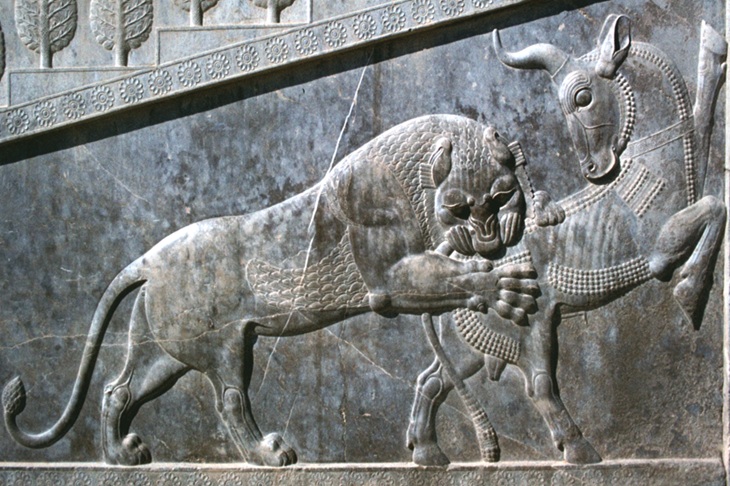
From a historical perspective, there is also evidence of Nowruz’s importance in ancient Iran. Although the name Nowruz does not appear directly in Achaemenid inscriptions, many scholars believe that spring festivals were held at the royal court. Some reports suggest that Cyrus the Great honoured this day as a national celebration, during which cities were cleaned, public affairs addressed, and prisoners pardoned. It is also said that during the reign of Darius I, grand ceremonies were held at Persepolis, likely connected to the New Year.
During the Parthian period and especially under the Sassanian Empire, Nowruz was celebrated in an organised and official way and lasted several days. The festival was divided into Nowruz for the general public and Nowruz for the royal court. In the early days, different social classes would meet the king and present their concerns. On the sixth day, known as the ‘Great Nowruz’, only the king’s close companions were received. This shows that Nowruz had not only cultural and religious importance but also political and social functions.
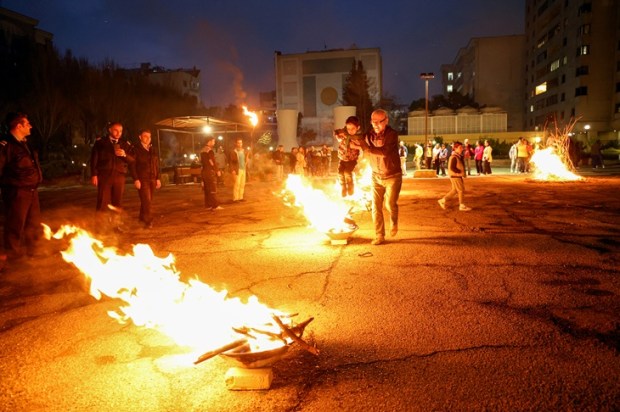
Customs of that time were closely tied to agriculture and hopes for the coming year. Various seeds were planted before spring, and their growth was used to predict the harvest. Lighting fires on the eve of the New Year, sprinkling water on one another on the morning of Nowruz, and giving coins as gifts were common practices, many of which still exist in Iranian culture today.
Despite major historical changes, including the Arab Muslim conquest of Iran, Nowruz did not disappear. It remained the most important national celebration and a means of preserving Iranian identity. Its deep connection to history, mythology, and collective memory has allowed it to endure through generations.
For Iranians, Nowruz is a reminder of the continuity of life, hope for the future, and appreciation of beauty and joy, as if each spring offers both the world and humanity a chance to begin again.
This year, after 47 years, and following the hacking of state media, a Nowruz message from Princess Noor Pahlavi was broadcast, bringing hope to many Iranians who have stood against the Islamic Republic. Nowruz 2585 in Iran is seen as a victory of light over darkness. Many believe they will reclaim their country, rebuild it, and restore kindness and reconciliation to Iran and to the world. Nowruz Piruz (Happy Nowruz).
By Leila Naseri: Author | Composer | Social Cultural Activist