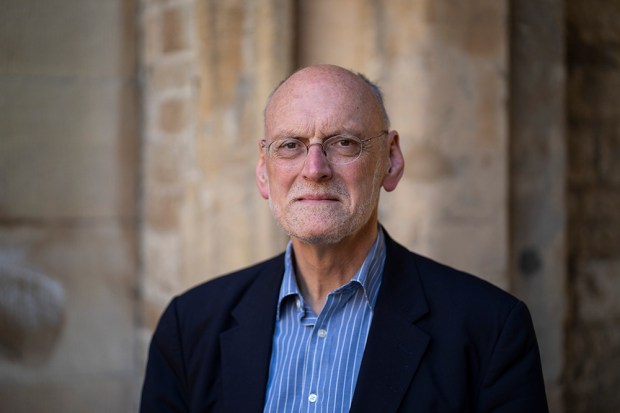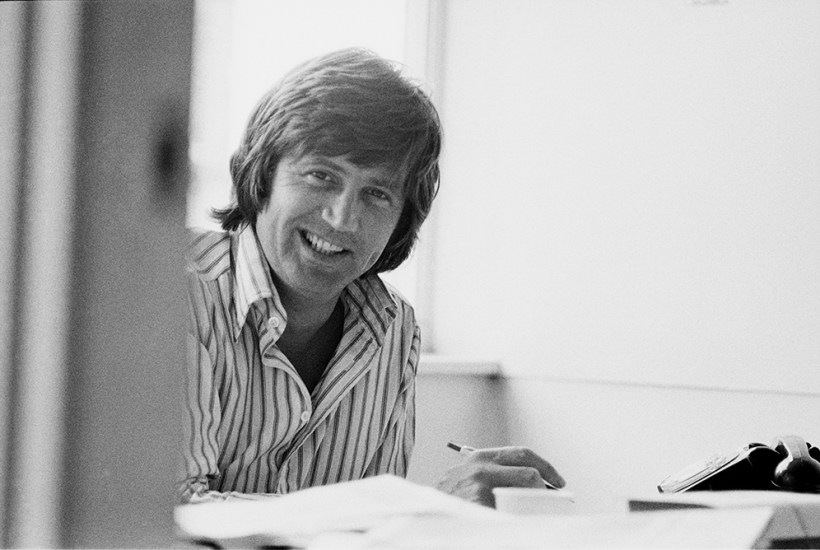
The leaves had yet to fall as Melvyn Bragg left his native Cumbria and arrived in Oxford by train in the autumn of 1958 to read Modern History at Wadham College. Weighed down with suitcases, the grammar-school boy admired the town’s medieval core; but his first impression was of ‘effortless wealth and privilege everywhere’. Oxford was still largely dominated by public schoolboys, but it also featured those who had served in uniform, which added a note of gravitas to the atmosphere. On both counts, it was foreign terrain to Bragg, who pined for the familiar sights and sounds of his close-knit hometown of Wigton: ‘I could close my eyes and walk through it – as I often did to get to sleep.’
Poignant and lyrical, Another World is a sequel to Back in the Day, an intimate account of Bragg’s early life in postwar Cumbria. Reading like a coming-of-age novel, it explores the interconnecting themes of love and loss, class identity and the lasting impact of upbringing. Oxford in the late 1950s provides the theatrical backdrop, but Wigton is never far from the author’s mind.
Despite feeling out of place, Bragg strove hard to fit in. He smoked Disque Bleu cigarettes, wore the uniform of grey flannels and blazer, and quickly swapped his Elvis Presley hairstyle for ‘a neat and tidy crop not unlike that of everyone else’. Although he threw himself into university life, he was intimidated by the preternatural confidence of the white-tie-wearing Union debaters. In the evenings, as the light flickered off the highly polished silver in his college’s candle-lit dining hall, the sense of dislocation was sharpened by Bragg’s recollection that his only other experience of communal dining with strangers was ‘at Butlin’s in Ayr in the early 1950s’.
In the male-dominated pubs where the beer flowed, Bragg and his contemporaries frequently discussed nuclear disarmament, and many took part in the Aldermaston marches to protest against the bomb. Despite this sense of precarity, Britain at that time still felt like a country with a clear sense of its own destiny. Bragg’s peers were ‘expected to be proud of the Empire, to police it, to anglicise its laws… and to plant English and the King James Bible as the key language of administration and faith’. In fact this was once the main purpose of an Oxford education, and Bragg’s generation was arguably the last to be imbued with this sense of mission.
Intricate social hierarchies permeated the university, and it was commonplace for public school boys to be accommodated together. Bragg, meanwhile, was ‘lumped in’ with another grammar-school boy called Gerald, who primly buttoned his pyjamas to the neck and brushed his hair into a meticulous parting before bedtime. At the other extreme were the titled and entitled members of the Bullingdon, who wore garish waistcoats and spent their evenings drunkenly trashing local restaurants. Bragg took a dim view of such antics, and also found it easy to dismiss the characters involved: ‘I thought it was the predictable pose of superiority for those who had no class.’
Bragg strove hard to fit in, smoking Disque Bleu cigarettes and wearing grey flannels and a blazer
Dons who provided a template for living and taught him how to think are remembered with great fondness. Bragg marvels at their patience and attributes this to their wartime service, as it ‘bred a willingness to support the younger generation beyond the call of duty’. But the eccentrics are treasured, too. The college’s Warden, Maurice Bowra, whose classical erudition was matched by his sharp wit, was once asked how he selected his undergraduates. Bragg recalls that Bowra, whose sexual proclivities were the source of fevered innuendo, did not hesitate:
‘Clever boys,’ he said, and beamed as if it included all present. He paused. ‘Pretty boys.’ He bared his choppers. And then the guillotine finale. The teeth clashed together. ‘No shits!’ It was spoken to be repeated.
The book’s most moving scenes, aside from those concerning Sarah, Bragg’s Cumbrian girlfriend, who leaves him because she believes that Oxford had changed him, involve Bragg’s interactions with his father, who came from a long line of labourers and miners. A chance encounter with Bragg’s tutor, Mr Stone, culminates in the don’s book-lined rooms, overlooking the college’s elegant front quad and Christopher Wren’s magnificent Sheldonian Theatre. As the father gazes round these exotic surroundings, Bragg detects in all his mannerisms an unmistakable sense of pride in his son’s achievement. But their relationship had also changed. ‘Until then,’ Bragg reflects, ‘I had been protected by him and looked up to him…That day it was his nervousness that cued me.’
Another World also extends beyond Oxford, as Bragg offers a broader paean to the transformative power of education. He is full of praise for his old schoolmaster, Mr James, and argues that teachers who ‘light the flame of encouragement’ are, as Shelley said about poets, ‘the unacknowledged legislators of the world’. But, above all, the book turns on what it means to feel rooted. Although Bragg manifestly enjoyed his time at Oxford, there were moments of doubt when he wondered whether he was merely pretending. Returning to his beloved Wigton, he realises just how much he has lost: ‘When I come back here I know where I am. I feel I know every bit of it.’ Ultimately, Bragg straddles both worlds, and it is this unresolved tension that gives the book much of its creative energy.
Got something to add? Join the discussion and comment below.
You might disagree with half of it, but you’ll enjoy reading all of it. Try your first month for free, then just $2 a week for the remainder of your first year.