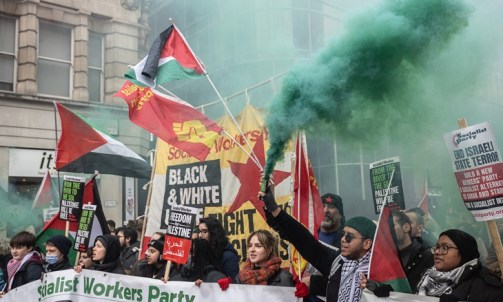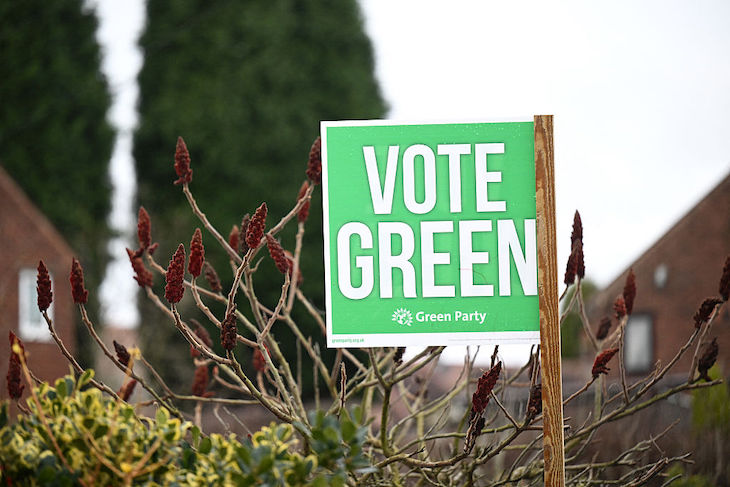
It was only a matter of time before an ultra-progressive, hard-left party with a fondness for voguish identity politics, enthusiasm for multiculturalism and morbid obsession with Israel came to preeminence in this country. This inevitability is the consequence of a demographic time-bomb just waiting to make its effects known.
It’s no surprise that the Greens offer hope to that portion of a generation
As a YouGov survey has revealed this week, the Green Party has now overtaken both Labour and the Conservatives to take second place in the polls, two points behind Reform UK. Their support now stands at 21 per cent, up four points in the week since their historic win in the Gorton and Denton by-election. The polls also show that the Greens are the most popular party among voters under 50, especially those aged between 18 and 24. It was also the most popular among women, backed by 23 per cent of female voters.
That last statistic is telling. It’s well attested that young, middle-class women are the section of society most inclined to hold hyper-liberal opinions, while generations Y and Z are overall more likely to support trans rights, display allyship with immigrants and refugees, and voice solidarity with the people of Palestine and Gaza.
Ten years ago, this was the demographic who were being instructed in ultra-progressive dogma at school, or who were entering academia, where their skewered view of the world and fantastical take on the human condition became further entrenched. It was at university where they learnt about the evils of Western ‘civilisation’ – those contemptuous inverted commas being mandatory – the unconscious racism built into the minds of white people, and the unique European crime of colonisation, with Israel now standing as the epitome of that villainy.
Those school children and students of ten years ago, with their highly moralistic, Manichean politics and otherworldly theories on gender and race, are now the voters of today. They are also our first post-literate generation, a demographic which doesn’t read newspapers, which doesn’t read books willingly, who instead get their politics on their smartphones from emotive TikTok videos devoid of nuance, depth and context. This is the demographic with a reduced attention span that doesn’t even listen to radio bulletins or watch the news from reputed broadcasting organisations.
A generation which has been taught that all knowledge is relative has got what it wanted: news with no pretence at impartiality, propaganda masquerading as reportage from partisan activists and bad faith actors. All of this depthless and dubious content, delivered with breathless hyperbole, reinforces the notion that the world can be clearly divided into good and bad people and forces.
It’s no surprise that the Greens offer hope to that portion of a generation who believe they are on the side of the angels against the forces of evil and hate. This is a party that relies on emoting, slogans and the repetitious focus on its enemies befitting any low-grade demagogic outfit from history, one which appeals to base instincts and the lowest common denominator. By inveighing against ‘apartheid’, ‘Zionism’ and ‘billionaires’ they draw on those inclinations forever found on the hard left: envy, resentment and the thirst for vengeance.
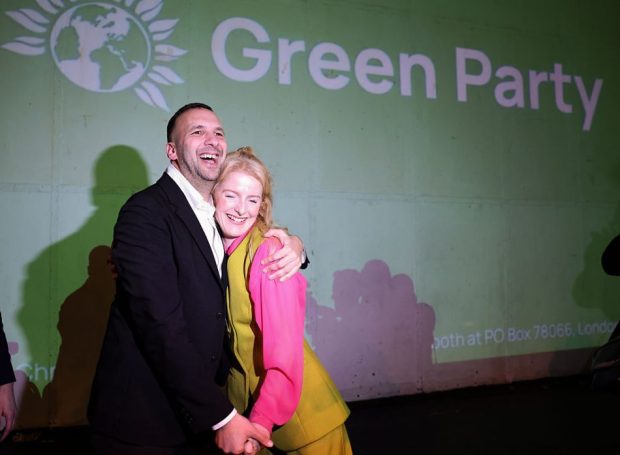
Only since the party has raised its profile under Zack Polanski has it been subject to greater scrutiny. As a consequence, many people, especially those who read newspapers, are now attuned to the nastiness that dwells within. Yet at the same, much of the post-literate generation still thinks, like Polanski and their new MP Hannah Spencer, that this is the outfit which represents niceness and ‘hope not hate’, as they endlessly reminded everyone before last week’s by-election.
Spencer’s victory speech exposed the vacuity of their ‘kind politics’, and indeed the entire babyish belief that the world would be perfect if only everyone would stop being so horrid. There she spoke, with bottom lip trembling, of the ‘hope and a chance to do things differently’, that ‘everybody should get a nice life’, exhorting repeatedly the imperative to be ‘nice’.
That word, along with ‘kind’ and ‘belief’, takes centre stage in the ultra-progressive lexicon because it encapsulates a politics devoid of substance or cerebral engagement. The Greens place their faith instead on ‘vibes’. They are conspicuously light on policy – they scarcely appear to have proper proposals on the environment these days, let alone a recognisably green agenda – and where they have specified what they will do should they get into power, their plans betray either economic illiteracy or a species of student-union, libertarian utopianism, whether it be open borders or legalised drugs and prostitution.
Many people in the mainstream left and right, those mature in age or mind, recoil in horror at policies that would entail economic ruination and social catastrophe. Perhaps their new-found acolytes don’t care. Or perhaps, more likely, they are too ignorant to understand, hoping naively that ‘being nice’ will instead carry the day.