Inflation is not an abstract statistic.
It is the weekly grocery bill that keeps creeping higher.
It is rent and mortgage repayments swallowing a greater share of household income.
It is electricity, healthcare, and insurance costs rising faster than wages.
And last month, it was another interest rate rise.
Labor told Australians an increase to the cash rate would not be necessary.
Instead of confronting the economic reality behind these pressures, the Albanese government prefers denial.
In the Senate, Labor Ministers continue to insist theirs is not a high-spending government.
They even tried to claim the Howard government spent more.
Unfortunately for them, the truth is contained in their own Budget papers.
According to the 2025-26 Mid-Year Economic and Fiscal Outlook, Commonwealth spending under Labor has reached 26.2 per cent of GDP – making the Albanese government the highest-spending federal government outside the pandemic in 40 years.
The historical comparison is clear.
At its peak in 1996-97, the Howard-Costello government spent 25.1 per cent of GDP while repairing the excesses of the Keating years.
By the 2006-07, spending had been reduced to 23.2 per cent.
Even the final Keating Budget – often cited by Labor – reached 25.6 per cent, still below today’s level.
Outside the extraordinary conditions of Covid, the last time Commonwealth spending approached current levels was 1986-87, when Hawke-Keating spending reached 26.9 per cent of GDP.
Labor is now projected to match – and potentially exceed – that level, with Treasury forecasts showing spending rising to 26.9 per cent in both 2025-26 and 2026-27.
This is not a temporary spike.
It is a structural choice – and it is having real consequences for Australian households.
The Australian Bureau of Statistics recently confirmed what families already know from experience: inflation is rising again.
Headline inflation increased to 3.8 per cent in the year to December 2025.
More importantly, trimmed mean inflation – the Reserve Bank’s preferred measure of underlying inflation – rose to 3.3 per cent. This is well above the RBA’s target band.
Price pressures are broad-based.
Food prices are up 3.5 per cent, housing costs 5.5 per cent, and health costs 3.6 per cent.
Now another inflationary shock is emerging – this time from global energy markets.
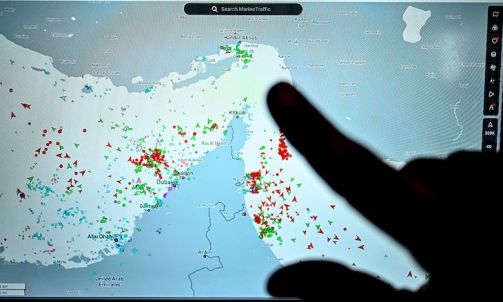
The escalating conflict in the Middle East has sent oil prices surging to US$117 per barrel, pushing petrol prices across Australia above $2.20 per litre.
Economists warn the inflationary impact could still be significant.
Westpac senior economist Pat Bustamante says higher fuel prices alone could add around one percentage point to headline inflation.
Auto fuel accounts for roughly 3.5 per cent of Australia’s CPI basket, and global oil prices have jumped roughly 35 per cent during the conflict.
‘That’s going to have an impact on domestic inflationary pressures,’ Mr Bustamante said.
If petrol prices remain elevated, he warned, headline inflation could rise above 5 per cent by the June quarter.
AMP chief economist Shane Oliver has reached a similar conclusion.
A 40-cent increase in petrol prices, he estimates, would add around 0.8 percentage points to inflation, pushing CPI towards 4.5 to 4.8 per cent once flow-on costs are included.
NAB senior economist Taylor Nugent has also warned that unless fuel prices retreat quickly, inflation could exceed 5 per cent in the second quarter of 2026, with markets already pricing in further tightening from the Reserve Bank.
In short, global energy shocks are now adding fuel to an inflation problem that was already proving difficult to contain.
Australia’s inflation problem is already worse than that of many comparable economies.
The United States sits at 2.1 per cent, Canada at 2.4 per cent, the United Kingdom at 3.4 per cent, Germany at 1.8 per cent, and Japan at 2.1 per cent.
Despite what the Labor’s claims, inflation is no longer primarily driven by pandemic disruptions or global supply chains.
It is home-grown.
While Labor insists there is no link between its spending and inflation, economists disagree.
AMP Deputy Chief Economist Diana Mousina has warned that government spending has been contributing directly to inflation in recent years – a predictable result when public spending is running at record highs.
Similar concerns have been raised by HSBC Chief Economist Paul Bloxham and IFM Investors Chief Economist Alex Joiner, who warned that ‘the fiscal guard rails have come off’.
The mechanism is simple.
When government spending grows far faster than the economy, demand outstrips supply.
In an economy already constrained by weak productivity, skills shortages and housing bottlenecks, that demand translates directly into higher prices.
For mortgage holders, the Reserve Bank’s decision to lift the cash rate by 25 basis points to 3.85 per cent is not theoretical.
According to Compare the Market, a 0.25 per cent increase adds about $94 a month to repayments on a $600,000 mortgage – more than $1,100 a year.
At Senate estimates in December, RBA Governor Michele Bullock explained the dynamic clearly: when savings fall – including government savings – while investment remains strong, upward pressure on interest rates is inevitable.
When fiscal policy remains loose, monetary policy must tighten.
That means higher interest rates for households and businesses.
This is an inconvenient truth for Labor – particularly when it comes alongside four-decade highs in government spending and the growing risk that global energy shocks could push inflation even higher in the months ahead.
And it is a painful reality for Australians who are now paying for it.
Dean Smith is a Liberal Senator for WA