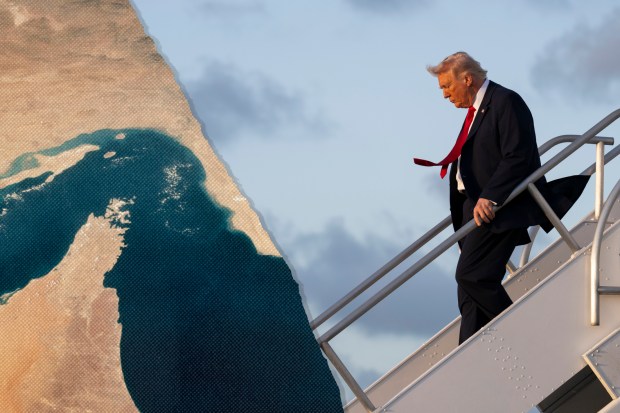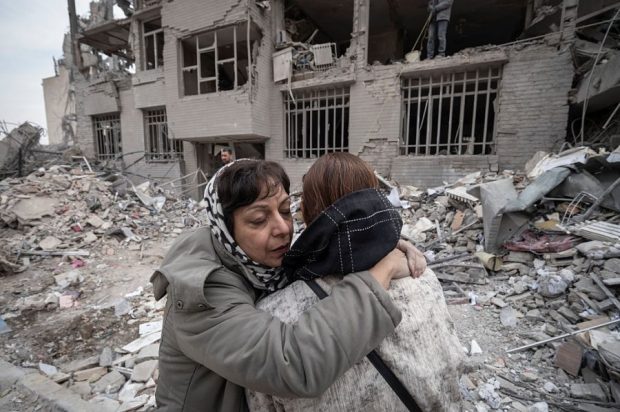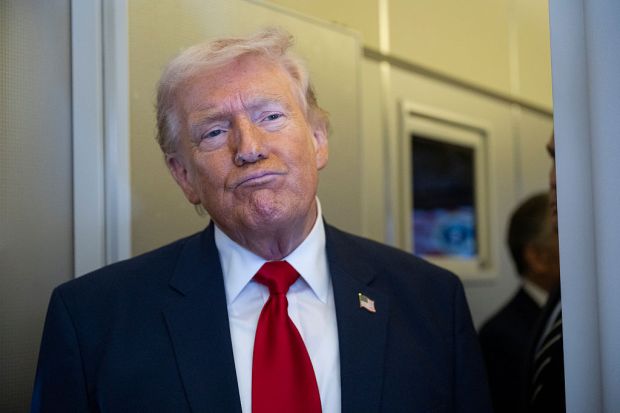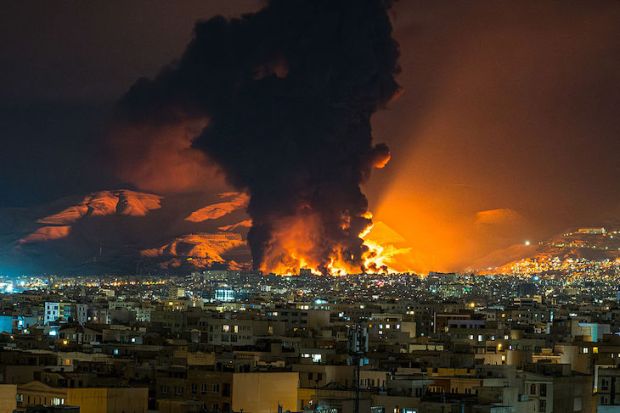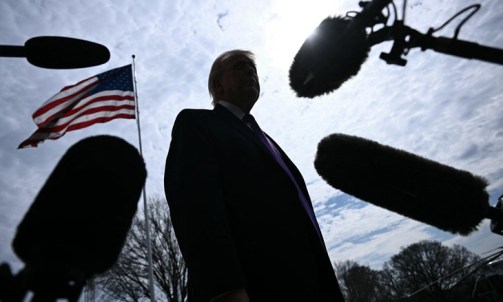
President Trump said on Saturday that the United States is seeking an international naval coalition to reopen the Strait of Hormuz. In a message posted on Truth Social, he said ‘many countries’ affected by Iran’s attempted blockade, including China, France, Japan, South Korea and Britain, should deploy warships alongside the U.S. Navy to secure the waterway. In the meantime, he warned that American forces would continue attacking Iranian maritime assets and coastal positions, after the U.S. had carried out one of its most significant direct attacks on Iranian military infrastructure since the war began with its large-scale precision strike on Kharg Island, Iran’s principal oil export hub in the northern Persian Gulf.
Britain is reportedly considering sending thousands of ‘Octopus’ interceptor drones to the region to strengthen defences against Iranian Shahed drones, in what may also be seen as an effort by Keir Starmer to counter criticism from President Trump over Britain’s response to the war. The systems are being manufactured in the UK for Ukraine to counter Russian drone attacks.
The International Energy Agency has warned that Iran’s closure of the Strait, one of the world’s most critical maritime chokepoints, represents the largest oil supply disruption ever recorded.
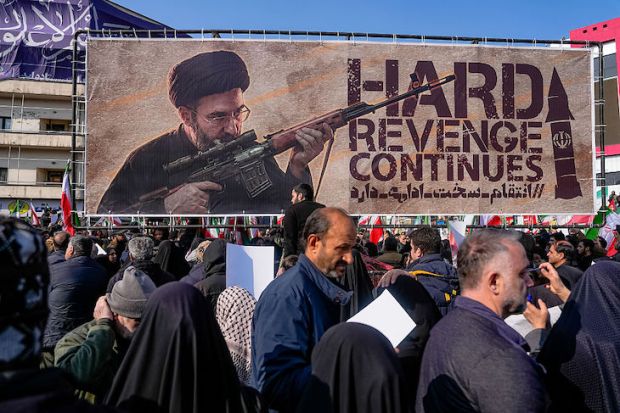
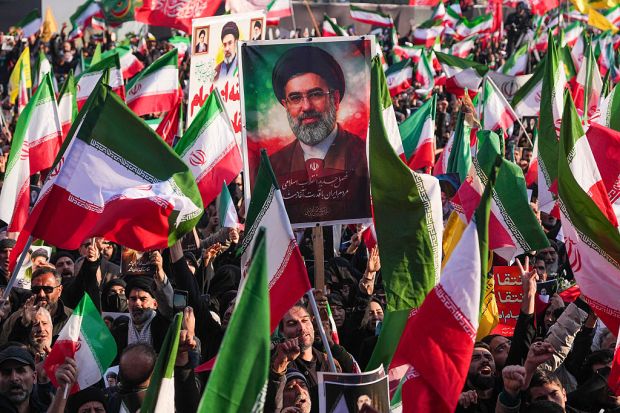
Tehran, however, signalled it had no intention of backing down. The Islamic Revolutionary Guard Corps declared the Strait of Hormuz ‘under the full control of the IRGC Navy’ and warned that ships belonging to ‘the aggressors and their allies’ would be attacked if they attempted to transit the passage.
The Iranian government has also issued new threats against U.S. forces in the region. Manouchehr Mottaki, an Iranian lawmaker, warned that if American troops attempted to seize Kharg Island, Iranian forces could carry out helicopter assaults on U.S. bases in the Middle East and capture American soldiers.
The Iranian-backed Houthis in Yemen warned they could impose a naval blockade against both Israel and the United States and potentially close the Bab al-Mandab Strait, if they formally enter the conflict.
On Saturday the U.S. Embassy compound in Baghdad’s heavily fortified Green Zone was struck in a missile and drone attack that hit a helipad and sent smoke rising above the complex, according to Iraqi security sources. The Iran-aligned militia Kataib Hezbollah later claimed responsibility and released footage that it said showed drone attacks on the U.S. Camp Victory logistics base at Baghdad International Airport.
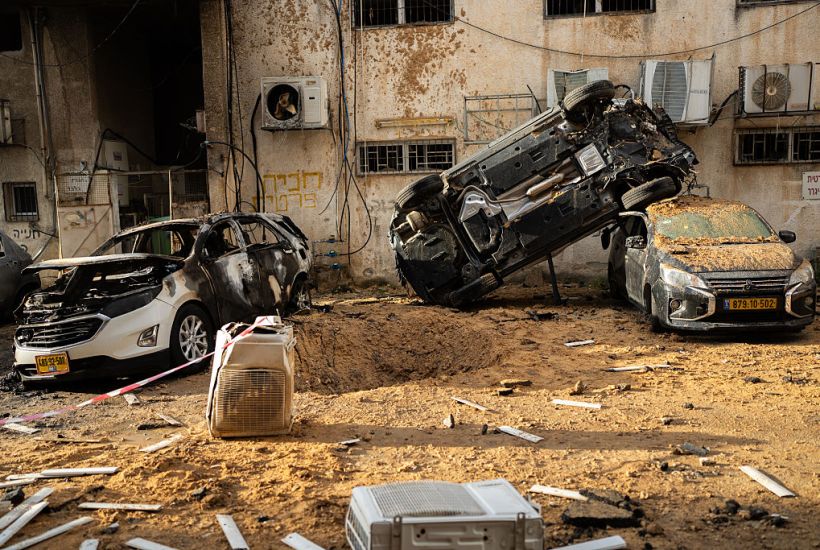
Across the Gulf, Iranian missile and drone attacks continued to target U.S. partners. The United Arab Emirates said its air defences intercepted nine Iranian ballistic missiles and 33 drones on Saturday alone. Since the war began, Emirati authorities say Iran has launched 294 ballistic missiles, 15 cruise missiles and 1,600 drones against the country, killing six people and injuring 141.
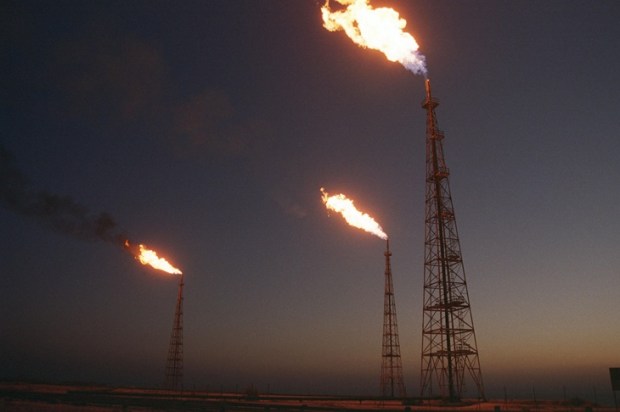
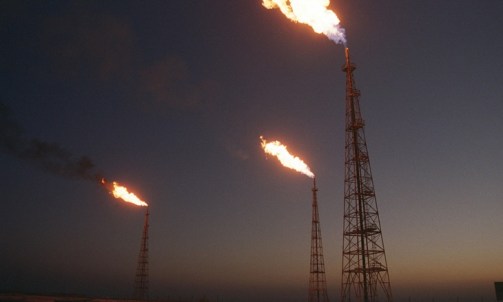
The fighting has also begun to affect the region’s energy infrastructure directly. The Emirate of Fujairah, one of the world’s largest ship-refuelling hubs and a major crude export terminal, suspended some oil-loading operations after a drone attack and fire on Saturday. Fujairah handles around one million barrels per day of the UAE’s Murban crude, roughly 1 per cent of global oil demand. Officials said the blaze was caused by debris from a drone interception, and no casualties were reported.
Elsewhere in the Gulf, Kuwait confirmed that Iranian drones struck radar installations at Kuwait International Airport on Saturday evening, although there were no injuries. Saudi Arabia said it had intercepted multiple Iranian projectiles the previous day, including six ballistic missiles and most of a wave of drones targeting the kingdom’s Eastern Province.
Israel’s campaign against Iranian and Hezbollah infrastructure continues. The Israeli military said its air force carried out dozens of strikes across Tehran on Friday evening, destroying the main research centre of the Iranian Space Agency. According to Israeli officials, the facility housed laboratories used to develop military satellites capable of surveillance and targeting across the Middle East. Israeli strikes also hit factories producing Iranian air-defence systems, significantly degrading Tehran’s ability to rebuild its aerial defence network.
In Lebanon, the Israel Defence Forces said it had struck additional Hezbollah command centres in Beirut, bringing the total number of such facilities targeted since the start of ‘Operation Roaring Lion’ to around 110. The military said the sites were used to coordinate attacks against Israel. Hezbollah responded with a sharp escalation of its own. The group claimed responsibility for 47 separate operations against Israeli forces on Saturday – the highest single-day total since it resumed attacks. The human cost in Lebanon continues to mount. According to the Lebanese Ministry of Health, 826 people have been killed and 2,009 wounded since the latest round of fighting began.
Israeli leaders are increasingly framing the confrontation as a decisive struggle against the Iranian regime itself. Defence Minister Israel Katz said Saturday that the war had entered ‘the decisive phase’ of a global and regional struggle led by the United States and Israel. Only the Iranian people, he added, could ultimately end the conflict by overthrowing the government in Tehran.
The war is also producing growing diplomatic activity. France is reportedly circulating a proposal aimed at ending the war in Lebanon that would include negotiations leading to Lebanese recognition of Israel, according to officials familiar with the plan. French diplomats are discussing the framework with Washington and Jerusalem, but publicly denied the existence of a French plan.
European and regional leaders are also scrambling to prevent further escalation. French Foreign Minister Jean-Noël Barrot held talks Saturday with counterparts from Britain, Germany, Egypt, Qatar, Saudi Arabia and Iran about the deteriorating security situation.