In 1999, psychologists David Dunning and Justin Kruger described a phenomenon that has become depressingly observable. Those least capable of performing a task are often the most convinced of their own ability. It was not intended as a guide to public administration. Yet it has become one.
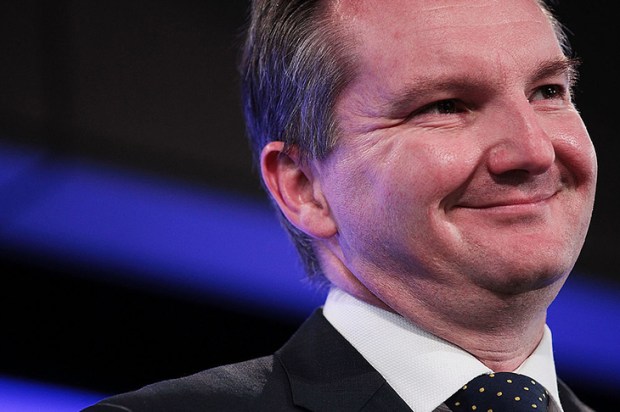
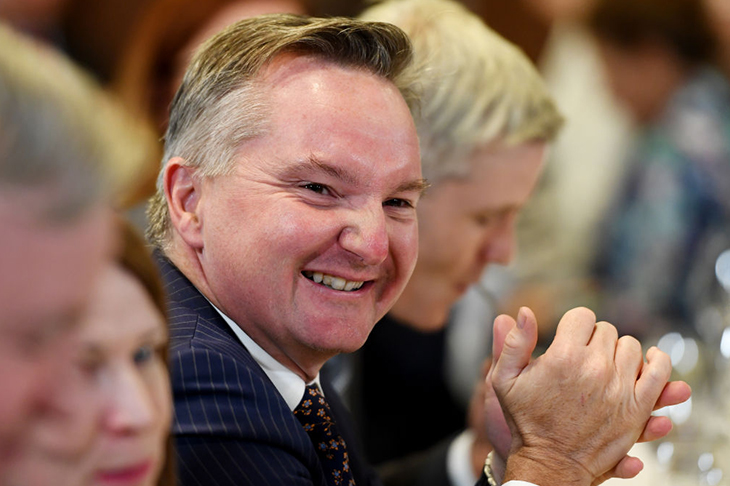
In contemporary Australian politics, Chris Bowen is one of its most complete expressions. Across immigration, treasury and now energy, Bowen has exhibited the same pattern. Confidence arrives first. Reality follows later. The gap between the two is borne by everyone else.
As Immigration Minister between 2010 and 2013, Bowen presided over a system that lost operational control. Nearly 400 boats arrived carrying more than 24,000 people. Detention capacity was overwhelmed. Policy shifted repeatedly without restoring credibility. His flagship Malaysian Solution collapsed in the High Court hours before implementation. It was not an unfortunate setback. It was a policy that had never been properly grounded in law.
He moved from that to Treasury, where the failure was fiscal rather than operational but no less instructive. Surpluses were promised and did not materialise. Deficits widened. Debt accumulated. The distance between projection and outcome became a defining feature of the period.
In opposition, Bowen perfected a style of politics that substituted assertion for argument. Before the 2019 election he informed voters that if they did not like Labor’s policies, they were free to vote against them. They did.
None of this appears to have prompted reconsideration. It rarely does.
Energy policy has now taken this pattern and extended it across the entire economy. A 2022 election promise was clear and repeated. Electricity bills would fall by $275. It was not a modelling footnote. It was a headline claim. Instead, power bills have risen sharply across the country. The promise has not been missed. It has been reversed.
When pressed, Bowen advised Australians to shop around. This is the standard manoeuvre. When policy fails, responsibility is reassigned to the consumer.
The underlying numbers are more revealing. Any apparent moderation in prices has been driven by taxpayer-funded rebates. Remove the subsidies and electricity costs continue to rise. The government is borrowing to offset the impact of its own policies. It is not reducing the burden. It is disguising it. Meanwhile, the real economy is responding in ways that cannot be obscured.
BHP has suspended its Nickel West operations in Western Australia, citing high energy costs and collapsing margins. Incitec Pivot has closed its fertiliser manufacturing operations in Brisbane, explicitly pointing to energy prices that made domestic production unviable. Qenos, Australia’s last major plastics manufacturer, has exited local production after years of struggling with input costs. Glass manufacturer Oceania Glass entered administration, unable to compete with imports produced using cheaper energy offshore.
These are not isolated failures. They are signals from the cost curve. Energy is not just another input. It is the input that determines whether an entire production chain sits on the left side of the global cost curve or the right. When your energy prices rise relative to competitors’, everything downstream becomes uncompetitive. Margins compress, then disappear. Production does not adapt. It relocates.
This is the basic economics that energy policy is supposed to respect. It is being ignored. Australia’s traditional advantage was simple. Abundant resources. Reliable baseload power. Competitive input costs. That combination placed Australian industry on the lower end of global cost curves across a range of sectors.
That advantage is now being dismantled. In its place is a system that is more expensive, less stable and increasingly dependent on intermittent generation backed by subsidies. The cost structure has shifted. Australia is moving up the cost curve while its competitors move down. The result is predictable. Industry leaves and this is then rebranded as progress.
The government’s response has been to replace economics with incantation. Green hydrogen. Green steel. Green aluminium. The mantras are repeated with increasing intensity, as though repetition might engender viability. Global commodity markets do not operate on moral endorsement. They operate on price. Steel buyers in Asia are not waiting for Australia to discover its spiritual purpose. They are buying from the lowest-cost producer that meets specification.
The idea that Australia can impose a higher cost energy system on itself and then persuade the world to pay a premium for the result is not a strategy. It is a fantasy.
There is no credible case for reducing emissions by exporting industry and importing goods produced under lower environmental standards. That does not reduce global emissions. It shifts them. The atmosphere does not distinguish between jurisdictions. What it does do is strip Australia of productive capacity while leaving global emissions unchanged.
Australia is becoming a country that exports raw materials, imports finished goods, and congratulates itself on the arrangement. It is the economic equivalent of selling the farm equipment and celebrating the aesthetic of the empty paddock.
What makes this more dangerous is that it is not treated as a problem. It is treated as success. Bowen has shown no inclination to revisit the assumptions underpinning this trajectory. Evidence that contradicts the model is not incorporated. It is dismissed. Rising prices are transitory. Industrial closures are isolated. Concerns are reframed as resistance.
This is not a character flaw unique to one minister. It is Dunning-Kruger operating at institutional scale in Canberra. When decision making is confined to a narrow set of assumptions and the people holding them are never required to live with the consequences, error is not corrected. It is reinforced. Confidence is mistaken for competence because there is no effective mechanism to distinguish between them.
Australia once had the capacity to feed itself, fuel itself, and manufacture at scale. It now faces rising energy costs, declining industrial capacity, and increasing dependence on external supply chains for critical inputs. This is presented as an inevitable transition. It is nothing of the sort. It is the result of bad choices.
Dunning and Kruger observed that the least capable are often the last to know it. Bowen has now held three key portfolios, left a visible trail of destruction in each one, and remains, by all appearances, entirely satisfied with his record. That is not a coincidence. It is a diagnosis.
Got something to add? Join the discussion and comment below.
Dimitri Burshtein is a Senior Director at Eminence Advisory. Peter Swan AO is professor of finance at the UNSW-Sydney Business School.
You might disagree with half of it, but you’ll enjoy reading all of it. Try your first month for free, then just $2 a week for the remainder of your first year.