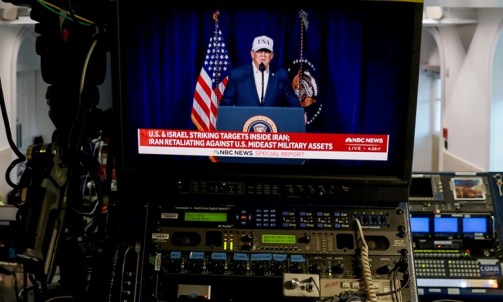
As of now, it is possible to draw a number of immediate conclusions from the war currently under way between the alliance of the United States and Israel, and the Islamic Republic of Iran.
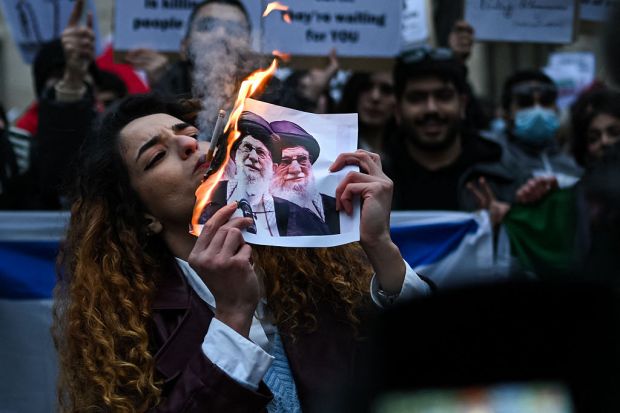
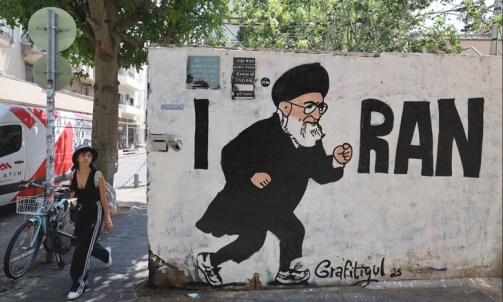
Firstly, the range and nature of US and Israeli targeting indicates that a determined attempt to destroy the 47 year old regime in Iran is now finally under way. The most senior leadership, up to and including Supreme Leader Ali Khamenei, appear to have been targeted – and possibly killed – by Israel. Action of this kind make sense only as part of a comprehensive attempt at regime destruction.
History provides no unambiguous examples of regimes removed by air power alone
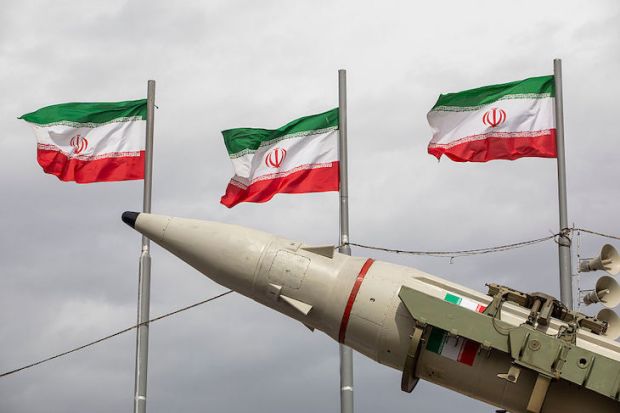
Secondly, Iran’s response has been immediate and very comprehensive. It has sought to strike at US targets across the region – in Qatar, Iraq, Bahrain, Kuwait, Saudi Arabia, the UAE and Jordan, as well as to target Israel with waves of ballistic missiles and drones. In contrast to previous episodes, where the regime waited and then sought to calibrate and even telegraph its responses, this time it appears to be attempting a comprehensive counter attack, sensing that it is now in a war for survival. Given the statements by both president Donald Trump and prime minister Benjamin Netanyahu and the pattern of the attacks, it’s clear that as of now, there is no diplomatic off-ramp available.
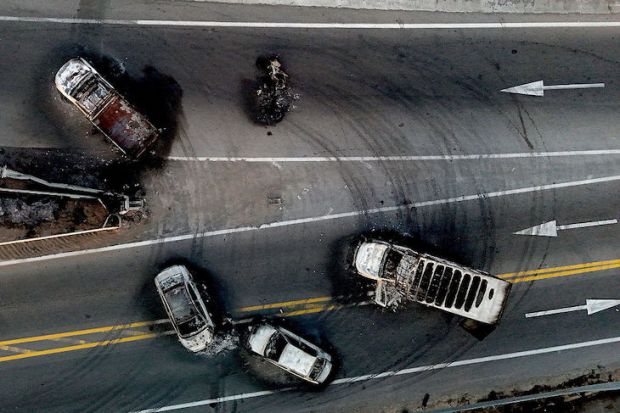
But while Iran’s targeting in its attempted counter attack has been broad, the results appear limited. One person died as a result of falling debris, following a missile attack on Abu Dhabi. For the most part, the Iranian attacks caused only limited damage. This appears to attest to the damage suffered by Iranian capacities at the hands of Israel and the US a year ago, and the failure of the regime to adequately rebuild.
More broadly, the direction and nature of events so far point to an already known fact, which as of itself does not predict the outcome of the war now under way: this already known fact is the overwhelming conventional superiority of the US and its allies in every area of military capacity: conventional air power, air defenses, missiles, drones, conventional intelligence activity (it is clear that the structure established by Israel on Iranian soil and in evidence in the encounters in 2024 and 2025 remains intact and may well be playing a vital role in locating targets in real time).
There can be no doubt regarding the extreme imbalance of the forces arrayed against one another in this regard. Why then does this not make the achievement of US and Israeli goals an inevitability?
Iran has never been under any illusions regarding the conventional balance of power. Indeed, Iran’s whole regional strategy, which for a while brought it unprecedented success and influence, involved an acknowledgement of asymmetry in this regard.
Tehran sought to leverage its capacities in the field of political and ideological mobilisation, and turn these into instruments of state. By these means it advanced for a quarter century across the Middle East. Through its sponsorship of Hamas and Islamic Jihad, it gained ownership of Palestinian militancy. Through its creation and deployment of Lebanese Hezbollah, it expelled Israel from Lebanon in 2000, then in 2008 gained undisputed freedom of action and mastery in that country. Through a similar process of establishment and deployment of proxy political military groups, Tehran gained a dominant position in Iraq in the years following the US toppling of the Saddam Hussein regime in 2003. Via its support for the Houthis, Iran took control of 30 per cent of Yemen in 2015, including part of the coastline and the key port of al-Hudeidah. Its alliance with the Assad regime in Syria enabled it to link its Lebanese and Iraqi assets along a contiguous line of control from the Iraq-Iran border to the Mediterranean.
The Tehran regime was busily seeking to advance its conventional missile (and WMD) capacities throughout this period. Yet its great gains were made by bypassing, not addressing, its deficiencies in the conventional field.
The trajectory of the two-and-a-half years of war in the Middle East that followed the October 7, 2023 massacres has been one in which Iran’s enemies have finally used their conventional superiority to reverse the long period of Iranian advance, and instead initiate a phase of retreat (realised in considerable part). The Iranian client Hamas organisation has been decimated in Gaza. Hezbollah has seen its historic leadership eliminated and its missile capacities drastically reduced. The Assad regime has disappeared as an unexpected by product. Iran itself has been mauled in October 2024 and then more comprehensively in June 2025 by Israeli, US and allied air power, combined with intelligence assets on the ground.
And yet. The final stage in this conflict – the destruction of the regime – shifts the focus away again from the areas in which the US and its allies have enjoyed unambiguous superiority. History provides no unambiguous examples of regimes removed by air power alone (Milosevic in Serbia is the closest. For various reasons, comparisons aren’t really applicable to the Iranian case). Leaders can be targeted. But the Islamic Republic was never a one man show. In the clear absence of any intention to send a conventional army to conquer Tehran, success in this endeavour brings us back to the murky arts of political/proxy warfare and use of clients. That is the area in which the Iranian regime, not its opponents, has the greater record of success. Some force on the ground will have to act in concert with the continued, judicious and targeted use of Israeli and US airpower against key regime targets for this goal to be realised.
The Islamic Republic was never a one man show
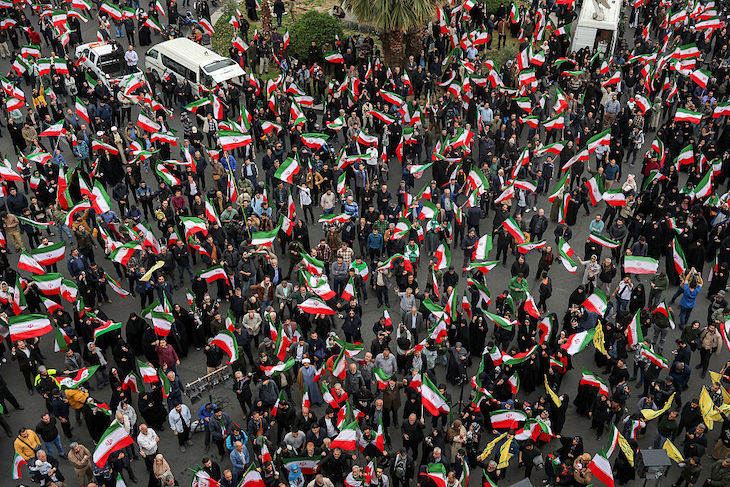
Is a strategy for the materialising and use of such a force in place? The mobilisation of large publics, as opposed to individual assets or even proxy militias has never been an exact science. Has this been thought through, and the ground prepared? Or are we witnessing something in the nature of a gamble, a roll of the dice which, if the risen Iranian people does not materialise, may end with a battered, perhaps temporarily headless Iranian regime still maintaining its grip on power?
The Iranian regime will be hoping for the latter. It will hope that, as in previous large scale western interventions in the region, in Iraq, in Libya, overwhelming technical superiority could not in the end substitute for a coherent plan and a clear map of the nature and capacities of the various players on the ground, both friendly and hostile. Tehran’s intention, clearly, will be to cling on to power and inflict sufficient damage on the US, Israel and their allies such that an eventual ceasefire which it will (with some justification, given the stated US and Israeli goals) present as a victory. For this to be prevented, western air power needs to partner with the emergence of something it can ally with on the ground. The existence and emergence, or non existence and non emergence of this factor is likely to decide the outcome of the war.