Jalisco, Mexico
No one seems to know exactly how El Mencho was killed. We are told the feared leader of the Jalisco New Generation Cartel was captured by the Mexican army during a firefight in late February, and subsequently died of his wounds. Beyond that, there is very little information. Why are the Mexican and US governments being so secretive about his death?
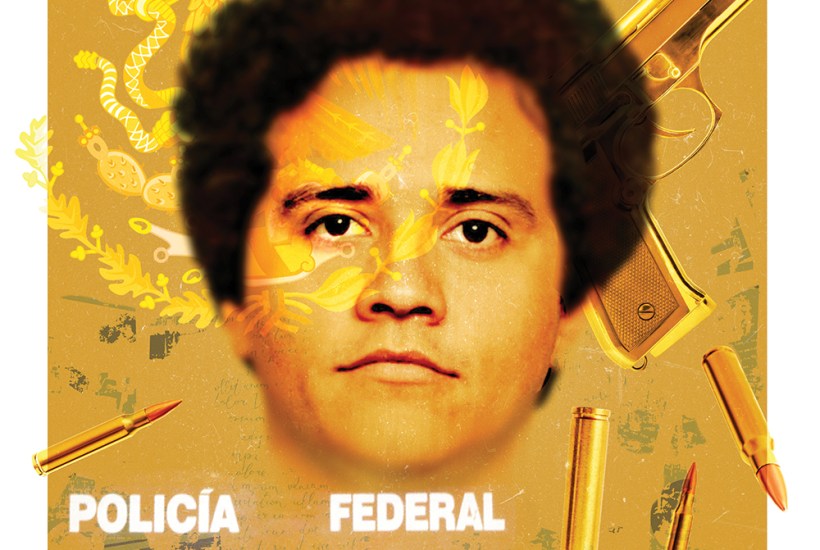
El Mencho – real name Nemesio Oseguera Cervantes – was 59 when he died. He was Mexico’s most-wanted man; US authorities had offered a $15 million reward for information leading to his arrest. I decided I had to go to Jalisco, where El Mencho made his last stand, to look for answers. Most of Mexico’s airspace had been closed after his death, such was the level of unrest. Cars and buses were torched, gunmen set up roadblocks on Mexico’s highways and more than 70 people were killed in widespread retaliatory fighting. Three days after his death, I disembarked at Guadalajara International Airport on one of the first flights into the region.
Many powerful people in Mexico would do anything to stop El Mencho stepping inside an American courtroom
“We heard and saw the helicopters the night before. If we saw them, so did he. But he stayed,” said the owner of a hotel in the tourist town of Tapalpa, famous for its colonial villas. He believed that El Mencho had actually died four years ago from a chronic kidney disease, which had made him reliant on dialysis. The cartel, he believed, struck a deal with the Mexican government to hand over his body to appease the Americans. It’s a fantastic story that stretches credulity, but stranger things have happened in cartel world. I jumped in my rented van to try to find the truth.
El Mencho’s compound is little more than a mile from Tapalpa Country Club. The forest between the main road and the cabins was still smoldering following a firefight and, as I parked, I was unsure if I would be stopped. There were a few local journalists poking around but no cartel gunmen as far as I could see. I walked past bedsheets, towels and food strewn across a parking lot where it looked like El Mencho’s security had been camping.
The spot provided an excellent vantage point of the main highway. On the ground were bullet casings and grenade fragments. In a small barbecue, I found two passport-sized photos of pretty young women that had somehow escaped the flames. Maybe they were the girlfriends of cartel men who wanted to make sure they couldn’t be identified. Or perhaps they were poor young women who had been kidnapped and brought here as sex slaves. As I went from cabin to cabin, I found spent bullet casings, statues of Jesus, a mounted head of a zebra as well as Viagra and lubricant. There were children’s toys in one bunk bed.
The network of cabins, I suspect, were safe houses for El Mencho and his men. When things heated up, they could escape here and lie low. The kids’ toys suggested that he would let his men bring their families to visit. One cabin stood out to me more than the others. It was littered with large .50 caliber shell casings from the entrance staircase all the way into the furthest back bedroom. Yet there no damage to the cabin; I couldn’t find any impact sites for the bullets.
A white Jeep, which had its keys on the dashboard, was parked next door in an open garage. It was surrounded by large shell casings – but again, the vehicle was completely unscathed. The cabin where it seemed some of the fiercest fighting had taken place bore no signs of damage. And its dusty curtains and bedsheets smelled as if it had been vacant for months. The scene didn’t add up.
I got the sense that someone had scattered .50 shell casings everywhere so the press wouldn’t ask too many questions. I photographed the casings and later discovered they were made exclusively for military use, predominantly in Turkey, the US, Canada and South Korea. As I got closer to the Tapalpa Country Club, I noticed two armed cartel spotters on motorbikes. They were wearing balaclavas and watching me.
El Mencho supposedly died in a helicopter as he was being airlifted out of the forest between the country club and his compound. Some men did die at this site. I spoke to the girlfriend of a National Guard soldier who was on this mission. He texted her: “Shit’s hitting the fan. I love you.” Then he was shot dead. Authorities say 24 soldiers and 12 of El Mencho’s men were killed in the fighting. But where was the blood? Where were the bullet impact sites? The complex felt like it had been abandoned some time ago. There was spoiled food in the cabins and everything was dusty.
I left the scene and worked my cartel sources. Eventually, someone cracked. Over encrypted messaging, my source outlined what he said had really happened. He told me that El Mencho had agreed to surrender to Mexican authorities to win a softer sentence for his 36-year-old son, Rubén Oseguera González, who is currently serving life in prison in the US on drug trafficking and weapons charges.
Instead, El Mencho and his men were ambushed by the Mexican Guard. The security forces didn’t want him to reveal to the Americans how far the cartel’s influence had spread through the government and military. Many of the Mexican Guard’s leaders are on its payroll. So are the politicians. El Mencho’s men were lightly armed and quickly overpowered, my source claimed. The drug lord was handed an M4 assault rifle and fell back through the woods, but he was shot and captured. It is interesting to note that while authorities say he died in transit to Mexico City, his death certificate states he died in Tapalpa, Jalisco.
Of course, my source might be wrong – or lying. But the Tapalpa compound certainly raises questions. America would undoubtedly want El Mencho alive and many powerful people in Mexico – including the CJNG – would do anything to stop him stepping inside an American courtroom. He knew too much. Since El Mencho’s death, the transition of power within CJNG has also been unusual. Instead of fighting with each other for control, the cartel declared war against the Mexican government. Typically when a kingpin dies there is chaos as the cartel fractures and those in the chain of command bid for power.
When El Mayo, one of the leaders of the Sinaloa cartel, was betrayed and taken to the US two years ago, there was a bloody power struggle. But this time El 03, El Mencho’s stepson, is thought to have taken over CJNG almost effortlessly. There has been no official announcement but all the cartel members I have spoken to say he is the new leader. CJNG is still a multinational enterprise fueled by billions of dollars in drug profits. Cartels rarely collapse when a leader dies. But the question of exactly how El Mencho died is still unanswered.