‘As surely as Water will wet us, as surely as Fire will burn, the Gods of the Copybook Headings with terror and slaughter return.’
– Rudyard Kipling, The Gods of the Copybook Headings (1919)
Political slogans often achieve their greatest influence when they become too familiar to question.
In recent years, one phrase has been repeated so frequently that it has acquired the status of a civic maxim: ‘Diversity is our strength.’
The assertion appears in speeches, corporate mission statements, and university declarations. Like many slogans, it sounds reassuring and generous. Yet the phrase is rarely examined closely.
The American political tradition contains a different formulation of national life – one older, more precise, and far less fashionable. The nation’s historic motto, E pluribus unum – out of many, one – recognises plurality but insists that unity must ultimately emerge from it. The motto does not deny diversity; it places it within a larger civic project.
That distinction matters. The difference between celebrating diversity and sustaining unity is the difference between describing a society’s composition and defining its political architecture.
A useful metaphor for this relationship is a river. Rivers are formed from many tributaries – streams, springs, and mountain runoff that feed a larger current. Those tributaries enrich the river and give it vitality. Yet the river remains a river only because its banks guide and contain the flow. Remove the banks and the water spreads outward, losing both direction and force until it becomes a marsh.
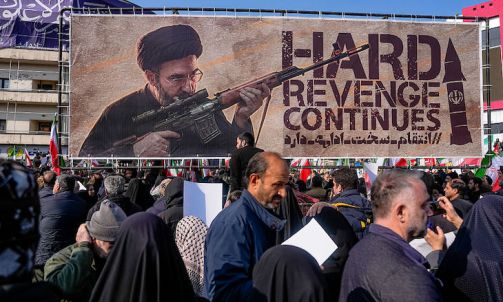
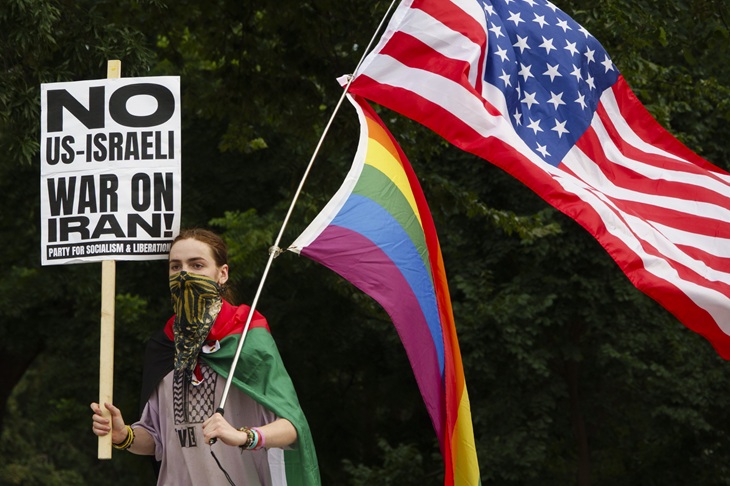
The tension between civic identity and transnational affiliation surfaced recently during the debate surrounding the American strikes on Iranian military targets.
Several members of Congress condemned the operation in unusually stark terms, framing the action not primarily through the lens of national security but through the language of religious or cultural grievance. Critics of those remarks argued that such framing risks transforming geopolitical conflict into a question of communal identity rather than national interest.
The episode illustrates a broader dilemma that diverse societies inevitably confront: whether foreign conflicts are interpreted through the shared perspective of citizenship or through the competing loyalties of global cultural and religious communities.
These debates point toward a deeper principle that has accompanied republics throughout history. Cultural pluralism can exist within a society, but the institutions that govern that society must remain unified. The moment a political community begins to fragment into separate legal or political spheres, the foundation of common citizenship begins to weaken. The question is not whether cultures differ – they always have – but whether the civic framework that binds those cultures together remains strong enough to sustain the republic itself.
Civilisations function in much the same way. Cultural diversity may enrich a society, but it requires a unifying framework – laws, institutions, and shared civic commitments – that channel those differences into a common enterprise.
The United States historically understood this principle. The country absorbed successive waves of immigrants from vastly different backgrounds: Irish, Germans, Italians, Jews, Poles, and many others. Their languages, customs, and religions differed widely, yet over time they became participants in a shared political culture built around constitutional government and national identity. Assimilation in this sense did not erase heritage, it integrated it. The tributaries entered the river and strengthened its current.
Modern discussions of diversity sometimes invert this relationship. Instead of asking how varied communities can be incorporated into a shared civic culture, contemporary rhetoric occasionally treats diversity itself as the organising principle of the society. The assumption seems to be that unity will somehow emerge automatically from multiplicity. History suggests otherwise: Unity is rarely accidental, it must be cultivated and maintained.
A constitutional republic depends on a common legal and institutional order.
Citizens may differ in religion, ancestry, or political belief, but they must ultimately operate under the same constitutional framework. The principle is embedded in the Constitution’s Supremacy Clause, which establishes that the Constitution and federal law constitute the supreme law of the land. Whatever differences exist among citizens, they share a common legal authority.
Questions about civic cohesion also arise in the realm of law. Several states have recently addressed concerns about whether alternative legal frameworks rooted in foreign or religious authority might conflict with the constitutional system of American law. In Texas, state leaders have emphasised that disputes within the state must ultimately be governed by the Constitution and the laws of Texas and the United States. The issue is not private belief or religious practice – freedom of worship remains a foundational American principle – but the preservation of a single legal order that applies equally to all citizens. A republic cannot function indefinitely if competing systems of legal authority claim jurisdiction within the same territory.
This principle has practical implications. Religious freedom, cultural expression, and voluntary association are protected rights in the United States. Yet those freedoms exist within the broader framework of constitutional law. A republic cannot sustain multiple competing systems of legal authority within the same territory.
Political philosophers recognised this long before the American founding.
Thinkers such as John Locke and Emer de Vattel argued that political communities, like individuals, possess a fundamental right of self-preservation. The Declaration of Independence itself reflects this tradition, affirming that governments exist to secure the safety and happiness of the people who compose them.
A political society is not merely a population occupying territory; it is an inheritance of institutions, laws, and shared assumptions about public life. The preservation of that inheritance has always been a legitimate concern of sovereign societies.
This is not a uniquely American dilemma. Throughout history civilisations have faced the challenge of maintaining cohesion while remaining open to new influences. Cultural exchange can invigorate a society, introducing new ideas and talents. Yet without a strong civic framework to integrate those influences, diversity can easily produce fragmentation rather than vitality.
The debate surrounding the American strikes on Iranian military targets exposed another tension within contemporary political discourse.
Representatives Ilhan Omar and Rashida Tlaib sharply condemned the operation, portraying the strike not as a response to Iranian aggression but as an unjust escalation and warning that it would inflame tensions across the Muslim world. Such rhetoric effectively reframed an American military action against a hostile regime as a grievance against Islam itself.
Critics argued that this framing blurred the distinction between a constitutional republic defending its interests and a civilisation narrative in which American policy is interpreted through the lens of religious solidarity. The episode illustrates a deeper challenge faced by diverse societies: whether international conflicts will be interpreted primarily through the perspective of shared national citizenship or through the competing identities and allegiances of a globalised political culture.
Episodes such as this highlight the tension between identity politics and the older American principle expressed in the nation’s historic motto, E pluribus unum – out of many, one. The phrase recognises that the republic is composed of people from many backgrounds, cultures, and traditions. Yet it insists that those differences must ultimately be reconciled within a common civic framework. The success of the American experiment has always depended on that hierarchy: diversity exists within unity, not in place of it.
When public discourse begins to interpret national events primarily through the lens of competing cultural or religious identities, the integrative principle that once bound those differences together begins to weaken. A republic can contain many tributaries, but the river itself must still have a single course.
The distinction is not merely rhetorical. Civilisations throughout history have confronted the same underlying problem: how to maintain cohesion while accommodating diversity within their borders. When the integrative framework of a society weakens, differences that once coexisted within a shared political structure can harden into rival identities competing for authority and legitimacy.
The founders of the American republic understood that the stability of a free society depends upon preserving a common civic language – a shared set of institutions, laws, and loyalties that bind citizens together despite their many differences. Without that unifying framework, the political community begins to fragment, and the very idea of a single republic becomes increasingly difficult to sustain.
The biblical story of the Tower of Babel offers a powerful metaphor for this dynamic. In the narrative, humanity’s shared language dissolves into a multiplicity of tongues, and the collective project collapses. The story does not condemn human variety; it warns about the consequences of losing a common framework of understanding.
Modern societies confront a similar tension. The benefits of pluralism depend on the existence of a civic culture capable of integrating diverse communities into a shared political order. When that integrative framework weakens, divisions once contained within the republic begin to harden into competing identities.
The American founders were acutely aware of this risk. James Madison warned in Federalist No. 10 that factions – groups driven by particular interests or loyalties – could threaten the stability of republican government if they overwhelmed the broader national framework. The Constitution was designed to manage these divisions while preserving the integrity of the political community.
The American motto captures the balance elegantly: out of many, one. Plurality is acknowledged as a fact of national life, but unity remains the objective. Diversity describes the composition of the republic; unity sustains it.
Kipling’s warning about the ‘Gods of the Copybook Headings’ reminds us that societies often abandon fundamental truths in favour of fashionable doctrines. Eventually, reality reasserts those truths.
The American experiment has always depended on remembering one of them: that a free society requires a common civic foundation strong enough to unite people who differ in countless other ways.
A civilisation, like a river, draws strength from its tributaries. Yet only the river’s course gives the water direction and force. Diversity may enrich a nation; only unity determines whether it endures.
Aaron J. Shuster is a writer and filmmaker. His essays on history, politics, and culture have appeared in Middle East Forum, FrontPage Magazine and The Australian Spectator.