After a record tax take and surplus in January, normal service has resumed. Britain experienced its second-largest February borrowing splurge since records began, according to figures just released by the Office for National Statistics (ONS).
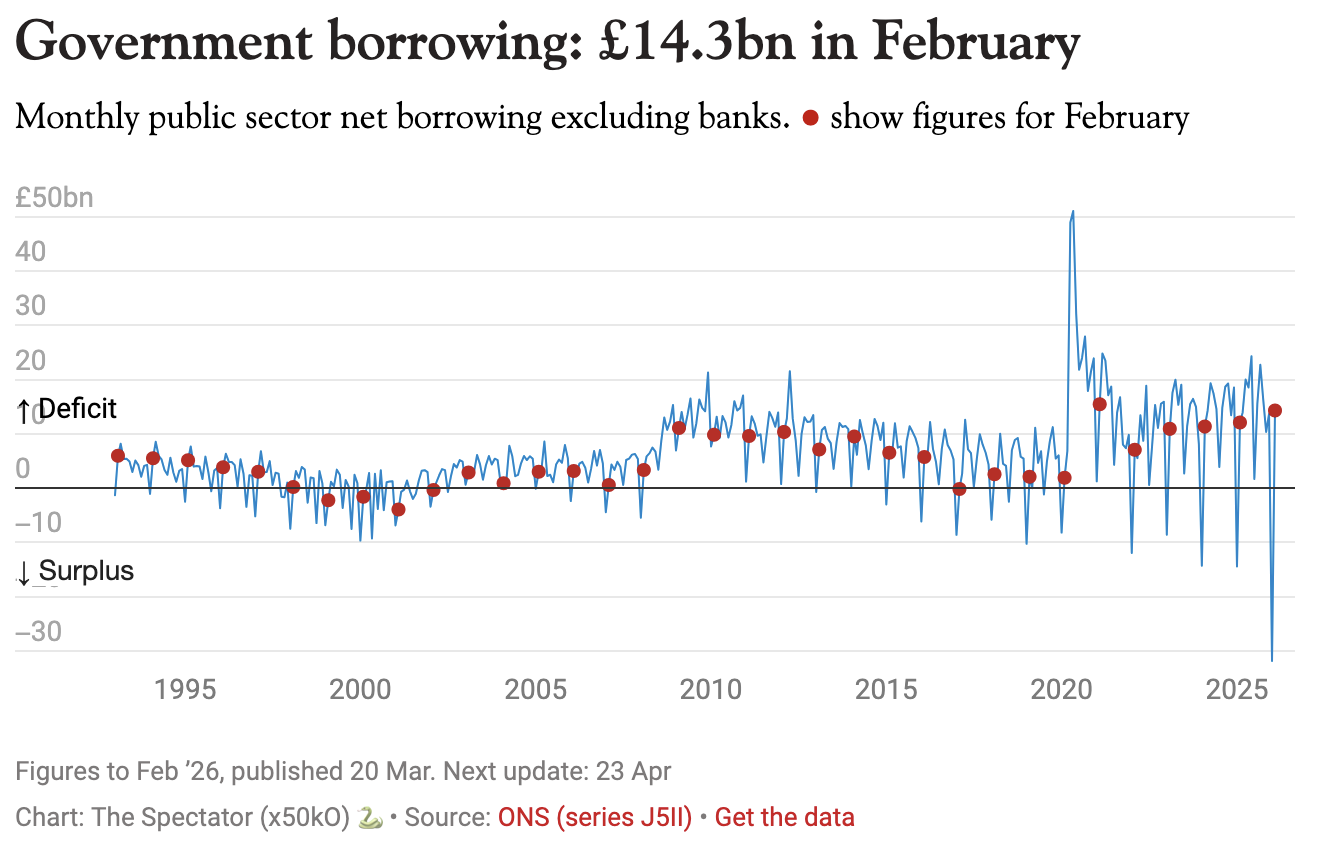
Last month we borrowed some £14.3 billion, which was £2.2 billion more than a year before and the second highest figure for a February since records began in 1993. Tom Davies, senior statistician at the ONS, said: ‘While [tax] receipts were up last year, that was outweighed by a rise in spending.’
A large part of that jump in spending was our debt interest payments which, at £13 billion, was the highest ever recorded for February, as this rather striking graph shows:
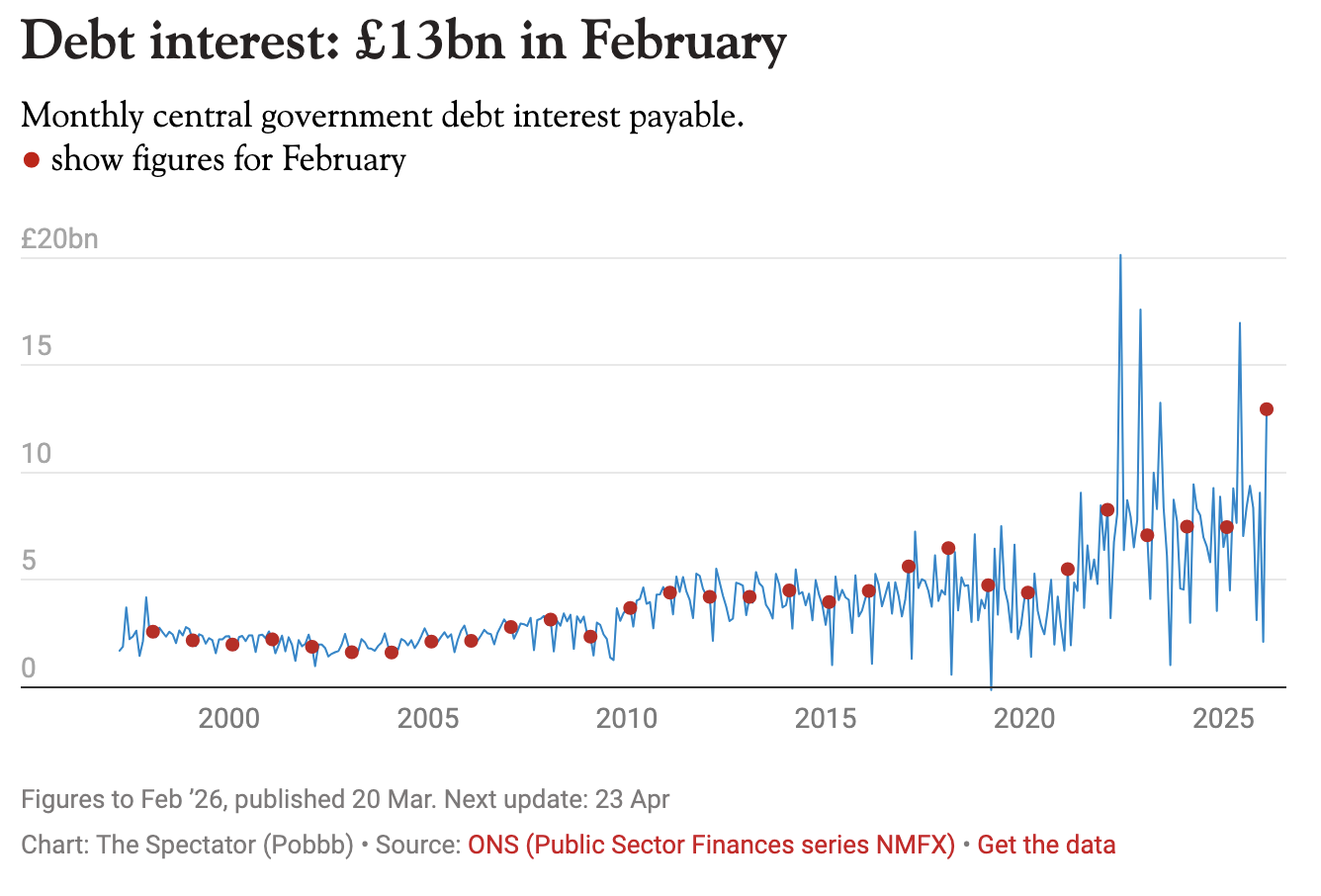
Some £4.8 billion of that was so-called ‘capital uplift’ on inflation-linked gilts, known as ‘linkers’. Because the Retail Prices Index went up towards the end of last year, so did what we had to pay. However, there is some bizarre accounting at play here too. The ONS explains:
‘Last month, interest coupon payments due on 30 January 2026 were settled on 2 February 2026 because of the intervening weekend. Consequently, underlying central government debt interest was reduced by £2.0 billion in January and increased by £2.0 billion in February.’
Regardless of which month the payments occur, though, that’s still a staggering amount of money we’re having to pay just to service our debt. It’s this inflation-linked portion that explains why our debt interest is now famously around double the defence budget.
If you’re looking for more positive news, though – especially if your name is Rachel Reeves – you can find it by looking at the financial year as a whole. Across the first 11 months of the financial year, borrowing (just shy of £126 billion) was down £11.9 billion on the year before. That’s thanks to the surge in tax receipts in January. The important bit for the Chancellor is that the current budget deficit for the financial year so far is running at £62.1 billion – down over 21 per cent from a year ago.
However, viewing a tax-bonanza-fuelled improvement to the public finances as good news is a bit like saying the temporary relief provided by alcohol is a cure for your crippling anxiety. A large part of the extra tax receipts this year was due to fears about capital gains, as well as the obvious fiscal drag. That’s a Chancellor’s trick with diminishing returns. We can keep draining our economy with the highest tax burden since the war for only so long before the medicinal effects wear off, leaving nothing but a nervous husk behind.