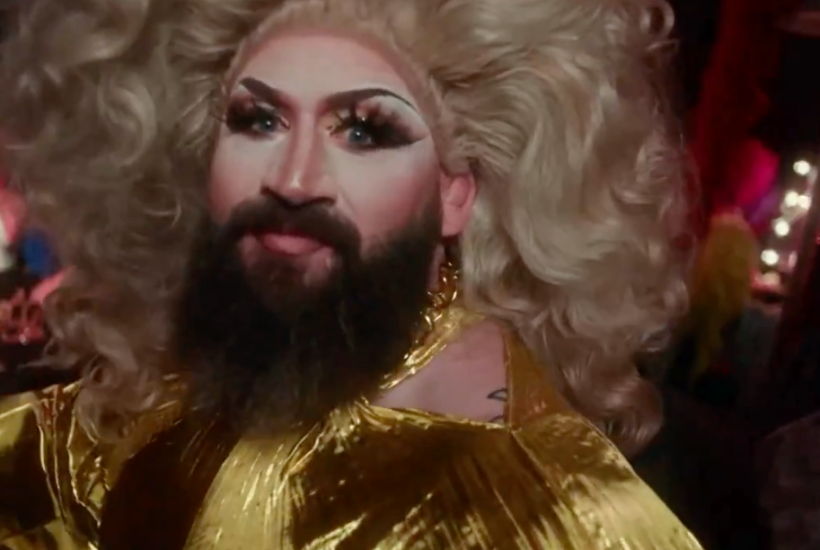
The BBC has reached peak drag queen. These days, turn on any celebrity quiz, cookery show or news item by the state broadcaster and you are almost certain to be confronted by a bloke in heavy make-up and a dress.
Only the other day, two drag queens appeared on the BBC advert for the latest Comic Relief, after ex-rugby player Joe Marler said we could all do ‘with a bit of a laugh’.
Despite waning interest in Red Nose Day, it’s back for 2026. And despite waning interest in drag queens, that’s who the BBC are using to promote it this year pic.twitter.com/1rOpTuGoqW
— ripx4nutmeg (@ripx4nutmeg) February 9, 2026
Celebrity Mastermind and The Finish Line have both had drag queen ‘Tia Kofi’ as a contestant; recent BBC Weakest Link celeb specials featured drag artist ‘Blu Hydrangea’ and The One Show kept up its commitment to a monthly drag act with ‘Paige Three’ on in December and ‘La Voix’ on last month. Traitors Uncloaked – the show where contestants who’ve been kicked off The Traitors give their insight – also had a drag artist on.
And, of course, ‘because of the unique way the BBC is funded’, the BBC News site also features every crumb of drag news from ‘Wiltshire locals dress in drag for calendar’ to ‘Drag queens impacted by cost of living crisis.’ The site ran around 20 separate online stories about the death of drag queen, ‘The Vivienne’.
Where does this almost religious adherence to all things drag come from?
Where does this almost religious adherence to all things drag come from? Some of it is partly because the Waitrose Lib Dems at the Beeb, who hold the reins when it comes to commissioning, think drag queens are cool, risqué or naughty – that somewhere in the Shires, a Reform voter will go red in the face at the sight of a man in a dress. But of course, anyone knows that once drag queens are regularly on The One Show they are about as edgy as a trip to Homebase.
As a straight man in media, I used to find it baffling that the most visible on-screen gay type in TV media was the catty, sex-obsessed diva, when few of the gay men I knew in London behaved in this way. That is, until I worked in TV myself, and came to understand how the BBC’s endless quest for diversity quotas shaped its output.
You see, while showing you have met on-air diversity requirements for ‘race’ is easy enough, it’s much harder to convey someone’s sexuality on screen in most contexts. Clive Myrie can’t really ask a contestant on Mastermind out of the blue: ‘So, what do you do with your boyfriend at weekends?’
Which is where drag queens come in. A drag queen is the most visible manifestation of LGBTQ you can get. Being instantly noticeable is the whole drag mojo. So putting one on TV – or in a BBC news story – is an immediate sequinned nod to the fact that you are meeting your diversity quotas and telling ‘vital LGBTQ stories.’ Hence why TV has become so obsessed with drag, despite it becoming tedious for audiences. Two drag queens in Eastenders, how exciting, you never hear people actually say.
When working at the BBC on investigative programmes, we also had to adhere to diversity with on-air case studies. As someone from a state school background in Birmingham, I absolutely believe publicly-funded TV networks should have voices and stories from different classes and experiences. But showcasing a diversity of views is tricky – especially finding characters that immediately ‘tick a box’ in the first three minutes they are on screen.
For instance, when creating programmes on the housing crisis, we once interviewed a live-alone gay man who had a compelling newsworthy story. But in order to hit a self-defeating diversity target set by bosses who never make programmes, we then had the issue of how to make him immediately ‘look gay’ on-air.
Cue pantomime among the production team. Can we interview you with your boyfriend? Can we interview you walking around Soho (while we play ‘Smalltown Boy’ in the background)? Our well-meaning bid for inclusivity had become preposterous and actually offensive.
This is where diversity eats itself. It ignores the realities of being for the sake of a bankable trope. Where are the hairy gay men that drink real ale and wear corduroy? They don’t exist for TV commissioners. And as a result there are surely confused teenage boys out there who think they might be gay, but presume they can’t possibly be, because they don’t like wearing heels and ‘voguing.’
The idea of gay men as sex-obsessed, bawdy divas has now become as cliched and predictable as a South Asian family in a soap opera owning a corner shop; driving a taxi; wanting their kids to be doctors and having a storyline about an arranged marriage. This immovable need for visibility means you are no longer describing real human stories but meeting a quota influenced by bodies like Stonewall. It’s insulting to everyone involved.