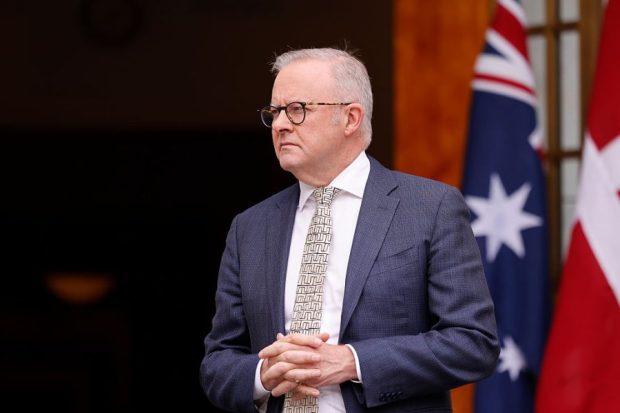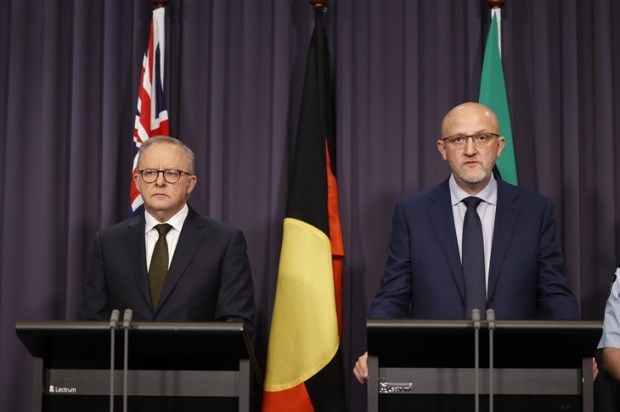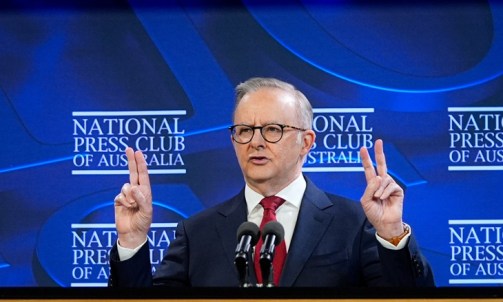
‘Australians don’t want a bar of this bloke, frankly.’ That’s what Australia’s prime minister, Anthony Albanese, said today after calling for Andrew Mountbatten-Windsor to be banished from the line of succession to the throne.
It’s not just in Britain that there’s public and media pressure for parliamentary action to remove Andrew’s succession rights
It’s no exaggeration to say that Australians are revolted by the abundant evidence of Mountbatten-Windsor’s relationship with the disgraced financier and paedophile, Jeffrey Epstein. Mountbatten-Windsor’s tormented nemesis, Virginia Giuffre, came to settle in Australia – and, tragically, took her own life here last May. Australians’ picture of him is an unpleasant and unsavoury man, undeserving of public sympathy. The latest revelations from the Epstein files, which led to last week’s arrest of the disgraced former prince, have not made Mountbatten-Windsor any more sympathetic, in spite of his continued denials of any wrongdoing.
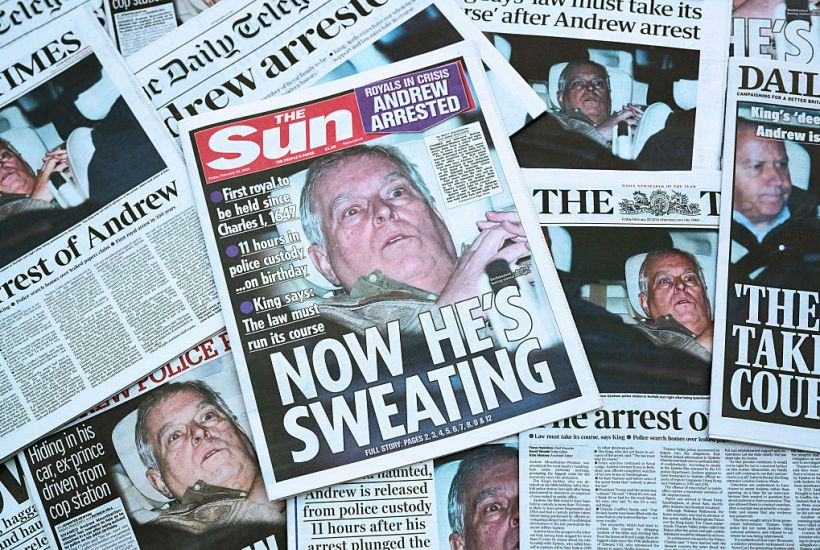
Last week the arrested Mountbatten-Windsor was released under investigation but is as yet uncharged. He has already had lost his princely status, titles and honours – King Charles made sure of that. But only Parliament can remove that last trapping of Mountbatten-Windsor’s royal status: his place in the line of succession.
As the eighth in line, only an unimaginable catastrophe would lead to Andrew becoming king. Theoretically, however, it remains possible, and it’s not just in Britain that there’s public and media pressure for parliamentary action to remove his succession rights.
Keir Starmer, former Director of Public Prosecutions that he is, is clearly sympathetic to the clamour, but says he won’t proceed, at the earliest, until the police investigations into Mountbatten-Windsor’s alleged misconduct are finalised. Albanese, it seems, has no such scruples.
As far as Australia’s prime minister is concerned, removing Mountbatten-Windsor from Australia’s monarchy can’t happen soon enough. Despite it being a highly sensitive constitutional issue, Albanese wrote to Starmer late last night (Australian time), without first consulting with new opposition leader, conservative Angus Taylor. He didn’t alert Australia’s state premiers either. Today, Taylor said, sensibly, ‘The law must take its course, including a full and fair process. If the United Kingdom determines to pursue this course of action through its Parliament, we would support that action.’
Albanese hasn’t been as measured. He sniffed a media and political opportunity, and went hard. Asked on the ABC radio’s AM programme, he insisted his approach to Starmer wasn’t solicited or coordinated. ‘We initiated it’, he boasted. ‘Australia likes being first and we have made sure that everyone knows what our position is and we’ll be writing today to the other realm countries as well, informing them of our position’.
In another radio interview among many he’s done today, Albanese made it clear his push related to the whole sordid Esptein relationship. ‘I think it is appropriate to send a signal that this guy’s actions across a range of issues, he’s been – the allegations of course, go to handing over of documents, but also go to the seedy parts of the Epstein issues that are raised and the extraordinary linkages which are there, that I think just disgust people.’
Yesterday, Albanese was still on the fence over the succession question, but that suddenly changed late last night. Domestically, Andrew became what Conservative campaign guru Lynton Crosby called a political ‘dead cat’: an issue tossed to the media to distract from something highly embarrassing. In Albanese’s case, he is desperate not to talk about his government’s badly mishandled repatriation from Syria of a group of Isis brides and their children, who have Australian residency rights. He insists they are radicalised terrorists who won’t be allowed back; yet his government has issued them passports and is preparing for their return. Being self-righteous about Andrew Mountbatten-Windsor is not only popular with the Australian public; it is a deliberate decoy to get Albanese and his responsible ministers out of a political dung heap of their own making.
Nevertheless, now Albanese has come out on the succession issue, the snowball is rolling. Following suit, conservative New Zealand prime minister Christopher Luxon today said that he wanted Mountbatten-Windsor out of the line of succession ‘when the law has taken its course’. As more leaders of the Commonwealth realms similarly call for a quick resolution, the pressure increases on Starmer to act sooner rather than later.
How Starmer manages that external pressure as he wrestles with the Epstein legacy of not only Mountbatten-Windsor, but the equally-disgraced Peter Mandelson, is a diabolically-difficult political test of his weakened leadership and authority. Albanese’s supposedly helpful intervention reminds Starmer that, well beyond Britain, the eyes of the world are watching his every move.