Tadpoles darted through the shady shallows of the Thomson River, as I stooped to fill my bottle with the pristine clear water. An elderly tourist announced to my husband that the headwaters came from up at Mount Kosciuszko. Surely not, I thought, we were in Victoria. The tourist further grumbled that there was no dam on the river and it all flowed uselessly out to sea. In fact, the Thomson Reservoir is Melbourne’s major water supply, and the river springs from the Baw Baw Plateau, as I later checked. My husband said that was why he hated group tourism – there’s always a know-it-all who’s wrong about everything.
We were visiting a beloved childhood haunt of mine, the historic boom-bust gold mining town of Walhalla, that once had 4,000 residents and yielded over 70 tons of gold. Now only 20 lived along the narrow valley floor, where picturesque timber cottages snaked beside the stone-channelled Stringers Creek and single roadway. There is so little flat land in this steep-sided, V-shaped valley that the town’s cricket ground was built a two-kilometre walk up to the top of a hill.
What hadn’t ever occurred to me – and to most, I would suggest – was that Walhalla was like Nepal. Yet the town and its famous rotunda were recently filmed as a ‘Nepalese village’ in the Liam Neeson action thriller Ice Road. I asked a local shopkeeper if she’d been an extra during shooting. ‘No, they bussed up Nepalese people from Melbourne,’ she said. Because of course, Melbourne has a Nepalese community, being now a mini-United Nations of ethnic groups, plus machetes.
Walhalla turned out to be an immaculate and cherished outpost of old Australia. Enthusiastic volunteers worked the restored Walhalla Goldfields Railway, now having its best year. The Long Tunnel Extended Mine was no longer just a hole in the hill, but was lit and festooned with rusting tools and machinery to a depth of 300 metres. Our white-bearded guide told of the early deaths of young men from miners’ dust, and then reeled off all the government benefits that they didn’t have access to. The timber cottages were painted and picturesque, the gardens and verges bloomed with lilies, red hot pokers, ornamental cherry trees and roses amid the ubiquitous tree ferns. Here had stood the police station, up here was the cemetery, everywhere was historic memorabilia carefully presented. White cockies screeched and wheeled, the streets were clean and peaceful, there was no litter and no graffiti. It was a country life fantasy, such as many a homewares magazine unrealistically presents. Showpiece Walhalla was in better nick than in my childhood memories.
What a contrast with Melbourne, now truly enshittified. The great wen is grimy and graffitied, with empty shopfronts, one in five offices empty (and anecdotally more), the streets decorated with hobos and their blankets. Only outliers remain in the once-celebrated Greek quarter, largely deserted and lined with shuttered businesses. But a block down, the Asianised student zone around the State Library is heaving with bodies, and bubble and matcha tea houses, Hello Kitty ‘cute’ culture and Chinese takeaways. Our Walhalla hotelier had said the city’s new housing estates now reached out to Nilma, a farming town some 110 kilometres into the country. This is some of the best farmland in Australia, being concreted over to house the inexhaustible pipeline of Indians, Chinese, ‘work from home’ locals and others straining our entire infrastructure.
News had come that week of the sell-off of Defence heritage properties, even the storied Victoria Barracks, where the second world war War Cabinet had met. Much of this land will be fed to property developers. Goodbye character and history, hello cheek-by-jowl project homes. Recent UK reports had also declared that London no longer had a white British majority, and the British countryside was ‘too white’. Perhaps the obverse is true, that the cities are too brown?
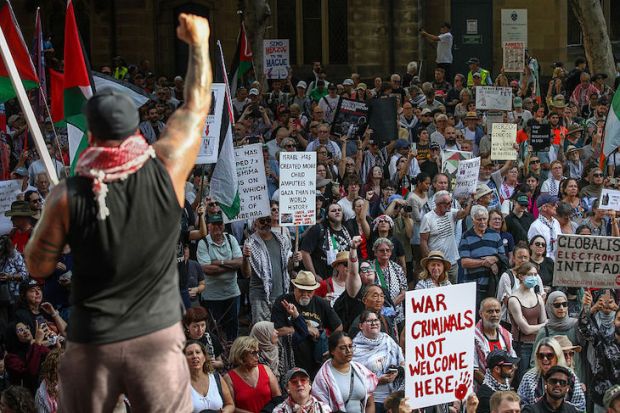
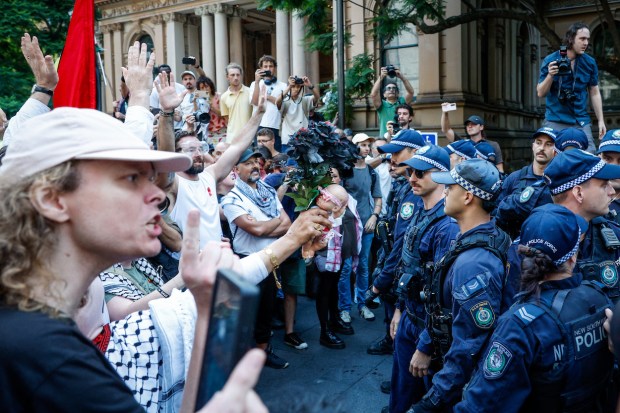
Certainly there was no evidence of Diversity, Equity and Inclusion among the cheerful Walhalla locals, workers and volunteers, deplorable Caucasians to a man and woman. No purple or pink hair, no piercings, perhaps a few tatts but none like the full-face tattoos of the CFMEU bullyboy I’d seen at the Invasion Day rally outside the state parliament on Australia Day. Rarely have I seen so many sour-faced people, Karens and affluent white female urban liberals (AWFULs), liberated from any wish to appear attractive, all blaming Australians at large for their unhappy lives. Scaringly, I’d passed a huge, burly man in a laneway clad all in black, his eyes mere slits amid black full face-and head covering. Only his legs, black below his shorts, were visible. He was hunting a fight.
Down at Flinders Street station the March for Australia protest crowd had been younger, more upbeat, strewn with Aussie flags, more men than women. A well-spoken youth, face painted with a blue flag and wearing a GoPro camera on his chest, had shimmied up a traffic light to film the speeches. When he came down I warned him the other rally was bigger and angrier if it came to a clash. He looked me in the eye and said, ‘Bring it on.’ This is the attitude that the milquetoast Liberal leader Sussan Ley is not getting, the readiness to fight for a better life among our young.
The US sociologist Robert Putnam in his seminal research bemoaned America’s loss of ‘social capital’, the informal links that make a community, and showed that ethnic diversity lowered social cohesion. The more groups lived in a town, the less any one group ‘owned’ the public space, and hence cared for it. Whatever the diverse origins of the migrants and gold seekers who came to Walhalla, the place now shared a common culture and strong local community, exactly what Melbourne no longer has. If young Australians only knew, as we older ones do, how much Australia as a whole used to be like this, their disgust and contempt at our multicultural mess would magnify tenfold.
So when we went to the movies that weekend and heard a lone Caucasian busker playing Auld Lang Syne on a saxophone to the largely Asian crowds sitting outside Melbourne’s State Library, I couldn’t help thinking, my thoughts exactly.
Got something to add? Join the discussion and comment below.
You might disagree with half of it, but you’ll enjoy reading all of it. Try your first month for free, then just $2 a week for the remainder of your first year.