In the early hours of Sunday, Mexico’s security forces carried out a daring military operation that ended with the death of El Mencho – the sadistic leader of Cártel de Jalisco Nueva Generación (CJNG).
Even as the Mexican government hailed the success of the operation, the country erupted into violence. Armed groups loyal to CJNG blocked highways with burning vehicles, attacked an airport, fought gun battles against security forces and turned villages into ghost towns.
Proof that while El Mencho may be dead, the cartel he built into the most ferocious and feared crime organization in North America will not die with him
I lived in Puerto Vallarta to report on CJNG recruitment and what I discovered was a narcoterrorist system that will far outlast El Mencho. On the surface, the city is an idyllic center of tourism: cruise ships docked and tourists drifted between tequila tastings and sunset dinners. But just inland, in the mountains and online, the next generation of foot soldiers were being groomed.
CJNG’s recruitment thrives in encrypted group chats. Telegram channels, WhatsApp chains, spaces where young men were courted, tested and hardened. I infiltrated several of these groups.
Recruits were taunted, degraded and challenged to prove they were not “soft.” Violence was discussed casually, sometimes competitively. There were instructions and boasts about harming animals as a first step to desensitize them. And instructions that if a woman gets in the way of operations, or an adversary has a wife or daughter, raping them was the best form of torture to get what they wanted.
Last summer, 62-year-old Irma Hernández Cruz, a retired teacher and part-time taxi driver in Álamo Temapache, Veracruz, was kidnapped and killed by armed men claiming to be a faction of the CJNG. Reports suggested she was brutally raped, which led to a heartattack and her subsequent death. Irma had refused to pay extortion fees. CJNG later publicly condemned this, yet behind the scenes encouraged sexual violence.
The camps themselves – located in the mountainous regions of Vallarta and ranches outside the city – were described to me in fragments by those who passed through them: places of physical exhaustion, sleep deprivation, beatings, loyalty tests. The goal was a transformation. CJNG wanted men who could not imagine life outside violence.
By the time of his death, El Mencho – Nemesio Rubén Oseguera Cervantes – was one of Washington’s most wanted fugitives, indicted on multiple drug and racketeering charges. The US had placed a $15 million reward on him and provided intelligence support to the operation in which he was killed.
As a young man, El Mencho crossed into the US illegally and worked in agricultural jobs in California before drifting into petty crime. He was arrested in the early 1990s on drug-related charges and deported back to Mexico. A return that would prove consequential.
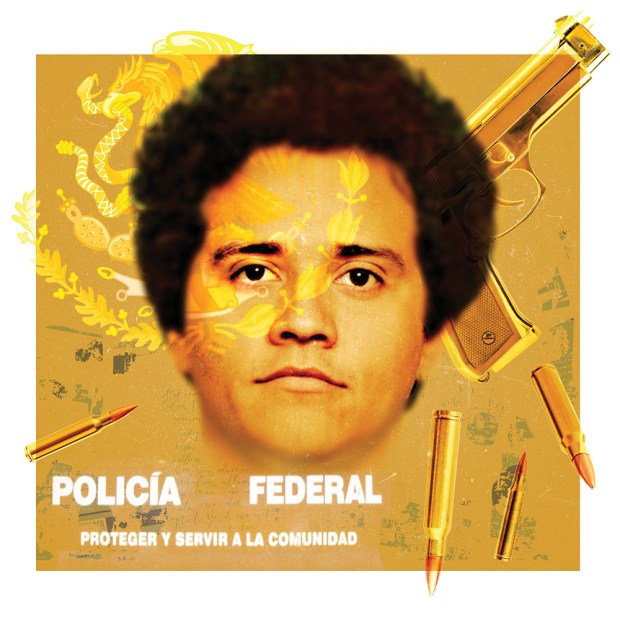
He joined the Mexican police. Quietly he learned how law enforcement works and brought that knowledge with him when he crossed into organized crime.
His alias, “El Mencho,” is believed to derive from a childhood nickname linked to his given name, Nemesio. Like many cartel monikers, it served a dual purpose: familiarity within his circle, anonymity beyond it.
El Mencho cultivated invisibility. He avoided interviews and delegated public appearances. He ruled through fear, punishing betrayals swiftly and rewarding loyalty materially. Under his leadership, CJNG professionalized. The recruitment pipelines, the camps, the ideology of total war, were designed to outlast the man who inspired them.
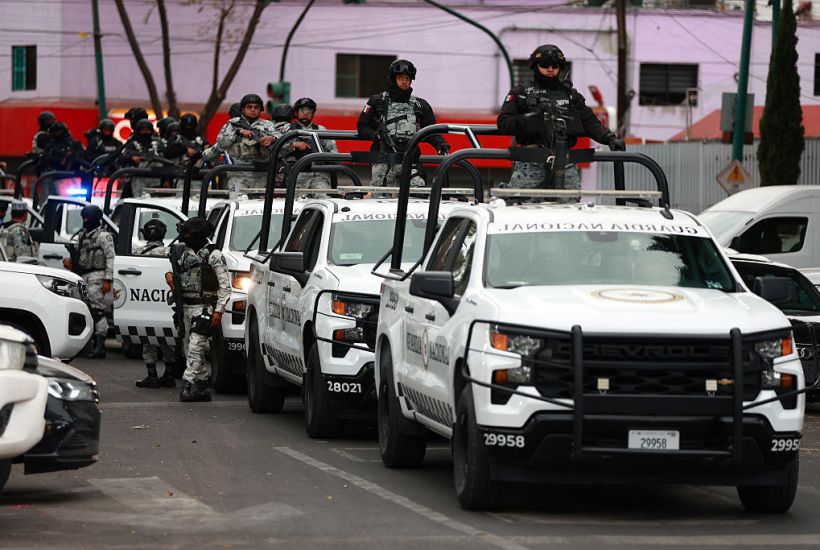
The first tremors of retaliation were felt as soon as news broke of El Mencho’s death at the hands of Mexican Army forces in Tapalpa, in the state of Jalisco. It quickly rippled outward across at least eight Mexican states. In Guadalajara bands of gunmen launched ambushes and turned transport hubs into war zones with smoke plumes stretching toward the horizon. Residents hunkered indoors.
In Puerto Vallarta, tourist flights were canceled, and resort areas were placed under de facto curfew as smoke and sporadic gunfire spread. In states as distant as Tamaulipas, Guanajuato, Michoacán, Nayarit, Aguascalientes, and Colima, CJNG cells erected narco-blockades, burned commercial vehicles, and even carried out execution-style killings of National Guard members on roadways.
The scale and coordination of this backlash is unprecedented. Many federal officials now privately liken it to a declaration of war against the Mexican state. It’s a message: attack us, and we, the shadow government, will make the country ungovernable.
Whether that will evolve into a sustained insurgency remains unclear, but the first wave of retaliation certainly resembles full-throttle conflict rather than sporadic criminality.
The US and Canadian embassies issued warnings for citizens in affected regions to stay indoors, and airlines, including Air Canada and American, canceled flights to and from key hubs amid safety concerns.The Mexican presidency, led by Claudia Sheinbaum, has sought to temper panic, insisting that people remain calm, deploying military reinforcements to the most affected areas.
For Mexico’s government, the killing marked its most high-profile blow against organized crime ever. But cartel wars have a cruel arithmetic: remove a boss, and a hundred others vie to fill the vacuum. With El Mencho gone, eyes have turned to the CJNG’s lieutenants, El Sapo, El 03, El Jardinero, among others and rival cartels who may see opportunity in disorder. Will this decapitation of CJNG’s central leadership fracture the cartel into warring enclaves? Or will it spark a broader swell of cartel-state conflict?
For now, the country finds itself in a grim new chapter, one where the headline “El Mencho is dead” is only the opening line in a much larger story of violence, fear and unresolved power struggles that will shape Mexico for years to come.