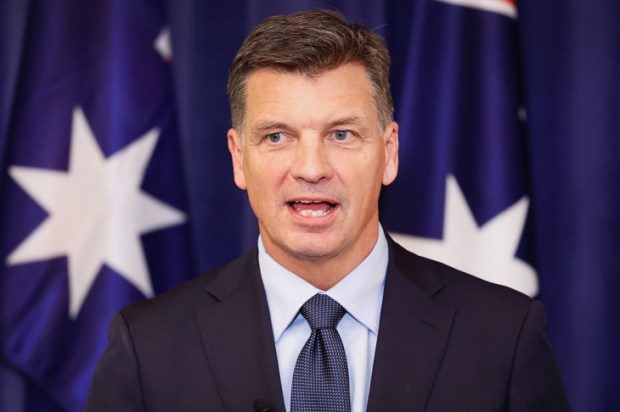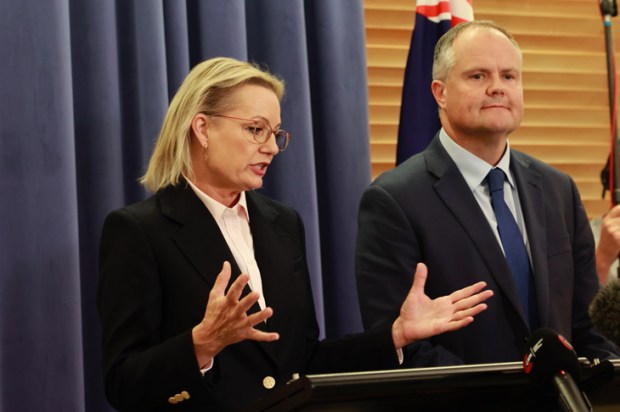

If the rumours are true, shortly after this magazine is printed the Liberal party room will have a leadership spill. Many assume that Angus Taylor will replace Sussan Ley, but given the history and unpredictability of such events, there could be a surprise outcome with another contender (Andrew Hastie? Tim Wilson?) merging as a ‘compromise’ candidate or Ms Ley somehow or other retaining her position.
As we pointed out on this page a couple of weeks ago, it is unlikely that a new leader is the magic solution to the Liberal party’s current woes, but of course a new leader definitely offers the opportunity of a re-set in the public’s mind.
It was highly entertaining this week to see the re-emergence of former Liberal prime minister Malcolm Turnbull, known to many as the ‘miserable ghost’ and to others as ‘Mr Harbourside Mansion’ or, to President Trump, as ‘Mr Trumble’. (There are other nicknames which are, alas, unprintable.) Mr Turnbull – who once told the incredulous former publisher of this astute organ that his colleagues had dumped him because ‘they were afraid I was going to win’ the next election – has always suffered from extreme self-delusions, but his latest comments set new levels of absurdity. Chatting excitedly to the ABC, Mr Turnbull began his diagnosis of the current collapse of support for the Liberal party by proclaiming that these woes are ‘the inevitable consequence of the Liberal party imagining that the goal of politics was to seek the approval of the Sky News audience’. Mr Turnbull then declared that Australia is a ‘centrist’ nation with an electoral system designed to maintain that ‘centrism’ and that any alternative to his bed-wetting variety of soft left, bland, consensus politics was ‘La la land’.
Absent from his analysis was anything that might be regarded as ‘evidence’. Indeed, most of the relevant evidence would appear to argue against, rather than in favour of, Mr Turnbull’s proclamations. For example, when given a clear, binary choice – such as with the Voice to parliament proposal, that Mr Turnbull and his elitist buddies universally supported – the Australian public opted in an indisputable 61-to-39 majority to go firmly against the centre-leftist consensus. Similarly, even when it came to Mr Turnbull’s same-sex marriage (voluntary) plebiscite, only 48 per cent of the public actively voted in favour of it. So much for Australia being ‘broadly centrist’. Quite the opposite. This magazine has long argued that Australia is broadly conservative, but its flawed compulsory preferential voting system (which is barely used anywhere else in the world) thwarts and distorts the natural wishes of the electorate by forcing them to vote for parties, policies and politicians they may loathe.
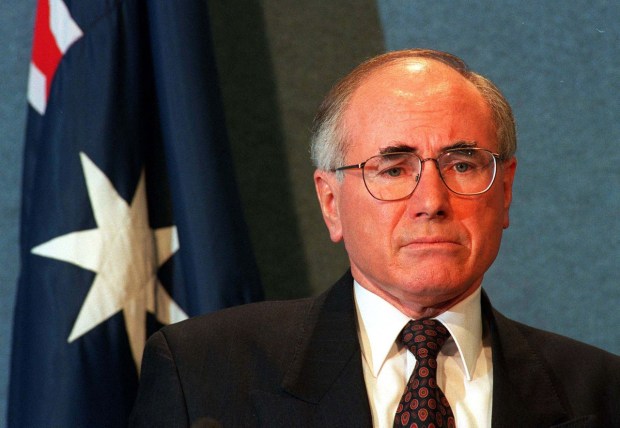
Yet even with such a distorted voting system, whenever the Coalition has offered the public a strong conservative option, such as with John Howard or Tony Abbott, the electorate has rewarded them in spades. Unsurprisingly, whenever the Coalition has offered a more ‘centrist’, ie. Labor-lite, option, the voters have been far less enthused. (See Turnbull 2016, Morrison 2022, Dutton 2025 and Ley to date).
Intriguingly, Mr Turnbull has forgotten the lessons of his own term of leadership, as good a guide as any to the absolute failure of consensus politics. As this magazine enjoyed chronicling at the time, Mr Turnbull – after having used Mr Abbott’s poor post-election polling numbers as the reason for tearing him down – suffered the worst bad run of Newspoll numbers of any Liberal prime minister possibly ever. Again, this might suggest that Mr Turnbull’s analysis on the leadership issue – along indeed with his analysis of most vexed political issues – is unimpressive.
So what should the Liberals do (other than ignore the former member for Wentworth)? Changing leaders would be a reasonable first step, but that alone will not solve the party’s current lack of appeal. What is needed is a brave and unabashed return to first principles, and that means putting the forgotten Australians to the fore of every single policy issue. This is not easy. To do so means slashing immigration dramatically, abandoning net zero and pulling out of the Paris agreement altogether, removing the moratorium on nuclear energy, slashing penalty rates and other crippling union regulations, slashing business-destroying red, green and black tape, slashing wasteful and unaffordable programs like the NDIS and other excessive welfare entitlements and reducing the size of government. The fact that such a program would appear to be electoral poison is because successive Coalition and Labor governments have been so reckless, so lazy and so extravagant that only harsh remedies can now repair the damage. But there comes a point at which the public realises that their trust has been abused and taken advantage of by successive ‘consensus’ politicians and a hard handbrake U-turn is required. The sudden surge in support for Pauline Hanson’s One Nation has nothing to do with ‘rabbit holes’ or ‘la la land’ as Mr Turnbull so idiotically suggests, but rather, a recognition that the current ‘uniparty’ model is a disaster for the majority of Australian families and businesses.
Whoever leads the Libs is going to need to return to core values as fast as they possibly can. Good luck, (fill in name here).
Got something to add? Join the discussion and comment below.
You might disagree with half of it, but you’ll enjoy reading all of it. Try your first month for free, then just $2 a week for the remainder of your first year.