Last November I wrote that, despite the electoral system in Australia and a few other significant differences with the UK, on balance I believed the forces at work were so potent that the Reform-led political revolution occurring in Britain would more than likely visit Australia in some form.
The factors at work here are deep-seated and global. They mark tectonic plates shifting. Viewed historically, this is a period of remarkable significance.
All over the world we are seeing broad-church, managerialist legacy parties on the centre right dying and being replaced by populist insurgents who do a far better job of connecting with voters.
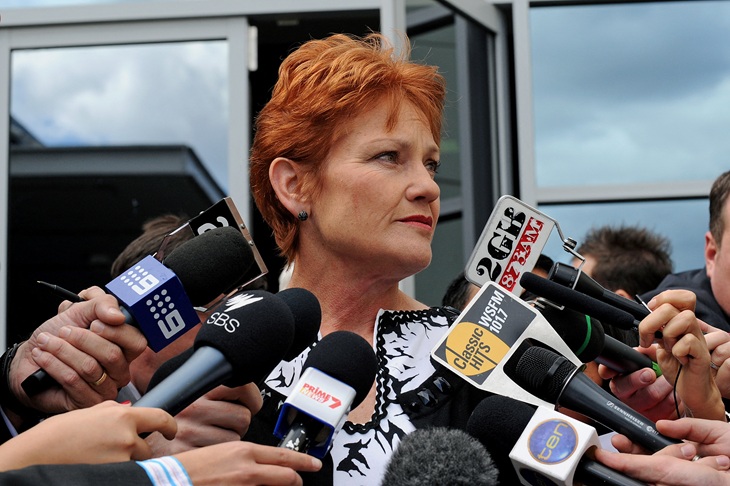
I do not want to sound like Mystic Meg, but zooming back into Australian politics now, these forces are almost certainly taking hold here. The tragic incident at Bondi clearly played a key role and crystallised in the minds of many Australians how far things had gone wrong and who was likely or unlikely to have the political will to address the problems.
The polling for One Nation has gone through the roof and the Liberal Party appears to be doing its best to rival the UK Conservative Party in its flirtation with electoral death.
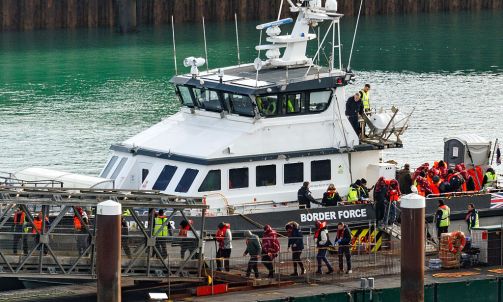
The patterns here are global. They are linked to declining living standards and the consequences of rampant mass migration that, in many instances, is forever changing the communities in which people live and undermining living standards. It is a reassertion of the national principle, support for national democracy against the managerialist parties that have pushed a globalist agenda directly contrary to the interests of hard-working patriotic citizens.
In the UK there have been people dismissive of Reform UK. There has been laziness and desperation from a political and media class terrified that the world they know, and have benefited from, is collapsing around them. We saw lazy comparisons with the growth of the SDP in the early 1980s, even though there were so many glaring differences I will not even bother spelling them out here.
It does seem that something similar is happening in Australia. But I am fairly certain the explosion in support we are now seeing for One Nation is very different from its growth in the 1990s. Looking at the one Australian state currently attracting a great deal of attention, it is also very different from the growth in support for Nick Xenophon in 2018.
Both the UK Conservative Party and the Liberal Party like to change their leaders frequently. They change their leaders a lot. The ‘rearranging the deck chairs on the Titanic’ analogy feels increasingly prescient. They are big bureaucratic behemoths, rabbits caught in the headlights, unable to respond adequately to the broad undercurrents of global politics and the tectonic plates shifting beneath them.
Both parties do not fully understand what is happening, and as more who smell the coffee wake up and leave for Reform UK or One Nation, the chances of those left behind finally getting a grip become more remote.
Both broad-church managerialist legacy parties will reach for every lever to save themselves, and more often than not that will come in the form of a leadership change. What they fail to realise is that, for an increasing number of voters, that ship has sailed.
Kemi Badenoch, the present leader of the UK Conservative Party, is more conservative than the leaders who preceded her and, in my view, a stronger leader than Sussan Ley and likely Angus Taylor. But it has been nowhere near enough to save the UK Conservative Party from being devoured by Reform UK.
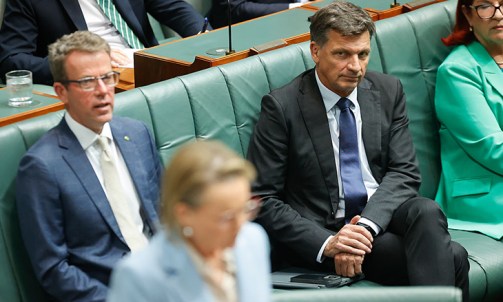
The Liberal Party of Australia is in a real bind. Sussan Ley was the most out-of-her-depth leader I have seen lead a Western political party. However, it was Liberal MPs and Senators who put her there in the first place. Those parliamentarians are still in situ, and 17 of them voted for Sussan Ley to continue her tenure last week.
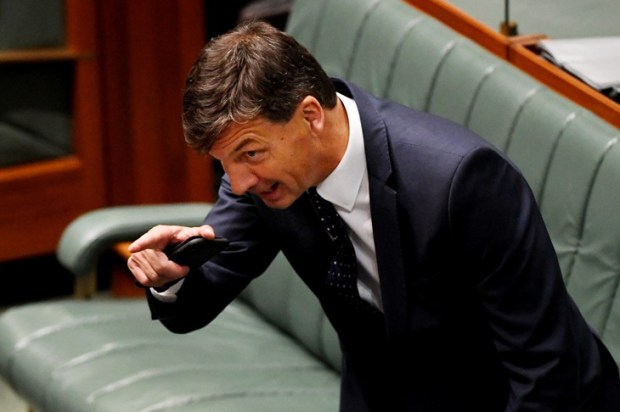
Angus Taylor, the new leader, comes across very much as a creature of the establishment and the managerial political class. His record on speaking out against mass migration and the issues that grind the gears of millions of disillusioned Australian voters – I struggle to find much. A quick search also reminds us he was Energy and Net Zero Minister under Scott Morrison.
Perhaps I will be wrong about him. I suspect not. I suspect he will be replaced before the next federal election.
Suffice to say, the issues afflicting the UK Conservative Party and the Liberal Party of Australia go far deeper than who happens to lead them. They are analogue parties in a digital age. They are ‘broad church’ parties that would struggle to tell you what they stand for, spending their time splitting the difference and managing factions while voters cry out for strong and decisive leadership on the pressing issues facing their countries.
There is a deep rot within the UK Conservative Party that goes well beyond whoever leads it at any given moment. Its MPs are a product of years of managerial manipulation. Like the Liberal Party, it is deeply divided on the key issues of the day.
I do not know what will happen in the short term in Australian politics. Perhaps Angus Taylor will engineer a poll bounce of sorts. However, in the medium to long term, my strong sense is that despite an electoral system that often seems to operate as a protection racket for the uniparty, the future of the Liberal Party is as imperilled as that of the UK Conservative Party.