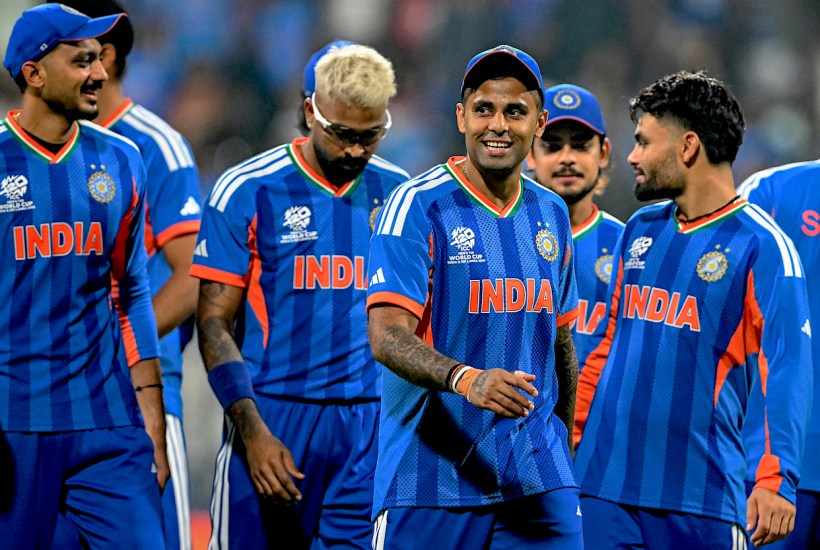
India are very likely to win the T20 World Cup that they are currently co-hosting with Sri Lanka. They won the last one, in the US and the Caribbean, in mid-2024. They are also very likely to win the 2028 tournament in Australia and New Zealand and the 2030 tournament that is so far away that the hosts have yet to be chosen. This is because the Indian team have finally figured out how to capitalise on their incredible advantages in T20 cricket. When we think of India playing cricket’s shortest form, we should really be comparing it to the US men’s national team in basketball.
The sports league the IPL most resembles is the NBA
India has struggled to translate its enormous population, giant domestic audience and large share of global revenue into a period of dominance in either test match or one-day cricket. But T20 is different, because India has the Indian Premier League. The annual tournament makes more money in each of its ten-week seasons than the rest of the cricket world makes in a year. All the best foreign players want to play, which means it acts like a crucible for innovation. And because each team’s 25-man squad can have no more than eight internationals, it is Indian players that have been benefiting from the best overseas stars sharing their skills and knowledge for almost 20 years.
The sports league the IPL most resembles is the NBA. The US has been so successful in exporting basketball around the world that many of the league’s best players – France’s Victor Wembanyama, Slovenia’s Luka Doncic and Greece’s Giannis Antetokounmpo – are foreign. But in both the NBA and the IPL, between two-thirds and three-quarters of the players belong to the host country, and the rest are high-quality foreigners. That should result in a much deeper talent pool for the US and India than any other country.
India have also wised up on selection. For years, seniority within the test team conferred a spot in the T20 side, even as the skills required to be successful in each code were diverging quickly. But with the retirement of Virat Kohli and Rohit Sharma, previously mainstays in all three of India’s international sides, the selectors have plumped for T20 specialists as their successors. It was notable that there was only one player who played in both India’s final test against England last summer and its opening game of the T20 World Cup.
India’s top six batsmen against the US – Ishan Kishan, Abhishek Sharma, Tilak Varma, Suryakumar Yadav, Shivam Dube and Rinku Singh – have three test caps between them and are unlikely to add many more. More pertinently, they have played in 554 IPL matches (and have won seven titles), which is the currency that really matters.
The outcome of this marriage of a deep talent pool and meritocratic selection has been a string of results unlike anything before in T20 cricket. India have won 49 of their last 57 T20 games. That’s 86 per cent Australia, the next best, have won 68 per cent. India’s recent success is built on the muscle of those six batsmen. No team has ever scored as quickly for as long as this group of players. Up until this team came together, India had never scored 270 in a T20 game. This lot have done it three times against three different opponents in the past 18 months.
The future also looks promising. The week before the WT20 began, India’s under-19 team won the 50-over World Cup in Zimbabwe and Namibia. That team contains a phenomenon, Vaibhav Sooryavanshi, who plundered 175 runs from 80 balls in the final against England. If his name rings a bell, it is because he became an overnight sensation by scoring 101 from 38 balls in an IPL match in 2025 aged 14. Fittingly, he became the first player to compete in the IPL who was born after the league was created.
The biggest difference between the IPL and the NBA is that IPL teams play 14 matches in their regular season, plus up to three in the play-offs. The equivalent figures for the NBA are 82 and 28. If the Board of Control for Cricket in India and the IPL franchise owners decide that they want a second season in the year, say in October-November, they have the financial clout to make it happen. The long-term effect would, of course, be to hand India an even greater advantage over the rest.
At the Olympics, the US men’s basketball team has won 64 of its last 68 matches, a run going back to 1992. This has been good enough to win eight out of nine gold medals. Given India’s overwhelming advantages, it is a record its T20 cricketers should be trying to emulate.