The more excitable and less well-educated elements of the liberal left are forever apt to observe that politics today resemble those of the 1930s, being prone to denounce a development or policy they disdain as being ‘just like Nazi Germany’. To be fair, they have a point. It’s not just the street brawls we’ve seen in Manchester and Lyon over the last week, between hard left and hard right youths, that should arouse such unnerving comparisons. It’s also because we are living in an age of appeasement. And this time it’s the liberal left who are doing the appeasing.
This was a textbook case of appeasement: not a tactical retreat to be dismissed as a one-off, but an action consistent with a sustained process of surrender
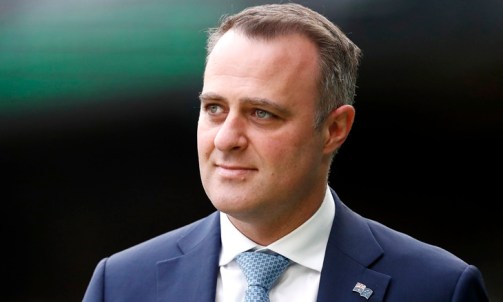
This trend continues to make itself more obvious. Government figures show that less than 3 per cent of honour crimes were successfully prosecuted last year. Last year, 2,949 honour-related offences were recorded in Britain, but only 95 defendants were prosecuted. What seems clear is that the authorities are consistently failing to prosecute and prevent honour-based abuse. Responding to these findings, Nick Timothy MP, the shadow justice secretary, says that ‘the British state has turned a blind eye to sharia courts spreading across our country.’
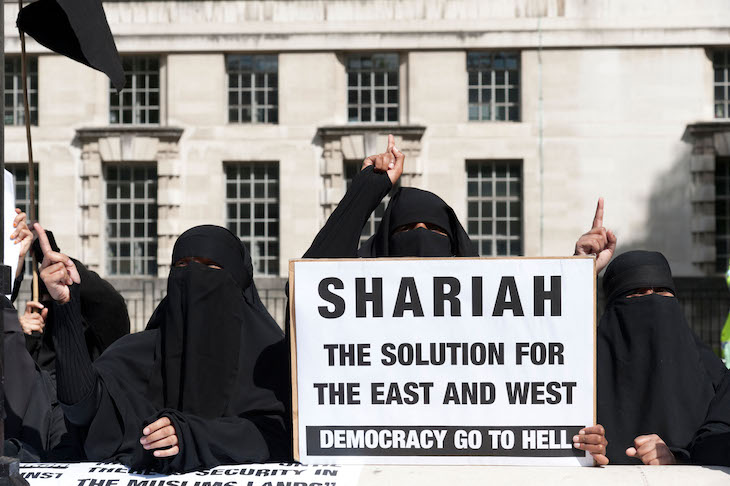
The accusation that sharia law has become normalised in Britain is entirely plausible, because it follows a grimly familiar pattern. There’s been a decades-long process of tacit capitulation to radical Islam and to sectarian voices in this country. It’s a process of gradual surrender by an elite who would rather this country descend into sectarianism strife than address its increasingly grievous problems, lest that by doing so their social esteem might be compromised.
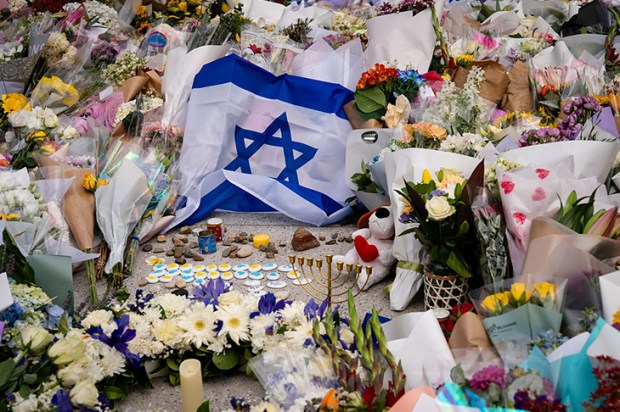
The fallout over the Aston Villa game against Maccabi Tel Aviv last November, once more the subject to scrutiny at the weekend, itself highlights the degree to which those in power are now liable to yield to musclemen because they would rather not rock the boat. In that particular instance, West Midlands Police saw fit to prohibit fans from the Israeli team attending the fixture because, it seems, they feared what some Muslims in Birmingham might do if thousands of Jews were allowed to enjoy the freedom of an English city. This was a textbook case of appeasement: not a tactical retreat to be dismissed as a one-off, but an action consistent with a sustained process of surrender.
The conduct of those in West Midlands Police may have had its origins in a kind of Danegeld thinking, but their timid behaviour only reflects that persistently shown by those in this country in recent decades, especially by those in authority positions. Ever since the Macpherson Report of 1999, policemen of all ranks have been skittish to the point of neurosis on matters pertaining to race. That report made clear the career death that faced any officer charged or even vaguely associated with racism.
Macpherson both reflected and entrenched a new moral order, a new ethos of hypersensitivity coursing through Western society, in which racism had become the ultimate transgression. This was the natural corollary of the reality that Britain and other countries like it were becoming numerically more multi-racial. One of the most efficient means to keep a racially disparate society together – a society that is no longer bound by common mores, standards or sense of history – is to make racism the most heinous crime and the most unforgivable of taboos. And of all who live in the greatest terror of this charge, it’s members of the metropolitan left.
The undue legal punishment and disproportionate social ostracism which now faces those found guilty of racism, including its most insidious variant, ‘unconscious racism’, has been at the root of much of our denial and evasiveness ever since. It’s also been behind the rampant cowardice and unwillingness to address awkward issues for fear of potential consequences, either at a social and personal level.
This craven desire for a quiet life manifest itself in the grooming gang scandal, one that was allowed to fester because so many in positions of authority were too terrified to talk of the perpetrators being of Pakistani origin. We have seen it in persistent attempts to officially define ‘Islamophobia’ or efforts to install de facto blasphemy laws – both these moves having derived from a desire to placate a noisy minority representing an ethnic group whose numbers and electoral consequence grow every year. This process goes back to 1989, when a British citizen, Salman Rushdie, was sent into hiding and many of his liberal friends in the literary establishment stayed silent. The book-burnings seen in Bradford that year were but a foretaste of things to come.
This appeasement has happened, and continues to happen, because those in charge forever remain terrified of being tarnished as racist, or of losing votes. A cowardly elite that is more concerned with its status and reputation has allowed this country to become more fractious and fractured because its members have been afraid of losing face.