Mayhem has erupted across Mexico after security forces eliminated Nemesio Oseguera Cervantes, the drug lord widely known as El Mencho, in a gun battle in the town of Tapalpa. El Mencho was the head of one of Mexico’s most violent and sadistic organisations, the Jalisco New Generation Cartel (CJNG).
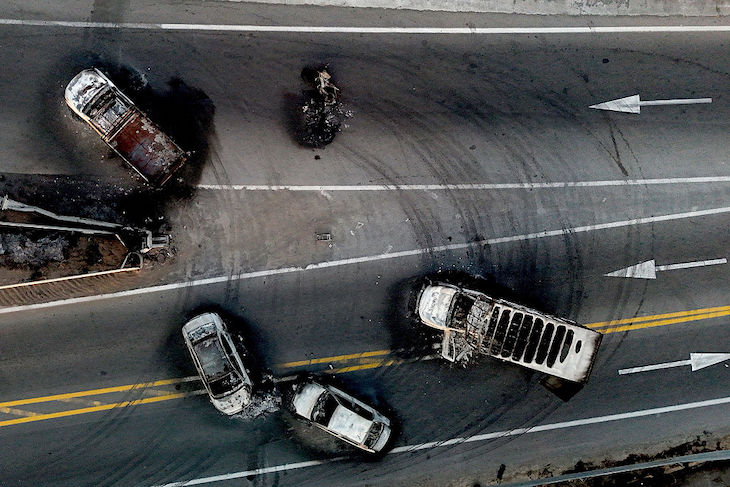
Henchmen forced passengers out of their cars before setting the vehicles alight, leaving them as burning roadblocks
Their reaction was about as solemn and dignified as you’d expect. Henchmen forced passengers out of their cars before setting the vehicles alight, leaving them as burning roadblocks. Scorched sedans and toasted trucks lined the highway to the World Cup stadium in Guadalajara, Mexico’s second-largest city that is set to host the tournament this summer. Bewildered tourists watched pillars of smoke rise over the coastal resort of Puerto Vallarta while sirens blared in the distance. Incidents were reported in at least a dozen other states.
“People decided not go outside today, so the city is basically a ghost town,” Crisis Group’s senior Mexico analyst David Mora told me over the phone from Guadalajara. “It’s really mind-blowing because we’re not talking about a rural part of Mexico; it’s a gigantic city. Seeing empty streets and shuttered businesses, it’s very eerie.”
After the capture of El Chapo – godfather of the once-mighty Sinaloa Cartel – in 2016, El Mencho became the DEA’s most-wanted drug lord, responsible for the import of untold quantities of meth, fentanyl, heroin and cocaine into the United States. The CJNG also preyed on innocent Mexicans through protection rackets and, last year, the cartel was placed on Donald Trump’s terrorist blacklist.
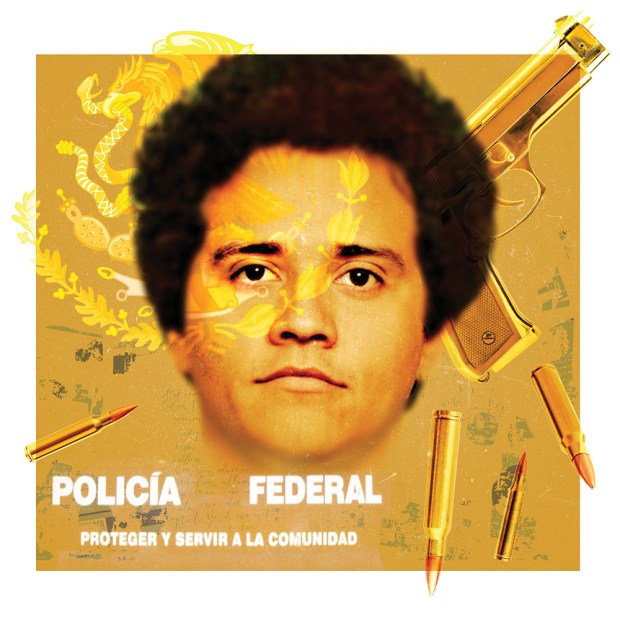
Nicknamed the Lord of the Roosters for his love of cockfighting, Mencho was born in 1966 to a family of poor avocado farmers. By 14, he’d dropped out of school to work on a marijuana farm. In 1992, he was busted along with his brother selling smack to an undercover cop in San Francisco. Mencho pled guilty so that his brother, a two-time felon, wouldn’t get life, and, in 1997, was deported, only to join the Jalisco police force, before heading a black-clad paramilitary group called the Mata Zetas (Zetas Killers), the local armed wing of the Sinaloa Cartel.
But after his immediate supervisor was assassinated, Mencho violently broke off with the Sinaloans. The CJNG aggressively expanded its domain across the Mexican underworld.
“The Jalisco is Mexico’s most powerful cartel in terms of the size of their operations, their footprint in criminal industries, but most importantly, in the military capacity,” explained Mora.
“Since it’s inception, Jalisco’s brand has been disseminating these videos where they showcase high-powered rifles, aerial rockets, drones…they bring a lot of foreign mercenaries into Mexico as their hitmen.”
The CJNG earned a reputation for extreme violence, with no qualms about killing cops or soldiers, once famously shooting down an army helicopter in 2015. At their paramilitary training camps, prospective recruits were reportedly even forced into cannibalism to harden them to bloodshed; if you vomit, you are beaten. And if you tell anyone where the camps are, you will be killed (and possibly eaten). But if you survive boot camp, you’ll be awarded with a graduation party involving drugs and prostitutes. But by then your mind has been left so twisted you cannot live a normal life anymore.
Last year, an “extermination camp” allegedly run by the cartel was discovered at a Jalisco ranch, where activists found several ovens for cremating corpses as well as 200 pairs of shoes, clothes, and even children’s toys. The state tops Mexico’s charts in the number of disappearances.
Mencho, meanwhile, cultivated an aura of mystique. Having not been seen in public for years, there’d been longstanding rumours he was already dead. It seems official this time.
Historically, the crackdown on cartels has had deadly side-effects
Trump has long-threatened a direct intervention in Mexico. While America invading its southern neighbour seems unlikely (though given recent events, not implausible), Trump has certainly put pressure on his Mexican counterpart, Claudia Sheinbaum.
“President Sheinbaum is buying herself some time, [proving] Mexican forces can act on the intelligence and carry out operations like this. We don’t need US troops in Mexico,” said Mora.
Historically, however, the crackdown on cartels has had deadly side-effects. In 2006, then-president Felipe Calderón began the campaign in earnest by deploying the army to his crime-ridden home state of Michoacán, backed by Washington’s Mérida Initiative which provided weapons, training, ammunition and even dogs to the Mexican armed forces. Since then, the so-called kingpin strategy (eliminating the top dogs in the drug game) has only splintered crime syndicates into smaller, warring gangs, filling Mexico’s streets with blood and bullet holes while failing to halt the flow of narcotics over America’s southern border: the opioid crisis has intensified year-after-year, only abating recently (whether this pattern continues remains to be seen).
In 2024, the Sinaloa Cartel’s mastermind (and former Chapo business partner) Ismael ‘El Mayo’ Zambada was betrayed by his colleagues and handed over to the United States, plunging Sinaloa into a civil war.
“[CJNG] was deeply immersed in battling smaller groups in Michoacán, in Jalisco, in Guanajuato, and the killing of El Mencho might create a sense that Jalisco is weakened, and that brings an opportunity for these smaller groups to seize territory,” Mora explained.
“The Jalisco Cartel is a very centralised organisation…And if you remove El Mencho from the equation, it’s really hard to know who’s going to inherit the operation…and that is certainly going to destabilise the cartel itself.”
However, a source in the Sinaloa Cartel claimed Mencho has already appointed a successor. “Mencho was already sick, and he already decided who would continue his place in the organisation in case of his death,” the narco wrote over encrypted messenger.
“So this is why I think there would be a relative peace between them; they are going to accept the final decision of El Mencho to avoid a war in the cartel.”
But, at the time of writing, gun battles between gang members and security forces still raged into the night. A new, bloody chapter has opened in Mexico’s drug wars.