Ray Lawler’s Summer of the Seventeenth Doll is the most celebrated of all Australian plays; and this story of the two cane cutters who for seventeen years have come from Queensland to take it easy with their lady loves Olive and Nancy took the world by storm. It was the first time (back in 1955) that Australian accents were heard around the country and then round the world.
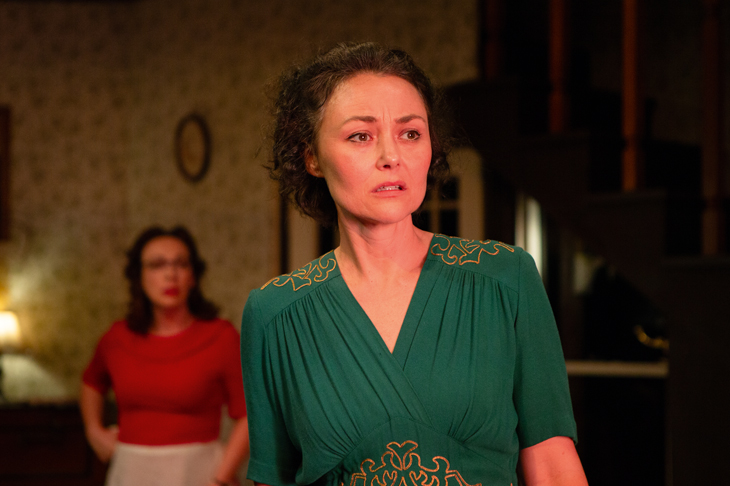
The 1955 Doll is a winner, a beautifully orchestrated depiction of two mates, celebrating the pull of their long-term seasonal relationships, symbolised by Roo’s annual gift to Olive of a Kewpie doll. The play itself – as its title suggests – is closer to Tennessee Williams than you might at first think in its depiction of the desolation and the camaraderie of working-class life in Fifties Melbourne and the history of the Doll saga is complicated and enriched by the fact that Ray Lawler in the 1970s was encouraged by John Sumner (the original director of The Doll and the founding head of the Melbourne Theatre Company) to write two prequels to The Doll: Kid Stakes set in 1937 (and recapitulating the shadow of the Depression) and Other Times set in 1945 at the end of the second world war. These two plays and The Doll that culminates them are a suite of dramas of extraordinary richness and Red Stitch has chosen to stage all three plays together. The continuous version of the whole box and dice runs with intervals from midday to nearly 11 p.m.. It is an extraordinary dramatic feast with Ngaire Dawn Fair as an Olive of unrivalled power and poise, Ben Prendergast as an absolutely solid yet sensitive Roo yearning to make holy his love and John Leary as a ruffish indomitable Barney, Emily Goddard as Nancy (then Pearl) who would like the ring as a seal of love and the veteran Caroline Lee as the matriarch who – famously – claims to capture the sea breeze from the gutter.
The Red Stitch production is like the resurrection of a lost idiom and it’s an evocation of the variegation and power of dramatically heightened speech that comes across as a miracle of dramatic realisation that it is impossible to imagine bettered and difficult to imagine equalled – and this is not to exclude renowned productions by Robyn Nevin and Neil Armfield. Ella Caldwell directs The Doll Trilogy in an absolutely straight almost non-rhetorical style that allows the bare intensities of the splendours and miseries of Lawler’s language to shine forth like a brand-new day for all the power of recollection the trilogy embodies.
Yes, there’s the weirdness of the fact that The Summer of the Seventeenth Doll was a contemporary play set in the 1950s while the two previous plays – the prequels – are set long ago but in practice this is an illuminating perspective. Of course, they are footnotes to a dramatic masterpiece but they have an energy that makes the whole matter of The Doll seem like a lost continent of memory and desire.
There’s a pivotal role for an Austrian emigrant played by Khisraw Jones-Shukoor who courts Nancy, and translates Heine from the German: it’s subtle, very sophisticated writing and that’s true of the same actor’s later incarnation as Johnnie Dowd the cane cutter who humiliates Roo and who also courts Bubba (a very fine Lucinda Smith), the girl next door.
But it’s dazzling to hear Roo recite chunks of the Old Testament and we believe him when he buys a fox fur for Olive and declares that his friendship with Barney was more important to him than promotion to the officer corps.
The Doll Trilogy comes across as a sustained masterpiece even though we’re aware of the episodic nature of the Seventies additions. But this has a modernity all of its own: after all we are aware of how the different bits of Faulkner’s Yoknapatawpha County relate to each other and the unity of discontinuity they exhibit. It’s also true of Vargas Llosa and some of early Joyce.
Part of the radical imagining of Ngaire Dawn Fair’s Olive first as a bit of a Flapper then as a mature woman of great beauty and self-possession comes from this aspect of The Doll Trilogy and the way it incorporates new perspectives by the light of a newly remembered history.
There’s Emma’s passion for a telephone and the way she – to her own heartbreak – falls into the hands of thieves and Ben Prendergast’s Roo says he’ll stand by her.
The Doll Trilogy in Ella Caldwell’s hands is a hoard of lost treasure and there is a splendour in the way it all coheres even though we’re aware of a zigzagging improvisational quality in Kid Stakes and Other Times but we accept this as a semi-marvellous journey back into the dark and backward abysm of time, as Shakespeare has it.
There are no rules governing incorporation and you can see the floodlit power of the insertions in the expanded version of The Doll Trilogy.
Its skeletal quality has an uncanny power of its own. We learn of Barney fathering two sons and of Nancy dropping out of the Doll game to be replaced by Pearl – superbly played by the same actress, Emily Goddard.
The Doll Trilogy doesn’t have the richness nor the colour and climactic power of the first and greatest of the Doll plays. Look at the brilliance of the community singing scene on New Year’s Eve with Caroline Lee’s Emma full of pride in her own prowess at the piano and her singing voice. That sort of dramatic ease and power of design never came back to Ray Lawler in the same way but their quality is highlighted by Kid Stakes and Other Times.
Ella Caldwell directs The Doll Trilogy as an elegy to an ancient working-class power of expression and power of impassioned feeling we would be foolish to forego. It was in some ways a theatre establishment audience that saw the first Doll marathon on Saturday 21 February but you could feel it, tingling in the air: the power of the different faces of beauty in Ngaire Dawn Fair’s Olive and the reciprocating reaching out for strength in Ben Prendergast’s Roo.
Last year Red Stitch showed with the Kat Stewart/David Whiteley Who’s Afraid of Virginia Woolf that a great play of yesteryear could burn with new life. The Doll Trilogy is a comparable achievement and everyone should see it.
Got something to add? Join the discussion and comment below.
You might disagree with half of it, but you’ll enjoy reading all of it. Try your first month for free, then just $2 a week for the remainder of your first year.