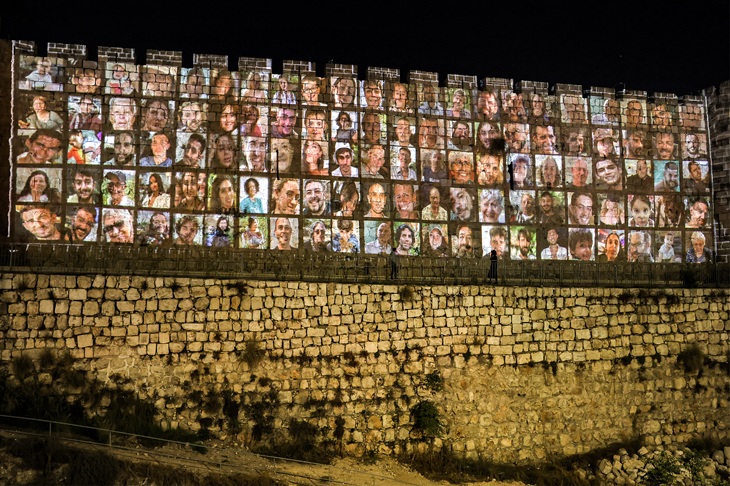
The hostages are home. The symbols have come off. The responsibility has not.
On Monday, January 26, 2026, I removed a yellow ribbon pin from my lapel. I took off a necklace shaped like a dog tag. I slid two blue-and-white bracelets from my wrist, each one reading Bring Them Home.
And I cried.
I’m not ashamed of that, not even a little. Because for more than two years, those symbols were not accessories, they were armour, they were memory and they were weight. They were a constant reckoning every time I looked in the mirror and a reminder: you do not get to look away.
For well over two years, they were with me in meetings, on stages, at dinners, at funerals. They pressed against my skin as a reminder that anger and sadness, left unchecked, can hollow you out, but channelled, disciplined, sharpened, they can be used. Used in pursuit of something bigger, something better, a different world for our children and grandchildren than the one we have been forced to confront.
Because on January 16, 2026, the last Israeli hostage was returned to his family.
Let me be absolutely clear about what that means. When I say returned, I do not mean by our enemies and I do not mean by our allies. I mean returned by his own people, by Jews, too Jews, for the Jews.
The promises made to secure a ceasefire were many, the concessions Israel was forced to swallow were real and painful. But two obligations placed on Hamas were explicit: disarm and return every hostage. They did neither, so we went in and got our people back.
Because that is what we do, we honour the dead, we mourn every stolen life. We care, endure, prevail and we refuse, utterly, to break.
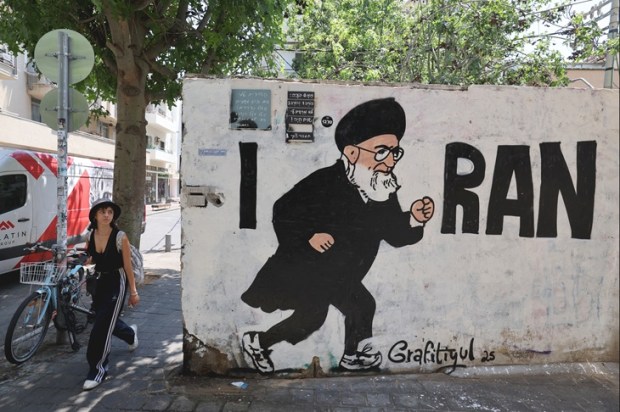
The body, the remains, of Ran Gvili, murdered and then held for 843 days, was discovered buried in an unmarked grave in a Muslim cemetery in Gaza. An unmarked grave, because even in death, this was an attempt at erasure.
This recovery also closed a chapter that should never have been allowed to remain open. For the first time since 2014, no Israeli hostages are being held in Gaza, following the return of Hadar Goldin and Oron Shaul, who fell during Operation Protective Edge, and Avera Mengistu, taken after wandering into Gaza 12 years ago.
Twelve years, eight hundred and forty-three days, a lifetime measured in waiting.
Ran Gvili was not meant to be there that day as he was not on active duty, but on injured reserve. He had every legal, moral and physical right to stay home on October 7. Yet, as he drove off to fight, he said just one thing to his father:
‘I have no choice. I won’t leave my friends to fight alone.’
That is the whole story. Ran saw the danger his people faced and he went anyway. He did not ask what it would cost him, did not wait for permission or calculate risk versus reward, he just went. He made the ultimate sacrifice for his people, he gave his life.
So, what stronger message do we need than that? What does this moment mean? What do we take from it? What do we use it for? What does it tell us about the scale of the challenge still facing us in this ongoing war against those who hate us, who would erase our history, destroy our homeland and kill our children if given the chance?
For nearly 850 days, we have witnessed the systematic gaslighting of Jewish pain, not slowly, but exponentially. Antisemitism did not merely rise, it metastasised. Our people were dehumanised to the point where ‘globalise the intifada’ went far beyond words and moved into action.
Jews murdered in Colorado, Washington DC, Manchester, Bondi, and beyond. Through it all, we were told that the fear we felt was imagined, that the attacks were exaggerated, that if they were real, then somehow we were to blame.
Perhaps and I include myself in this, we clung to Bring Them Home because we hoped it was unassailable. A moral floor so obvious that even the most egregious haters would hesitate. After all, these were innocent men, women and children, dragged from their homes, raped, abused, tortured, held in terror tunnels beneath Gaza.
Yet still, they argued, still, they contextualised, still, they equivocated.
Now the hostages are home. Some alive, many murdered, all returned. So we arrive at the next question, the most important one of all, what now?
What replaces the ribbon and the bracelet? What replaces the weight we carried on our bodies so we would not forget?
The answer is brutally simple, nothing replaces them. No necklace, no pin, no chant shouted into the street. All that is required now is this, to look at your children. Look at them as you tuck them into bed tonight, as you wake them tomorrow morning. Look at them, really look and imagine the world they inherit if we stop now.
That is all the motivation you should need, that is all the responsibility you should require and that is the fight you must face and meet head-on. So let this be our line in the sand. Let this moment be recorded properly, even if it is uncomfortable, especially if it is uncomfortable.
Hamas is a genocidal death cult, hostage-taking is not resistance, burying bodies in secret is not liberation and moral equivalence here is not sophistication, it is decay.
Let it also be said, clearly and without apology that the Jewish people did not forget their hostages, even when the world tried to. We carried them for 843 days and we will carry their memory for 843 years if we must.
There are now no Israeli hostages left in Gaza, but that does not mean our work is done. It means a chapter has closed, written in blood, silence and grief. What happens next depends on whether the world learns anything at all.
Whether it remembers Ran Gvili not as a footnote, but as a warning. Whether it understands that this was never complicated, it was barbarism. Whether it accepts that Jewish pain does not require translation, permission, or qualification to be real.
This is not the end of the story, but the moment we refuse to forget how the story was told and who tried to change the ending. So today, I stand without the ribbon, without the bracelet, without the weight on my chest, but I do not stand lighter.
Because Ran told us what this moment demands.
I won’t leave my friends to fight alone.
Now it is our turn to refuse to leave our friends, to refuse to leave our community, to refuse to leave our children. The symbols have come off, the responsibility has not.
Never again is not a slogan, it is a demand and now, with the last hostage finally home, that demand is louder than ever.