On October 7, 2023, more Jewish people were murdered in a single day than at any time since the Holocaust. It’s a grotesque irony then that the war in Gaza – triggered by the Hamas-led massacre of 1,200 people in Israel – should be the catalyst for a sharp fall in the number of schools taking part in Holocaust Memorial Day (HMD).
The Holocaust, even for those committed to its memory for religious, personal, or humanitarian reasons, demands grappling with the incomprehensible
Yet the figures are unambiguous. In 2023, more than 2,000 secondary schools signed up for HMD events, according to the Holocaust Memorial Day Trust. By 2024, around 800 fewer schools took part and another 350 dropped out in 2025. The decline is brutal and unequivocal.
The irony is compounded by the theme of HMD 2026 – ‘Bridging Generations’ – a call to pass remembrance and the lessons of the Holocaust to future generations.
That school educators would deny their pupils the chance to participate in a collective act of remembrance for one of the bleakest moments in human history is not only incongruous; it is morally indefensible. Reframing HMD as a political hot potato to justify its removal from the school calendar not only deprives young people of vital lessons about antisemitism, it sets a dangerous precedent. Treating the memorialising of suffering – in this case, specifically Jewish suffering – as selective or negotiable undermines the very purpose of education and memory.
Clearly those schools who have decided to abdicate from HMD are either choosing, what Chief Rabbi Sir Ephraim Mirvis describes, as the path of least resistance. (The playbook of the West Midlands Police). Or something more sinister is going on. Jewish MP Damien Egan’s visit to a Bristol school in September was cancelled after protests were planned and teachers threatened to wear keffiyehs to school.
In a survey last year by the NASUWT union found that 90 per cent of Jewish teachers believe their employers need more training to recognise and challenge antisemitism, and 51 per cent reported experiencing it personally over the past year.
Some will wonder what the fuss is about since Holocaust education is already a mandatory part of the curriculum. But if textbooks were sufficient, we might also wonder about the need to mark, say Armistice Day in school assemblies. Active participation in a collective act of memory – not for exams – achieves what lessons alone cannot.
There is something deeper at stake too. The Holocaust, even for those committed to its memory for religious, personal, or humanitarian reasons, demands grappling with the incomprehensible: the industrialised, state-sponsored murder of six million Jews, alongside millions of other victims, including those who were Roma or were gay.
Living in Manchester and witnessing firsthand how an act of Jew-hatred can escalate to murder – as in the attack on my family’s synagogue in Heaton Park – still cannot help illuminate the horror of the Holocaust. Germany was not an extreme culture where acts of barbarism were accepted. This was a sophisticated, Western nation. Many of those who planned the ‘Final Solution’ at the Wannsee Conference in 1942 were highly educated – seven held advanced degrees in fields such as law, philosophy, and medicine.
One gentleman, recalling how his nine-year-old brother was marched to the gas chambers, bitterly lamented: ‘What did this little boy ever do?’
As such Holocaust Memorial Day stretches young minds to confront impossible questions: How could a nation, even while fighting a massive military campaign, still devote immense resources to running death camps? Could propaganda, ideology, economic hardship, and the humiliation of post-World War I defeat really be enough to compel ordinary people to herd men, women, and even babies into gas chambers?
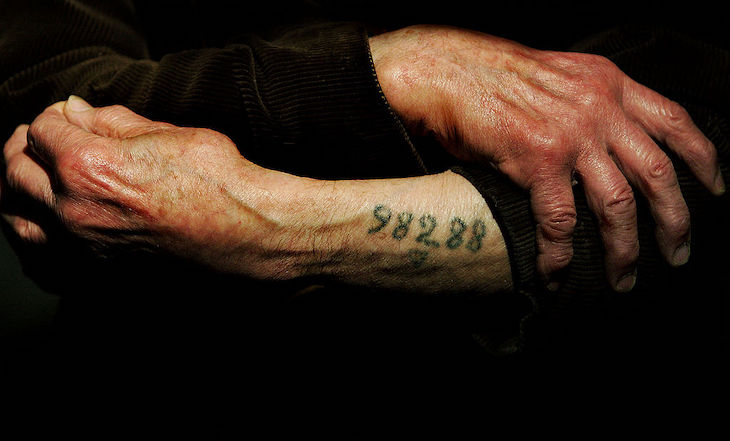
Even those caught in the midst of the horror had no answers. As a journalist and former volunteer at a Holocaust charity for ten years, I have had the privilege of meeting and interviewing many survivors. Reflecting on their barbarous experiences, their pain was always suffused with incredulity – even decades later.
One gentleman, recalling how his nine-year-old brother was marched to the gas chambers, bitterly lamented: ‘What did this little boy ever do?’ His tears, decades later, were as raw and unbearable as the moment he first learned the truth. On the podcast I co-present,, Jewish Mother Me, another survivor described his mother – vividly, lovingly – being torn from him with the casual flick of a hand. How? Why?
These are the questions that schools must compel their pupils to confront – not deny them for a partisan political agenda.
As survivors grow older and primary witnesses to these atrocities pass away, the need to remember becomes ever more urgent. Schools should be places where history is taught honestly and courageously – not spaces where fear of political backlash determines which victims are remembered and which are quietly forgotten.
Cowering in fear of controversy, backlash and protest. cannot be allowed to stand. This has to be the greatest lesson of all.