Even though Christmas is over, I’ve been thinking about the season just gone. There is a tradition of complaining about its commercialisation, portraying Christmas as a grotesque manifestation of consumer excess. But it’s strange to use our seasonal extravagance to attack consumer culture. That’s almost diametrically wrong. What Christmas really shows is that consumer capitalism is doing a cracking job: it’s the rest of the economy that’s a mess.
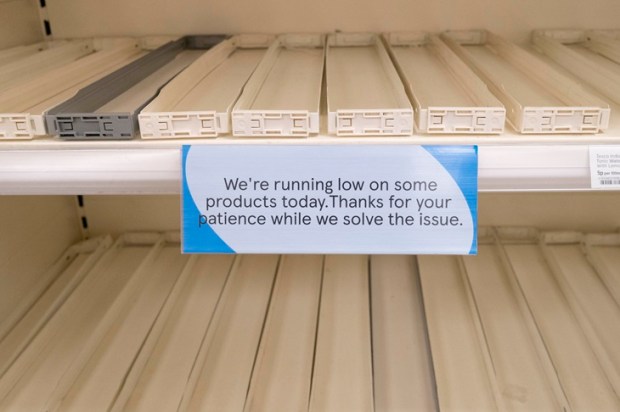
Consider food. The median family today, even if they’d spent December shopping at Fortnum & Mason and Daylesford Organic, would have spent a lower proportion of their income on food than an equivalent family would spend just to survive in the 1970s. Most consumer durables have similarly plummeted in price. In 1973, when Wizzard first sang ‘I Wish It Could Be Christmas Every Day’, consumerism was gearing up to grant them their wish. So what went wrong?
If food prices had kept pace with house prices since the 1970s, six bananas would now cost £9.50
Well, just as everything we buy at Christmas was getting cheaper, housing started to become inordinately more expensive. If food prices had kept pace with house prices since the 1970s, six bananas would now cost £9.50. In 1973, a colour TV cost more than 10 per cent of average annual income; it’s now 0.8 per cent. A tumble dryer would have cost 3 per cent of annual income; today it’s 0.7 per cent. Back then, food soaked up 31 per cent of annual expenditure rather than 13 per cent now. A new family car is about at parity. But the average home has risen from 371 per cent to 677 per cent of average income. We’re in a cost-of-housing crisis, not a cost-of-living crisis.
And in reality it’s more extreme than this. A 2025 Kia is inordinately better than a 1973 Austin Allegro, to say nothing of improvements in consumer electronics. But cars and televisions tend to end up on the second-hand market, which further reduces instrumental wealth inequality. Put simply, many consumer goods invisibly benefit other, future, poorer people when you buy them. This is not true of housing.
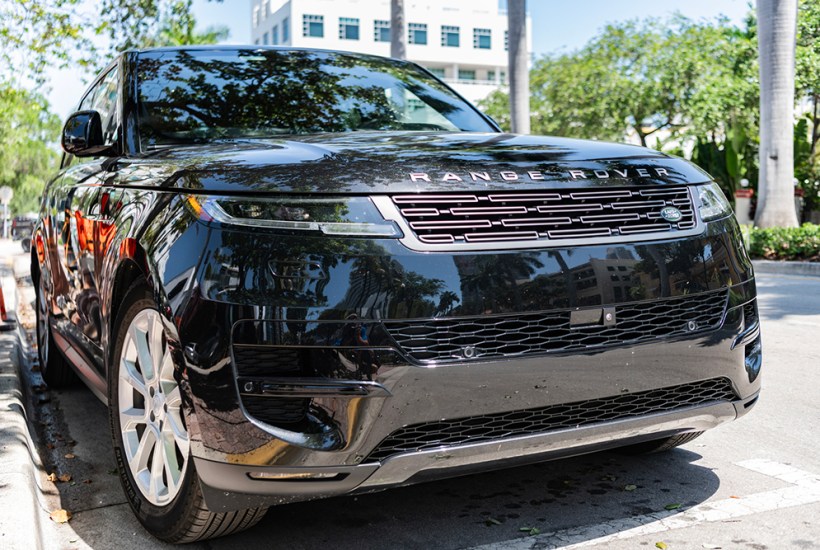
Have you ever heard anyone say, ‘We had a £900,000 house in Berkshire but after three years we sold it to a young couple for £450,000, because they needed a place to live’? You would think of those people as insanely altruistic. But that’s exactly what you are doing when you buy a new car only to sell it three years later for half the price. Buying a new Range Rover, a huge TV or a Mulberry bag is invisible socialism – stealth philanthropy. By contrast, if you spend your money decorating your dining room, you are spending it purely on yourself. There is a huge trickle-down effect when you buy a sports car or a jet ski. This is not true of housing, which is a trickle-up market.
And then it struck me. This is a perfect moral justification for buying luxury goods rather than selfishly spending money on housing. Recently I had a small windfall, and my wife wanted to redecorate our bedroom, rebuilding the wardrobes and replacing the carpet. I had terrifying visions of three-line-whip visits to Farrow & Ball and discussions of colours barely distinguishable to the human eye. So I patiently explained that, as a man, the only reason I could ever conceive of to replace a carpet would be to remove forensic evidence. And then gently explained that spending money on a bedroom was an immoral and selfish act, since it would benefit no one but ourselves – it might even risk making our flat more expensive for anyone else to buy.
So I went out and did the ethical thing. I bought a Lotus Eletre instead. Bright red, 600 bhp, LiDAR, 0-60 in 4.5 seconds, the works. In the long term, I’ll sell this to someone poorer than me – it’s really just time-delayed Marxism. And it’s a lot more fun than a carpet.
Got something to add? Join the discussion and comment below.
You might disagree with half of it, but you’ll enjoy reading all of it. Try your first month for free, then just $2 a week for the remainder of your first year.