In 1830, a pamphleteer expressed concern about the sudden appearance of ‘Raw Lobsters’ on the streets of London. These lobsters were, of course, not an alien invasion. Rather, they were Robert Peel’s New Police, established in London in 1829. The police had a blue uniform, the same colour as raw lobsters, but the pamphleteer worried that, when put under pressure, their uniforms would turn red like that of the red coat soldiers of their day. It was feared, as another petitioner put it that same year, that they might ‘crush the liberties of the people’.
The use of Facial Recognition Cameras further distances officers from us and places the law in their pockets
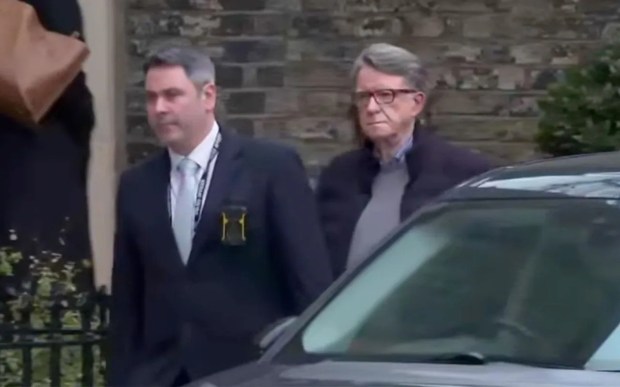
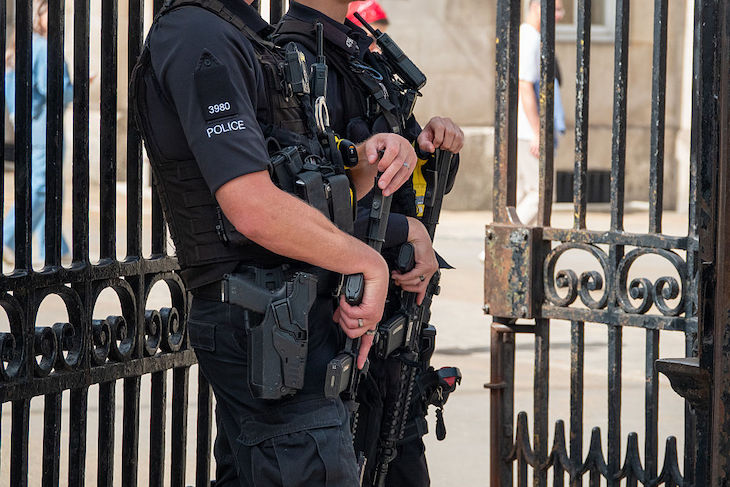
There is nothing close to the same suspicion in our day, especially towards the police using technology. They race around in police cars and blacked-out vans. When they are not carrying tasers, pepper spray and wearing stab vests, they occasionally hold sub-machine guns. More recently, my local police force announced that they had begun using Facial Recognition Cameras, which they claimed had helped them locate what they mysteriously call ‘people of interest’. One imagines that their access to the exponential potential of AI would lead a distraught Victorian to ask themselves: ‘Am I still in England?’.
Peel’s introduction of a unified police force was necessary, but he placed stark limits on the sort of technology to which they had access. They were allowed a truncheon, a rattle, and a pair of handcuffs, all to be used sparingly. The Victorians were concerned to ensure that the police were a neutered force. A blunt instrument ensured they could not oppress the people; a rattle, later a whistle, ensured they were dependant on the public in discharging their duties.
One reason the Victorians established these limits should be fairly clear: they feared that a police force, armed with weapons, could threaten them. This new force could ‘degenerate into government spies’ or worse still a Standing Army. Yet it also extended to the possibility that the police may overreach their powers.
The first police officer that was killed in the line of duty, was judged by the jury in 1830 to have suffered a ‘justifiable homicide’ on the basis that he had gone beyond his duties. We would not, with good reason, deliver that same verdict today, but in our age of technological power, we may have greater cause to share their suspicion.
Another was that Victorians, and earlier, were tightly protective of what they saw as their peculiar right and liberty as Englishmen. It was jealously guarded that in England, since wise Alfred, the law, and its enforcement, belonged to the people. The creation of an armed police, with the technology of their day, would threaten this because their power would mean that they did not have to depend on the public in the enforcement of the law. The idea of such a force, and the loss of the law to the government, or equally to that militia, was described by one MP, in 1856, as being ‘the most un-English measure’ he had ever read.
Indeed, the technologies our police already use display the risk. The car has made police less available and more distant; the two-way radio has ensured they turn less to the public and more to each other and their superiors; the use of Facial Recognition Cameras further distances them from us and places the law in their pockets. In general, technological developments, including weaponry, that allow the police any sort of independence, also allows them to take ownership of the law for themselves, or the government they serve.
None of this was theoretical. It was a response to real events. The Victorians had not long since witnessed the Gendarmerie and the Secret Police of Monarchical, Revolutionary, and Napoleonic France. Their historic memory reminded them of the oppressions of Oliver Cromwell and the Standing Army of James II. Neither was their belief in English liberty irrational, but a response to a continental tradition in which the law belonged to Kings, and Kings often oppressed. Fundamentally, their distrust of human nature when it was combined with awful power led them to create real and meaningful constraints.
To us this may seem anachronistic. The attitudes of the past are in the past, tyrannies are the sort of thing we only find in dystopian novels and far away countries, at least for the moment. We might not tremble as our forebears did, but we would do well to remember that our freedom owes much to their distrust of power. Human nature has not changed, only a brief glance at the news will show that, but the tools and technologies for our exploitation have certainly grown stronger.
The Peelite approach was cautious because the public and political pressure made sure that it must be so. As a consequence, Peel, in Burkean fashion, ensured that the important innovation of a unified state-funded police force took place within the continuity of English tradition. He did so by declaring that ‘the police are the public and public are the police’. Consequently, they prevented untrammelled power from running away from us. Our lack of similar restraint risks allowing such technological power to sprint over the distant hills.
This same cautious approach is needed now. There should be wearisome debate and, in the end, clear limits and even reductions on the sort of technology that the police can use. Otherwise, we may find we have lost ancient freedoms which it turns out were rather useful. The need for raw lobsters on our streets is important, but we must do everything we can to make sure that they stay raw; once cooked they might inflict untold harm.