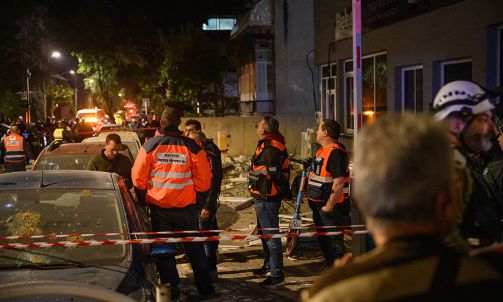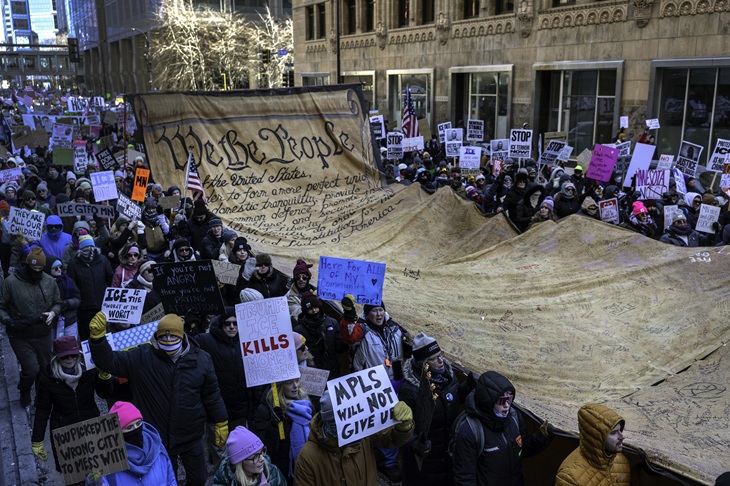
In the frozen streets of Minneapolis, two deaths have crystallised a distinctly American paradox. Alex Pretti, a 37-year-old ICU nurse, shot dead by Border Patrol agents during a protest against Immigration and Customs Enforcement operations. Three weeks earlier, Renée Good, a mother of three, killed by an ICE agent through her car window. Within hours of each death, the interpretation was complete. Hashtags flew, narratives hardened, tribal affiliations determined truth. The left saw federal murder; the right saw a justified response to armed interference. What nobody seemed willing to do was wait.
For those observing from Australia or elsewhere in the Anglosphere, the American response to Minneapolis feels simultaneously familiar and utterly alien. We recognise the surface elements – protests, law enforcement, competing claims about excessive force. But something deeper eludes us. Why does this keep happening? Why do American cities descend so readily into confrontation? Why do local officials position themselves against federal law enforcement as though enforcing immigration law were an act of occupation rather than routine governance?
The answer lies in recognising what makes America exceptional – not in the self-congratulatory sense Americans sometimes employ, but in the analytical sense. The United States operates on principles other Western democracies claim to share but don’t actually practice with anything like American intensity. Chief among these: freedom as a non-negotiable first principle, even when that freedom courts catastrophe.
Consider the facts that would be unthinkable elsewhere.
An individual attended a protest while legally carrying a concealed handgun. Minnesota law permits this; no federal statute prohibits it. When FBI Director Kash Patel claimed ‘you cannot bring a firearm to any sort of protest’, gun rights groups and fact-checkers rated this mostly false. Armed assembly remains constitutionally protected unless explicitly restricted. In Australia, the very concept strains comprehension. A protester carrying a weapon to a confrontation with police would face immediate arrest, and public opinion would overwhelmingly support it. In America, it’s a debatable question of rights.
But the Minneapolis situation reveals something beyond mere gun culture. Video exists of protesters spitting at agents, damaging vehicles, and getting into confrontations with law enforcement. Then we see footage of the protests themselves: organised interference, protesters blocking federal enforcement vehicles, deploying people in wheelchairs at front lines, throwing tear gas that hits journalists instead of agents. Reports from independent journalists on the ground describe ‘constant’ interference as ‘a badge of honour’, with tactics suggesting coordination rather than spontaneity.
Meanwhile, Minnesota Governor Tim Walz and other officials frame federal immigration enforcement as ‘modern-day Gestapo’, invoking Anne Frank in immigration enforcement debates. The Holocaust Museum rebuked such analogies – Frank was targeted for her identity, not immigration status – but the rhetoric persists. Local authorities don’t merely decline to cooperate with federal immigration enforcement; they create actively hostile environments, treat enforcement operations as invasions, and frame federal law enforcement as oppressors rather than addressing the enforcement standoff.
This is where American federalism becomes not just enabling structure but active mechanism. In Australia, despite our federal system, the concept of state officials obstructing Commonwealth law enforcement is nearly inconceivable. Disagreements occur through institutional channels – court challenges, legislative process, formal intergovernmental forums. What doesn’t happen is state premiers framing federal police as occupiers or local authorities refusing to notify federal agencies when releasing criminal offenders from custody.
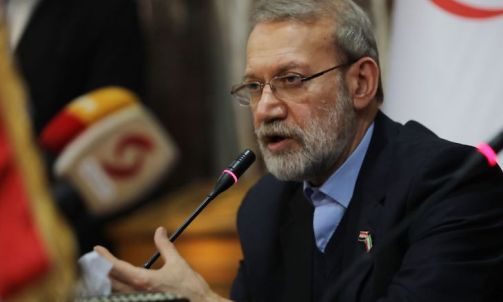
Yet that’s precisely the dynamic Tom Homan, Trump’s border czar, confronted in Minneapolis. In a notably measured press conference – a striking contrast to the surrounding heat – Homan explained the operational reality created by sanctuary policies. Border Patrol agents, typically focused on border operations, have been deployed to support ICE enforcement operations because years of border chaos under the previous administration left ICE critically understaffed. When local jails refuse to notify ICE of pending releases, agents – whether ICE or Border Patrol – must locate and arrest individuals on the street. What could be handled by one or two officers in the controlled environment of a detention facility requires entire teams in potentially hostile territory: perimeter security, arrest teams, additional security teams to protect the arrest teams from interference. The heavy presence critics decry as federal overreach is the direct consequence of local non-cooperation.
More revealing still: agents wear masks not as ‘fascist theatre’ but as protection against criminal cartels like Tren de Aragua, who have demonstrated willingness to target law enforcement families. The details matter because they puncture the narrative. This isn’t federal storm troopers terrorising communities. It’s the tactical adaptation forced when authorities at different levels work against rather than with each other.
Homan’s pitch was straightforward institutional logic: allow ICE access to custody in jails, reduce street operations, draw down personnel. Cooperation equals de-escalation. Minnesota officials eventually agreed to some version of this, acknowledging that arresting violent offenders in secure facilities is safer than street operations for everyone involved – agents, protesters, targets, bystanders. The question becomes: Why did it require deaths and the emergency deployment of the president’s border czar to reach this obvious conclusion?
The answer exposes the progressive governance paradox. Officials who frame themselves as defenders of community safety have created conditions that maximise confrontation. Sanctuary policies aren’t neutral administrative choices; they’re acts of resistance that transform routine law enforcement into potential flashpoints. When Democrats promoted bail funds during 2020’s unrest that released violent offenders back into communities, when local officials treat federal immigration enforcement as persecution rather than a statutory duty, they’re not protecting vulnerable populations – they’re protecting their political positioning.
Calls for investigations to run their course get drowned out by demands for immediate accountability, meaning immediate tribal verdict. Facts emerge piecemeal – new videos, conflicting accounts, ongoing investigations – but judgment solidifies in hours. The rush serves tribal appetites, not truth-seeking. Each side gets confirmation; each side gets outrage fuel; neither side gets resolution.
For those of us watching from outside, American political violence looks like a recurring fever. Shays’ Rebellion in 1786, where armed farmers shut down courts. The 1863 Draft Riots killing over a hundred. Reconstruction-era terror. Urban riots blending legitimate protest with chaos. The pattern isn’t isolated incidents but persistent cycle: organised disruption meets state response, confrontation escalates, violence erupts, investigations follow, reforms promised, cycle repeats. What distinguishes the current iteration is how completely institutional authority has been captured by this dynamic.
Consider the social psychology at work. Researchers have documented what happens in crowds: deindividuation, where group immersion overrides individual judgment; motivated reasoning, where tribal affiliation determines interpretation; moral disengagement, where normal ethical restraints lift because ‘we’re the good guys resisting evil’. None of this is uniquely American. What’s American is the institutional willingness to accommodate rather than contain it.
Progressive officials don’t simply fail to manage protest dynamics – they actively validate them. When Governor Walz invokes the Holocaust, he’s not making an analytical comparison; he’s providing moral ammunition for confrontation. When local prosecutors decline to charge interference with law enforcement, they signal that obstruction carries no consequence. When media and activists frame every federal enforcement action as potential atrocity, they create the expectation that citizens should resist rather than comply and challenge through legal process.
The Australian observer wants to say: this is insane. Just enforce the law. Arrest people who interfere with police operations. Prosecute those who assault officers. Cooperate with federal authorities on matters of national jurisdiction. Basic institutional function.
But that response misses what makes America America. The commitment to freedom as first principle – the idea that citizens retain the right and even the duty to resist when they perceive government overreach – runs so deep it survives even when the ‘resistance’ is protecting convicted criminals from deportation. This isn’t a bug in the American system; it’s the feature. The same spirit that produced the Revolution produces Minneapolis. The difference is whether institutions channel that energy or capitulate to it.
Which returns us to unfortunate casualties, whose deaths deserve better than memes and tribal scorekeeping. The genuine mystery isn’t what happened in those specific moments – investigations will eventually establish timelines, ballistics, legal culpability. The mystery is whether Americans can recover the institutional patience liberal democracy requires. Can citizens hold competing possibilities simultaneously: that and individual might have posed a genuine threat and that the broader enforcement environment is unnecessarily confrontational? That a tragic death might have been tactically defensible and that federal operations need better protocols? That progressive officials might be right about immigration policy and catastrophically wrong about enforcement resistance?
The evidence suggests: probably not. Each side has too much invested in its narrative, too much tribal capital at stake. When media can pivot from thoughtful Substack essays about Americans watching ‘different movies’ to X posts demanding accountability without acknowledging the organised disruption conservatives highlight, it demonstrates how completely even the most reasonable voices get pulled into tribal interpretive frameworks.
What Americans need – and what contemporary Americans, like Westerners generally, seem increasingly incapable of adopting – is epistemic humility: the willingness to say ‘this is genuinely complex’ and mean it. To frame tragic events as puzzles rather than confirmations. To resist the dopamine hit of immediate tribal judgment in favour of the harder work of patient investigation and moral ambiguity.
Homan’s approach – meet with opponents, seek common ground, offer concrete de-escalation in exchange for cooperation – represents precisely this institutional logic. Whether it succeeds depends on whether officials choose process over performance. Early signs suggest some success: agreements on jail cooperation, acknowledgment of shared interest in public safety, commitments to reduce inflammatory rhetoric. But the test comes when the next incident occurs, and tribal narratives harden again.
For Australia and other observers trying to understand American paradoxes, Minneapolis offers a lesson: beneath the apparent chaos lies a genuine philosophical commitment that cuts both ways. Americans really do believe in freedom as first principle, really do retain suspicion of centralised authority, really do see resistance as civic duty. These aren’t affectations; they’re foundational commitments. The tragedy is when those principles get weaponised by officials who should know better, turning healthy scepticism of power into active obstruction of legitimate law enforcement.
The alternative – continued stalemate between levels of government, continued confrontation in streets, continued deaths – benefits nobody except those whose political survival depends on maintaining crisis. Pretti and Good are dead. More will follow unless institutional maturity returns: the recognition that liberal democracy requires patience, cooperation, and the daily difficult work of enforcing law impartially regardless of which tribe it inconveniences today.
Minneapolis won’t be the last such crisis. But it could be the template for something different: officials choosing cooperation over confrontation, citizens choosing investigation over instant judgment, communities choosing safety over symbolic resistance. Whether America can make that choice depends on whether it can recover the institutional discipline its founders understood was inseparable from the freedom they enshrined.
The world is watching. And from this distance, whether America can recover the institutional maturity required to prevent the next Minneapolis looks tragically uncertain.
Matt Brennan is a Sydney-based writer interested in liberal principles and social psychology.