Departure(s), whose publication co-incides with Julian Barnes’s 80th birthday, will be his last book, a thank you and goodbye to his readers. Barnes has blood cancer, but the condition is manageable and not terminal; when he dies, it will be with, and not of, the disease. Or rather, as he puts it: ‘I, in dying, shall have killed my cancer! Barnes 1, Cancer 0 – result!’ Otherwise he is in good nick and still master and commander of his narratives. He is bowing out because his body of work is complete: his 18 novels and two memoirs – or, depending on how Departure(s) is categorised, his 17 novels and three memoirs – form a perfect whole. It is a canny move to write your own final chapter, and Barnes is a canny writer who has always had the sense of an ending. The Sense of an Ending, I need not remind you, was the title of his 11th novel, which won the Booker prize in 2011.
The unreliable narrator of Departure(s) is a chilly novelist called Julian Barnes, with manageable but not terminal blood cancer. Now in his late seventies, he is preoccupied, as he has been all his life, by the horror of mortality. While the protagonist of his debut novel, Metroland (1980), was ‘scared to death of death’, Barnes himself has become, as he says, ‘a little more accepting’ of his own departure, ‘a little more philosophical’.
The book is divided into five sections. The first begins with Barnes reflecting on an article in Neurology Clinic Practice about a man who, following a stroke, found himself deluged by involuntary autobiographical memories (IAMs). Tasting an apple pie, for example, would trigger the recollections, in chronological order, of every other pie he had ever tasted. How terrifying such a ‘high speed assault’ of memory would be, he muses, and how convenient for autobiographers, especially if our many different versions of each memory could be laid out before us. But – terrifying thought – what if the pie man had missed out some pies, or got the chronology wrong?
Swerving between intellectual curiosity and blind panic, he moves on to the phenomenon known as HSAM or ‘highly superior autobiographical memory’, in which every moment of a life is filed away in the mind like a film, waiting to be replayed. This is very educational, his readers respond, but will there also be a story? ‘There will be a story,’ Barnes reassures us on page 9, ‘– or a story within the story – but not just yet.’
The story, which begins in the second section, is ‘true’, or so we are told, and has a beginning and an end but no middle. Barnes may or may not have remembered the beginning accurately because it took place when he was a student at Oxford. What he describes is therefore not ‘what actually happened’, but what he ‘wants to remember’. The story is about Jean and Stephen (not their real names, and both are now dead), who began a relationship after Barnes introduced them in a café. The ‘moth-eaten’ memories Barnes has of this time amount to
a chaplet of moments and images, worn away like rosary beads. Walking past a late-night launderette and seeing them each with a book on their lap, doing a weekly wash together (and feeling too shy to disturb them); appraising them all togged up for some formal dinner or ball… the two of them having tea in my room… Jean sitting on the floor with her back to Stephen’s legs.
Instead of ‘some noble deus ex machina’, he turned out to be ‘a seedy marriage broker’ who failed in his task
After 18 months, Jean and Stephen separate and lose touch. All we know about their middle years is that Jean does not marry, Stephen marries on the rebound and divorces because he cannot get over Jean, and Barnes becomes a famous novelist.
After a 40-year silence, Stephen then emails Barnes to ask if he might reunite him with Jean. Barnes, recently widowed, comes up with a plot: he and Jean will meet for tea in the same Oxford café and Stephen will happen to walk past. ‘You fucking novelist,’ says Jean when she sniffs out the ruse, ‘couldn’t resist, could you?’ Jean, one of Barnes’s readers, likes some but not all of his books. ‘This hybrid stuff you do,’ she tells him, ‘I think it’s a mistake. You should do one thing or the other.’ ‘I don’t mind you not liking my books,’ he replies, ‘but you are mistaken if you think I don’t know exactly what I’m up to when I write them.’
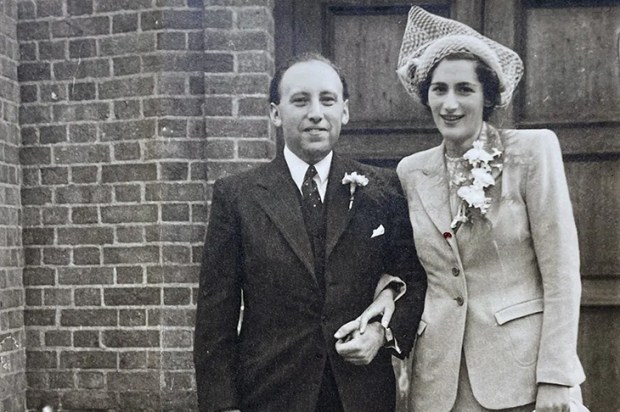
Jean and Stephen, now in their sixties, get married. The wedding is a celebration of Barnes, the man responsible for their last chance at happiness. He imagines their honeymoon in France and Italy, awkwardly returning to places they had first been to with other people:
It doesn’t always work, talking straightforwardly about previous lovers… trying to give them due weight in your life, while emphasising that of course their main function was to be innocent and heedless precursors of the glorious present.
This second attempt at a relationship lasts, again, for 18 months, during which time they each confide in Barnes. The problem with their marriage, as Barnes understands it, is that Stephen loves Jean too much, and Jean thinks too much about what love means. Happiness, she says, does not make her happy. ‘There’s a difference between showing your feelings and expressing your feelings,’ she explains, and Stephen gets it wrong. Plus she found his secret stash of hotel shampoos, mini-soaps in wrappers and different coloured shoehorns. Jean makes Barnes swear on the Bible that he will not change their names and turn them into characters in a novel, which shows how little she knows writers: ‘One atheist swore to another on a book neither of them was guided by in life that he would not do something he subsequently did.’
But nor does Barnes know Stephen and Jean, or the difference between life and fiction. He thought he was ‘some noble deus ex machina’, but he turned out to be ‘a seedy marriage broker’ who failed in his task. ‘I had treated Stephen and Jean as if they were characters in one of my novels, believing I could gently direct them towards the ends which I desired.’ Stephen and Jean were, however, characters in one of his novels: Stephen is another version of Graham Hendrick, the divorced protagonist in Before She Met Me (1982), who becomes consumed by jealousy over his second wife’s past. Jean, who asks too many questions, recalls her namesake Jean Serjeant in Barnes’s fourth novel, Staring at the Sun (1986), which begins with the sun rising twice over the English Channel.
Departure(s), a masterpiece of narrative trickery, is a tale told twice: the tragedy of Stephen and Jean was Barnes’s first undergraduate story, and also his last. As the curtain comes down on the book’s fifth section, Barnes reflects on his relationship with his readers, people like you and me and Jean, ‘invisible yet lurking, like my cancer’. He has never, he insists, told us how to live or what to think; he has not spoken down to us from an ‘assumption of greater wisdom’. Rather than leader and disciple, he prefers to think of us sitting together ‘side by side’ in a café somewhere, watching the world pass by. ‘We watch and muse. From time to time I will murmur things like: “What do you make of that couple – married, or having an affair?”’ But whatever we reply he can’t hear, because we’re sitting on his deaf side.
Got something to add? Join the discussion and comment below.
You might disagree with half of it, but you’ll enjoy reading all of it. Try your first month for free, then just $2 a week for the remainder of your first year.