
The lexicon of Brexit has a new entry: the ‘Farage clause’. As part of Labour’s ‘reset’ talks with Brussels, EU negotiators have reportedly floated a termination provision that would require compensation if a future UK government walked away from a new deal designed to ease post-Brexit checks on food and agricultural trade. In plain English: if Britain signs up to reduce border friction now and then later blows the arrangement up, Brussels wants someone to pay the bill for putting the border back together again.
Like lots of things involving Britain and the EU, however, this ‘Farage clause’ is not what it looks like. It isn’t really about the Reform UK leader. It’s about puncturing Labour delusions about restoring British ties with Brussels.
The point is not whether such an arrangement is legally ‘standard’ (the British side says it is and notes it would apply both ways). The point is that the European Union – supposedly chastened, supposedly eager, supposedly longing for a repentant Britain to come home – is acting in typical fashion.
The EU acts, in negotiations, like what it is: a bureaucratic institution designed to defend itself: its single market, its legal order, its institutions, its member states’ interests and its own political class. It does not act like a supporting extra in our national psychodrama. You would have thought we’d have learnt this by now.
The EU isn’t willing to pay any price to have Britain back
During the original Brexit negotiations, one of the most persistent British misconceptions – indulged by both unwise Leavers and imprudent Remainers – was that the EU could be bullied, emotionally blackmailed, or simply persuaded by reference to the febrile state of British domestic politics. If only Brussels understood how angry our backbenchers were, how cross our voters were, how fragile our prime minister was, then surely Europe would bend. This was a delusion that ended in humiliation and failure – just like the career of its greatest exponent, David Cameron.
Brussels does not do ‘help me out, mate; my voters are cross’. The EU was built, in part, to demonstrate that national politics should be constrained by supranational rules and that countries prosper by adhering to rules and pacts rather than tearing them up whenever their domestic mood changes.
This is why the Farage clause matters. It is Brussels politely – and not even very politely – inserting into draft legal language the thing British politics refuses to face: that our electoral volatility is not Europe’s problem.
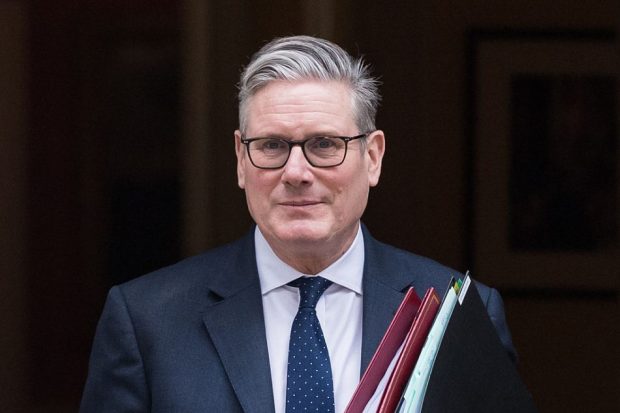
Labour’s leadership is increasingly keen to talk about closer ties with the EU. Some (but not all) people in No. 10 and some (but not all) people in cabinet think this is good politics, in that it plays well with the sort of disaffected former Labour voter now leaning towards the Greens or Lib Dems. To be clear, not everyone in government thinks this – some of them still, just about, remember the 2016 referendum, the views of Red Wall voters and the 2024 general election result. But for now, those Labour voices are being drowned out by allies and advisors to Keir Starmer who, frankly, never really accepted the referendum result and still dream of reversing it.
The prospect of a race to replace Starmer is a factor here too. Potential candidates for the top job need to woo Labour activists, many of whom remain sad about Brexit. Hence, Health Secretary Wes Streeting flirting with the idea of rejoining the customs union before Christmas.
The Farage clause is a useful corrective to some Labour thinking on this topic, since it is a hard reminder of two salient facts. First, the EU is a tough negotiating partner that does not shy away from exploiting domestic political weakness to strike the best deal. Second, the EU is not desperate to have Britain back on any terms.
The deal at the centre of this story is a veterinary/SPS agreement: the kind of thing Labour has trailed for ages as a pragmatic fix to the very real, very boring damage Brexit has done to trade. Yet the reports suggest the EU wants that deal to involve dynamic alignment: Britain committing to follow the relevant EU rules as they change. It also reportedly wants legal and financial scaffolding to deter the UK from ripping it up at the next election.
That should not shock anyone. It is exactly what you should expect from an EU that wants to maximise its interests and is institutionally sceptical of Britain as a partner. Nor will that approach change in any of our future dealings with Brussels.
The wider ‘reset’ package being discussed publicly is broad: linkage of carbon markets, electricity market integration, security cooperation, participation in EU schemes. The government has already announced an agreement for the UK to rejoin the Erasmus scheme in 2027, and ministers have set out further deadlines for other pieces of the reset.
All of this has some plausible economic logic – having better relations with our closest trading partner is inarguably good for the UK economy. But it is not simple, and it is not free: the EU will not give market access or frictionless trade without the UK accepting obligations – money, rules, enforcement mechanisms, and the asymmetry that comes with being outside the room when those rules are made. This is the bit of reality that British politics keeps trying to edit out.
Since the referendum, the political conversation about Europe has been dominated by two equally insular fantasies. The first was the Leaver fantasy: that the EU would fold because German carmakers would force it to, and that there was nothing to fear from ‘no deal’. That ended in tears, paperwork, and the discovery that ‘sovereignty’ is more complicated than it sounds. The second fantasy is now creeping back into vogue in parts of Labour and the broader pro-European ecosystem: that the EU is so keen to have us back that it will welcome a reasonable Britain with open arms, and that the main obstacle is those pesky British voters who keep failing to understand the obvious economic arguments here.
Labour’s current conversation on Europe is sometimes reminiscent of the ‘unicorn thinking’ that Brexiteers used to be – rightly – accused of over Brexit talks. The harsh reality is that the EU isn’t willing to pay any price to have Britain back and calculates that Britain needs the EU more than the EU needs Britain. Hence, the deeper relationship that some Labour people dream of would only come at a very painful political price to the UK.
No amount of nice words will stop the EU from being the EU, any more than press releases will stop the boats or speeches will increase economic growth. If this mooted Farage clause shoots Labour’s EU unicorn, it will have done good service to all.