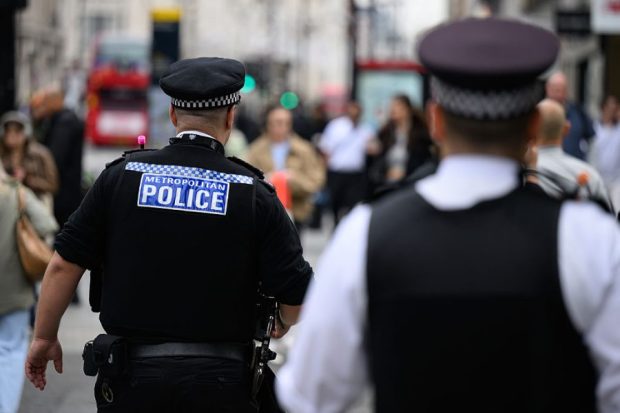
The actions of West Midlands Police in the case of the Maccabi Tel Aviv football ban are perhaps the most dramatic demonstration in modern times of what happens when a police force no longer operates ‘without fear or favour’.
The information now in the public domain shows there was never sufficient justification to ban the Israeli fans. Yet West Midlands Police have consistently claimed a ban was necessary following consultation with the ‘community’. Yet who exactly are the ‘community’ here? Indeed, who defines what the ‘community’ is? The ‘community’ apparently included three organisations who had previously hosted Islamic preachers who promoted antisemitic conspiracy theories or called for the death of Jews.
It would, rightly, be considered unconscionable for the police to consult Tommy Robinson if it were the sensibilities of the white British – or some other – population at risk. Yet somehow those who hold extreme Islamist views against Jews were considered appropriate tribunes of local ‘community’ sentiment in this case.
Ultimately what was the bargain West Midlands Police were willing to strike to appease the sectional ‘community leaders’ and extremists involved? Was it as simple as: ban the Jews and Israelis and there will be limited public disorder on the streets?
This is not the first time West Midlands Police have subjugated their operational decision making to the ‘community’. During the 2024 riots, a senior officer, in an interview with Sky News, defended the force’s choice not to deal with a mob armed with weapons after consulting with ‘community leaders’, because the community would apparently police ‘within themselves’. It has never been revealed who those ‘community leaders’ were and what policing ‘within themselves’ meant.
Cases such as these show what happens when it is left to the police to take decisions in secret which have significant national and international implications: just as war is too important to be left to the generals, so ‘community cohesion’ is too important to be left to the chief constables and more junior officers.
So, what now?
As a first step, every meeting between West Midlands Police and these self-appointed ‘community leaders’ should be subjected to the disinfecting sunlight of full transparency. A documentary record of who has been consulted, what they have been asked to comment on and what their advice was should be produced.
As Policy Exchange has previously documented, the role of internal staff networks must be made clear. In this case were any of the West Midlands Police or national staff networks – such as the West Midlands Association of Muslim Police – consulted before the ban was announced?
Neither are the police the only stakeholders involved – even if they are the most prominent. Which other agencies were involved in the decision making? Was MI5 aware and did they offer a view?
It is the reality of operational policing that there are times when the wrong decision will – in good faith – be made. On those occasions it is incumbent on senior officers to hold their hands up, explain how mistakes will be rectified and how they will make sure it never happens again.
Here the Chief Constable of West Midlands Police, Craig Guildford, has chosen a different path. He should resign. Not just because the wrong original decision was made, but because he has so far failed to fully recognise the gravity of the errors made by his force. A resignation in such circumstances would be the honourable and principled course of action.
Guildford’s actions so far, however, suggest that the honourable route is not one he will choose. His appearance before the Home Affairs Select Committee – where his flippant approach gave the impression that he was merely deigning to attend despite having more important things to do – cemented the view of many that he is a man whose oversized ego is matched only by his mediocrity. Whether there is any improvement when he reappears before the Select Committee later this week is to be seen.
So, what are the tools of accountability here?
Shabana Mahmood must demonstrate the grit and determination which we are regularly told are among her strongest assets
His Majesty’s Inspectorate of Constabulary is already looking into the episode at the behest of the Home Secretary. While the Chief Constable must take the fall for what has happened, the entire force needs to be put under the spotlight. A return to ‘special measures’ is therefore essential.
During the early stages of the furore, Simon Foster, the Police and Crime Commissioner for West Midlands Police, backed his Chief Constable – citing ‘operational independence’. What Foster seems to have forgotten, however, is that while the concept of ‘operational independence’ may well entitle chief constables to make operational decisions, it does not entitle them to be wholly unaccountable for them.
With the latest revelations Foster could justifiably change his position, and act to suspend the Chief Constable or require his resignation under the Police Reform and Social Responsibility Act 2011. The evidence so far however is that Foster – selected during Jeremy Corbyn’s leadership of the Labour party and widely seen at the time as the candidate for the Labour Left against the more centrist former MP Mike O’Brien – will not. Certainly not if that would mean standing up to the far left and Islamist-aligned characters who populate the politics of the West Midlands and have been agitating on this issue for months.
The stage is therefore set for the Home Secretary, Shabana Mahmood, to demonstrate the grit and determination which we are regularly told are among her strongest assets.
Under section 40 of the Police Act 1996 the Home Secretary, if she is ‘satisfied that the whole or any part of a police force is failing to discharge any of its functions in an effective manner’, has the power to direct the Police and Crime Commissioner to ‘take specified measures for the purpose of remedying the failure’. While Home Office records show that it is a power that has laid unused for at least the last 15 years, that is no reason for it never to be utilised.
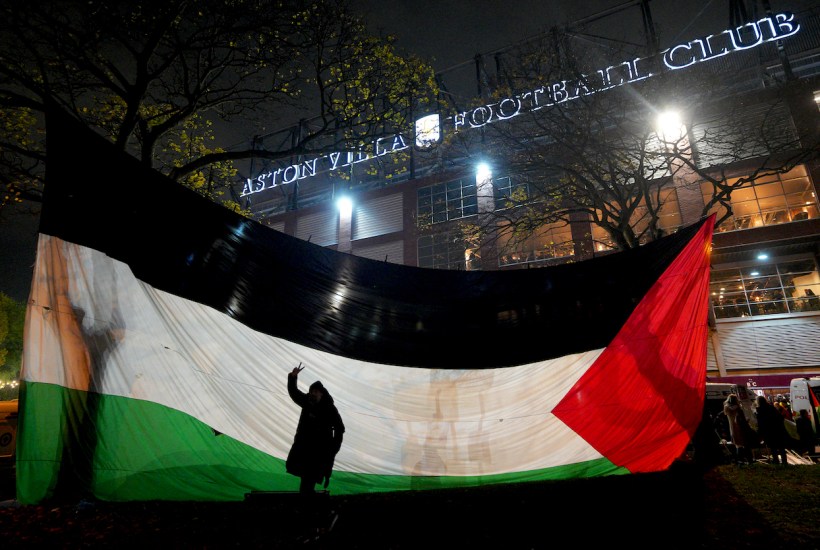
As well as being the Home Secretary, Mahmood is the Labour MP for the Birmingham Ladywood constituency, just down the road from Villa Park – Aston Villa’s home ground where the match against Maccabi Tel Aviv was played. But this is a time where the national interest must supersede any local electoral calculus. The Home Secretary must show the strength of character she has become known for.
The Chief Constable must go. If Guildford won’t jump, it will be down to the Home Secretary to push him.