What seemed unbelievable a few years ago has suddenly become a very real possibility at the start of 2026.
Namely, the Islamic Republic of Iran looks increasingly likely to fall.
In what it seems nothing less than a spiritual revival, as well as political revolution, 50,000 mosques out of a total number of 75,000 have closed, with one of the most significant being burnt to the ground.
Forty-seven years after the Islamic Revolution, some are predicting that Iran may not last the month. While far from being certain, what follows are ten reasons why I believe the Islamic Republic in Iran is likely to fall.
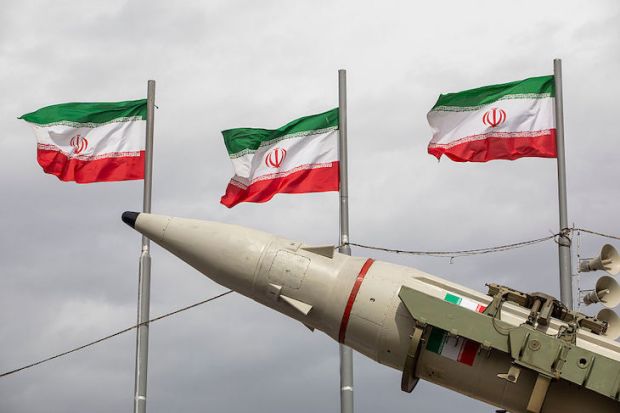
First, Iran’s air defences, missile stockpiles, production lines, and nuclear program as a whole were all severely impacted by the war with Israel in 2025. It will not only take years to recover the situation, they do not have the military power they once did. In short, Iran no longer has the ability to attack its enemies or even adequately defend itself. What’s more, as the Japanese National newspaper, The Mainichi, reports:
Meanwhile, Iran’s self-described ‘Axis of Resistance’ – a coalition of countries and militant groups backed by Tehran – has been decimated since the start of the Israel-Hamas war in 2023.
Second, over the past five years in particular, Iran has suffered widespread drought negatively impacting agricultural production. This has robbed the regime of a reliable and affordable food supply. It is even being reported that currently over 10 million Iranians are regularly deprived of water services.
Tragically, this national ‘water bankruptcy’ is a result of the Islamic Regime’s own mismanagement. As Fred Pearce explains in an excellent article for Yale Environment 360, this is one of the most significant issues facing the country of Iran:
More than international sanctions, more than its stifling theocracy, more than recent bombardment by Israel and the US — Iran’s greatest current existential crisis is what hydrologists are calling its rapidly approaching ‘water bankruptcy’.
It is a crisis that has a sad origin, they say: the destruction and abandonment of tens of thousands of ancient tunnels for sustainably tapping underground water, known as qanats, that were once the envy of the arid world. But calls for the Iranian government to restore qanats and recharge the underground water reserves that once sustained them are falling on deaf ears.
After a fifth year of extreme drought, Iran’s long-running water crisis reached unprecedented levels in November. The country’s president, Masoud Pezeshkian, warned that Iran had ‘no choice’ but to move its capital away from arid Tehran, which now has a population of about 10 million, to wetter coastal regions — a project that would take decades and has a price estimated by analysts at potentially $100 billion.
While failed rains may be the immediate cause of the crisis, hydrologists say, the root cause is more than half a century of often foolhardy modern water engineering — extending back to before the country’s Islamic revolution of 1979, but accelerated by the Ayatollahs’ policies since.
Third, a large share of its international proxy organisations — i.e. Hamas and Hezbollah — have been dismantled. Recent events in Venezuela have had an especially devastating impact on Iran as the two nations are linked. As the UK politician Tom Tugendhat has explained on social media:
Iran uses Venezuela’s banks to launder money to pay for terrorist groups like the Houthis and Hezbollah. It uses their factories to build things like ballistic missiles and the engines that go into drones that then attack other countries in the Middle East ships in the Red Sea. And when they’re sold to Russia, the Ukrainians.
So what we’ve seen is not just the removal of Maduro, not just the attempt to stop a Narco-Terrorist state bringing drugs into the United States but a way of undermining the Iranian regime that even now is under huge pressure domestically and is failing to sort its own problems.
Four, domestic morale is at an all-time low with many people protesting the oppressive religious policies of the Islamic regime. While there is a government-initiated internet blackout in the country, making it difficult to get accurate information, Elon Musk has used Starlink to enable people to continue to post on social media.
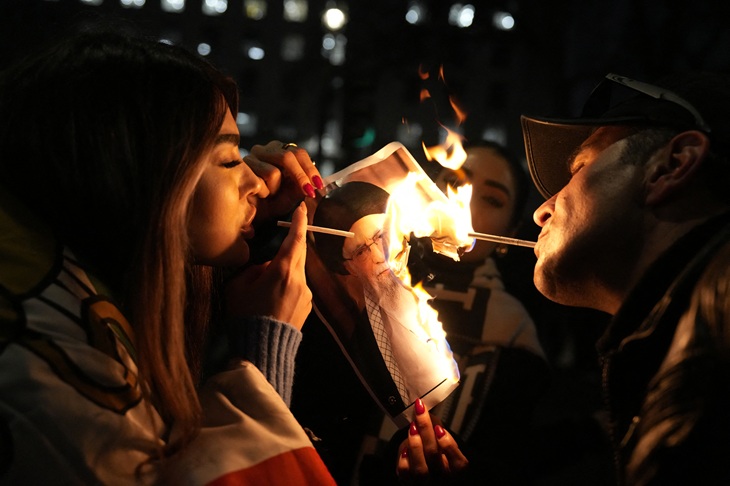
Women in particular are publicly removing their hijabs, burning pictures of Iran’s Supreme Leader — and lighting cigarettes with it — as well as performing gymnastics down the street as a form of open protest.
Five, the currency of Iran called the Rial is trading at $1.4 million to $1 US. That signifies an 80 per cent reduction in the space of just one year! As one Iranian newspaper is reporting:
Iran’s rial fell to a fresh record low on Tuesday on unofficial markets, with the US dollar quoted at about 1.47 million rials as authorities seek to defuse public anger over soaring prices.
The euro was trading around 1.72 million rials and the pound at about 19.94 million rials, traders said.
The latest slide follows sharp swings since late December, when the currency’s plunge helped trigger protests in Tehran and other cities that have increasingly taken on a broader political edge.
The government has floated new relief measures after moving to curb access to subsidised foreign exchange used for importing basic goods, a system critics say has fuelled distortions and rent-seeking while failing to contain inflation.
Six, following on from the previous point, inflation in Iran is skyrocketing sitting at around 45 per cent. Food prices have soared above 70 per cent with government officials also lifting the subsidies on petrol prices leading is a spiralling cost of living crisis. This has obviously led to riots and other forms of violent protest:
Seven, when retailers started to engage in regular open protests the government responded harshly with scores of demonstrators being killed. The Guardian even reported that, ‘The streets are full of blood’:
On Thursday, Iran went dark. Authorities shut down the internet and the ability to call abroad, cutting the country off from the rest of the world. The government’s rhetoric, initially conciliatory, quickly changed. Gone were the offers of dialogue, replaced by threats of death sentences for protesters, who the government accused of being backed by Israel and the US.
What happened next was documented in grainy videos and panicked messages ferried out of the country by activists who managed to grab a momentary Starlink connection before GPS scrambling shut their line down.
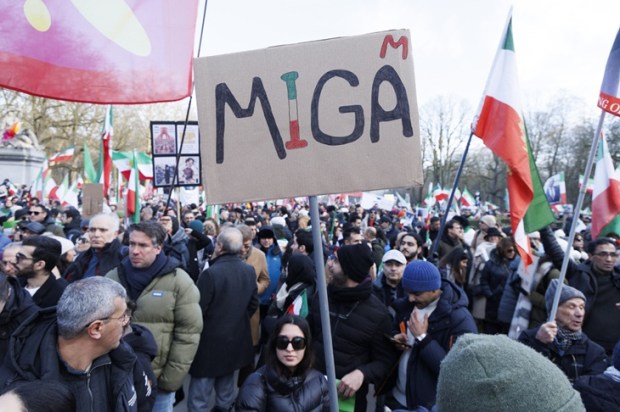
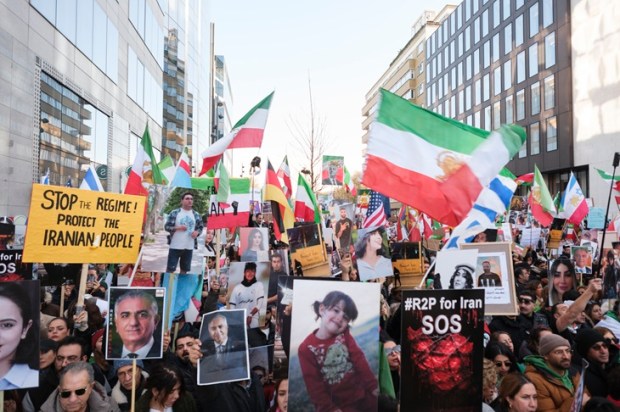
Crowds of thousands have marched across the country each night, chanting ‘death to the dictator’, a reference to Iran’s supreme leader, Ayatollah Ali Khamenei and for the return of the Pahlavi dynasty, which ruled Iran before the 1979 revolution.
Eight, whereas in previous uprisings people were concerned with issues of religious conservatism, now the issues are far more socially unifying. Indeed, all five of the ‘specific conditions necessary for a revolution to succeed’ are currently present in Iran. As Jack A. Goldstone writes in The Atlantic:
Forty-seven years ago, Iran had a revolution that replaced a U.S.-allied monarchy with an anti-American theocracy. Today, the Islamic Republic of Iran may be on the verge of a counterrevolution.
History suggests that regimes collapse not from single failures but from a fatal confluence of stressors … a fiscal crisis, divided elites, a diverse oppositional coalition, a convincing narrative of resistance, and a favourable international environment. This winter, for the first time since 1979, Iran checks nearly all five boxes.
Nine, even Iran’s President, Masoud Pezeshkian, has publicly indicated that the problems are facing the nation are so significant that the government doesn’t have the capacity to solve them. Iran’s central bank has also warned of possible financial collapse, widespread shutdowns and even ‘regime chaos’.
President Pezeshkian shocked the nation on January 1, 2026 when we said, ‘If people are dissatisfied, we are to blame. Not America. Not anyone else. Our failures are the result of poor management.’
Pezeshkian then went on to tell ministries to engage with protesters, to recognise their right to demonstrate and warned that ignoring the people could have spiritual consequences ‘sending officials to hell’.
While the President doesn’t have the same authority or power as the ‘Supreme Leader’ it is nonetheless a sign of that trust in the government is crumbling.
Ten, Iran’s adversaries have ominously warned that they will intervene with military action if necessary. Significantly, key US military assets have strategically positioned themselves in the Middle East. This is such a serious threat that The Times has reported that the Ayatollah Khamenei plans flee to Moscow if the unrest in Iran intensifies.
While many opponents of Donald Trump have accused him of being a ‘TACO’ (i.e. an acronym for, ‘Trump Always Chickens Out’) recent events in Venezuela with President Maduro would say otherwise. Love him or hate him, Trump is unlike any American President in recent history.
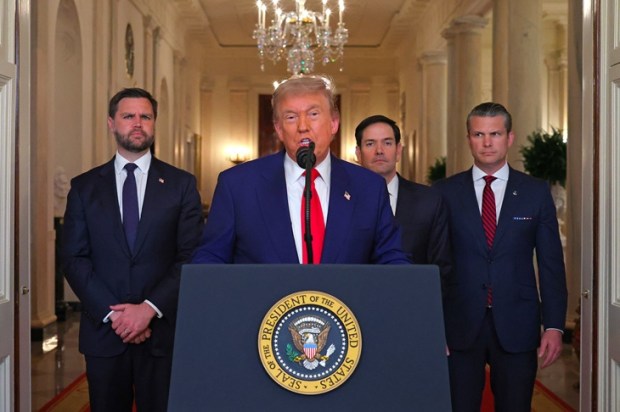
All of which is to say, one has to also factor into the mix the disruptive and unpredictable influence of Donald Trump who posted the following on Truth Social, ‘Iran is looking at FREEDOM, perhaps like never before. The USA stands ready to help!!!’
The Return of the King?
Acts of political protest have even spread as far as the UK with someone climbing the Iranian Embassy in London and replacing the nation’s flag with the pre-revolutionary one. Even X has even taken the bold step of replacing the Iranian flag with the pre-revolution symbols of the lion and the sun. When the richest man in the world predicts something as going to happening then it’s definitely worth considering.
One of the most fascinating aspects of this whole saga though is the figure of Reza Pahlavi who is the exiled son of Iran’s last shah. Significantly, the BBC has reported:
In recent years, however, his tone has grown more assertive. Following Israeli air strikes in 2025 that killed several senior Iranian generals, Pahlavi declared in a press conference in Paris that he was prepared to help lead a transitional government if the Islamic Republic collapsed.
He has since outlined a 100-day plan for an interim administration.
Pahlavi insists this new confidence stems from lessons learned in exile and from what he calls the ‘unfinished mission’ his father left behind.
‘This is not about restoring the past,’ he told reporters in Paris. ‘It’s about securing a democratic future for all Iranians.’
To my mind, this is one of the most significant aspects of all for Iran going forward. Tearing down the Islamic Regime is one thing, but rebuilding a nation with competent and trusted leadership is quite another.
Reza Pahlavi could very well be the man to achieve such a positive outcome. Only time to will. What seems more and more likely though is the Supreme Leader’s time in ruling Iran is quickly coming to an end.