Sir Keir Starmer told Xi Jinping it was time for a ‘more sophisticated’ relationship, yet there is very little sign of that in his excruciating performance in China. This was supposed to be the moment the Prime Minister cashed in on a year spent cosying up to Beijing, during which he has been accused of jeopardising national security to avoid causing offence. Yet you do not need to be part of his large entourage of business people to calculate that the returns have been minimal, and the costs potentially enormous.
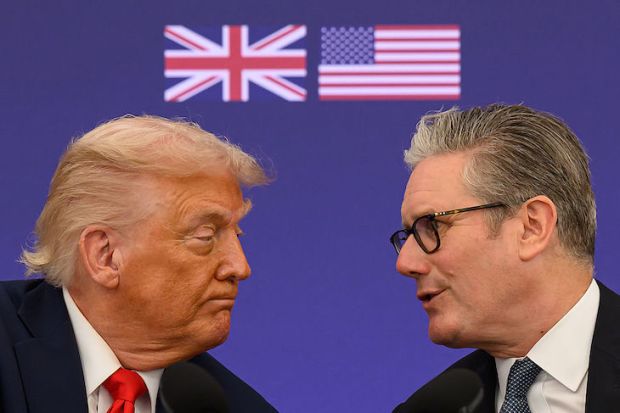
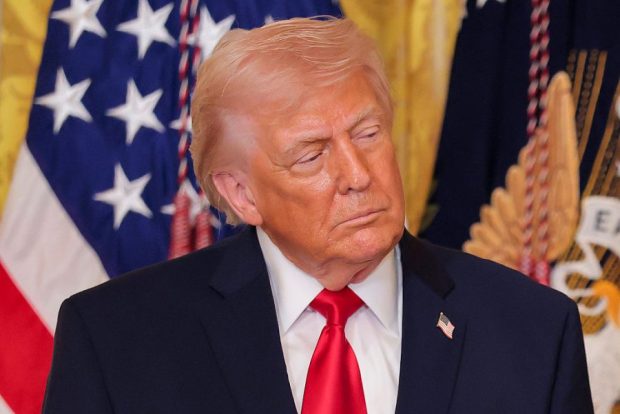
Donald Trump was certainly quick with his verdict. Asked about Starmer’s pursuit of closer business ties with China while attending the premier of a film about his wife Melania, the US President said: ‘Well, it’s very dangerous for them to do that’.
Whereas in past centuries, foreign missions to China’s imperial court carried gifts or ‘tribute’ to the emperor, Starmer carried a football, apparently signed by the players of Manchester United, said to be Xi’s favourite team. It’s not clear where he put it while awkwardly striding along the guard of honour at the Great Hall of the People on Tiananmen Square, though had he dribbled down the line it might have brought some levity to the totalitarian theatre that China so excels at.
As a rough rule of thumb, the cliches and platitudes at these events usually flow in inverse proportion to the substance, and so far there has been a blizzard of guff. As Starmer and his entourage moved on to Shanghai today, many among them could be forgiven for wondering why they bothered. They had already been kept waiting until the eleventh hour for confirmation of the trip, since China refused to green light it until after its new mega-embassy in London had been approved.
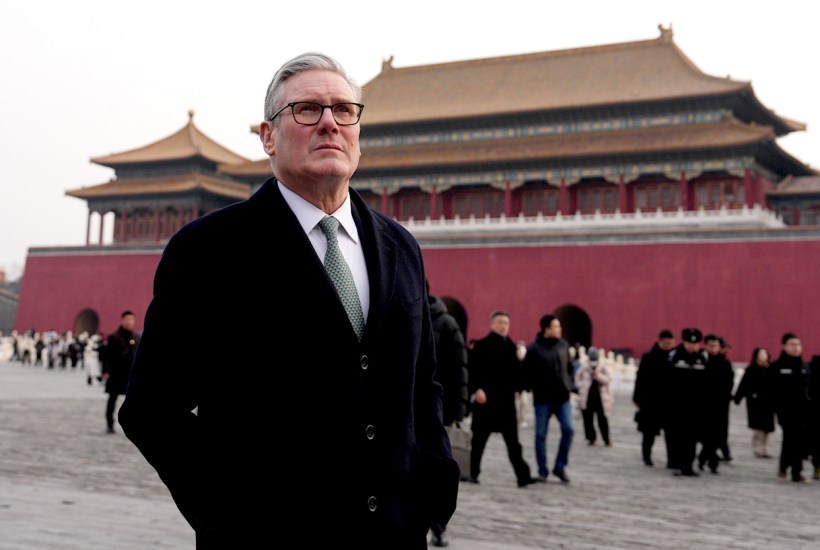
‘We made some really good progress on trade for whisky, on visa-free travel to China, and on information exchange cooperation on irregular migration,’ Starmer said, talking to reporters against the backdrop of the Forbidden City. There was also said to be progress on a broader trade deal and the resumption of regular economic summits. Starmer would also no doubt argue that it was the broader optics that mattered more, the resumption of a more pragmatic relationship.
Yet the grandeur of the setting seemed merely to emphasise the Prime Minister’s meagre returns. It all seemed such small beer compared with the other side of the ledger. Over the past year the government has been accused of deliberately collapsing a high profile spy trial to avoid embarrassing Beijing, buried a much-hyped ‘China audit’ that was supposed to bring some clarity, and refused to place China in the top tier of a new Foreign Influence Registration Scheme, which would have required greater scrutiny of those acting on Beijing’s behalf.
At times, ministers have tied themselves in knots to avoid calling China a threat, even while Beijing has continued its industrial scale espionage and influence operations in Britain, and while Jimmy Lai, a fearless campaigner for democracy in Hong Kong, languished in prison in the former British colony. He was convicted in December of trumped-up security offences that included ‘colluding with foreign forces’. The newspaper publisher and British citizen faces life imprisonment – with his sentencing expected very soon.
Starmer said he did raise Lai’s case during almost three hours of what he called ‘warm and constructive talks’ with Xi. He says differences were discussed politely behind closed doors, though the priority was clearly to avoid causing any offence. The Chinese leader suggested Labour governments made better partners for China, a comment that might come back to haunt Starmer.
The two leaders also agreed to promote parliamentary exchanges. It will be interesting to see how that plays with Commons Speaker Sir Lindsay Hoyle, who has barely been able to hide his fury at China’s threats to MPs, five of whom have been sanctioned by China for speaking out on human rights. MI5 recently issued a security alert to MPs, warning that Beijing was engaged in a ‘covert and calculated’ effort to recruit parliamentarians.
The fundamental problem with Starmer’s bid to separate issues of trade and investment from security and human rights is that it is a false dichotomy. China has never recognised the distinction, instead using trade, investment and market access as a means of coercion. The bigger danger is dependency in critical areas, such as renewables, about which Starmer had nothing to say.
Xi sees enormous propaganda value in lavishing a warm welcome of America’s closest allies
China is pursuing an unashamedly mercantilist trade policy, characterised by heavy subsidies and massive over-production as it seeks to dominate in emerging technologies, while seeking self-sufficiency at home. It wants to sell everything and buy nothing, which is a perversion of free trade. It remains an enormously difficult place to do business. Britain’s trade deficit with China has more than doubled over the last seven years to reach £42 billion.
Starmer also had little to say about Ukraine, where Russia’s aggression would not be sustainable without Chinese support – economically and in the provision of dual-use technology. Reports are also starting to emerge about the role played by Chinese surveillance technologies in Iran’s bloody crackdown on protesters.
For Xi, the bombastic welcome for Starmer was also aimed at a different audience – Donald Trump. ‘No matter how China grows, it will never be a threat to other countries,’ Xi said at one point. A patently absurd statement, but one seeking to draw a contrast with the recent behaviour of the American President. As with the earlier visit of Mark Carney, the Canadian prime minister, Xi sees enormous propaganda value in lavishing a warm welcome of America’s closest allies.
Perhaps the most tangible outcome of Starmer’s trip was the agreement on visa-free access for British citizens to visit China for under 30 days, though this merely brings the UK into line with 50 other countries, including France, Germany and Japan. Though it should be remembered that your average tourist does not have the luxury of burner phones and throw-way laptops issued to Starmer and his entourage to escape the permanent scrutiny of Xi’s surveillance state.