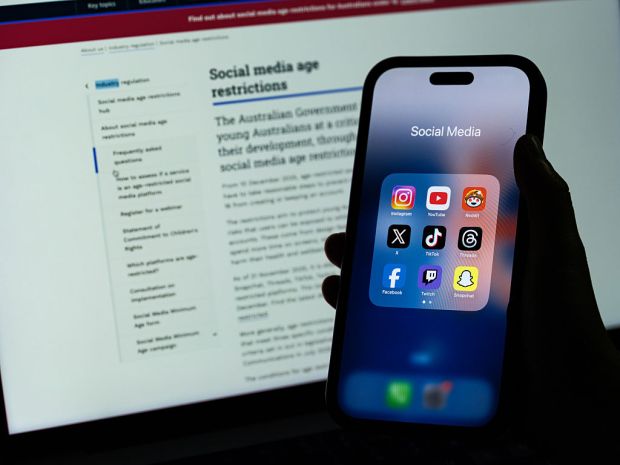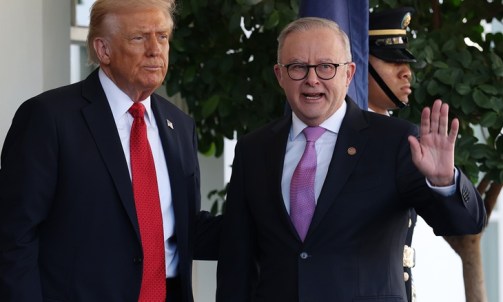
You don’t need to be a fervent admirer of Donald Trump to recognise that, on matters of national security and cultural cohesion, he hits the bullseye our establishment prefers to evade. His administration’s recent proposal – requiring travellers from visa-waiver countries, including Britain, to disclose five years of social media history as part of the Electronic System for Travel Authorization (ESTA) – has drawn the usual transatlantic sneers: an assault on privacy, a chilling of free expression, another Maga excess.
Yet recent events show social media vetting can expose troubling views. If Britain wants to protect its Jewish citizens – especially young scholars besieged on university campuses – it should follow suit without delay.
I have friends who lecture in Oxford’s ancient colleges: moderate men and women who’ve spent decades nurturing young minds. Over quiet dinners in college halls, they confide what official reports only half-admit: Jewish undergraduates arrive wide-eyed with excitement, only to hide kippot under caps, avoid certain quads after dark, or whisper Hebrew in libraries to evade glares – or worse. The Community Security Trust’s (CST) figures are grim: thousands of anti-Semitic incidents nationwide in recent years, with campuses seeing sharp surges no amount of vice-chancellorial hand-wringing can conceal.
Britain, proud shelterer of the persecuted, must not become a haven for their tormentors
CST recorded 272 university-related anti-Semitic incidents in the 2023/24 academic year alone, a 117 per cent increase from the previous year. Though the number of reports fell to 35 in higher education for January to June of last year, levels remain historically high amid ongoing tensions.
My friends describe a more insidious drip of intimidation, often tied to protests importing rhetoric from distant conflicts. Many overseas students hail from regions where anti-Jewish sentiment is regrettably commonplace. They post freely online – endorsing violence against ‘Zionists’ in terms crossing into plain anti-Semitism – then submit polished visa applications.
We demand academic transcripts, bank statements, biometric data; we probe ties to terrorism. Yet we avert our gaze from digital trails revealing hostile intentions. Why? A misplaced delicacy about ‘privacy’ for those seeking the privilege – not right – of entry.
The controversy over Alaa Abd el-Fattah’s return illustrates how inflammatory online histories can resurface. Successive governments lobbied for this dual-national activist’s release from Egyptian prison. Keir Starmer was ‘delighted’ at his Boxing Day arrival. Days later, old posts emerged: appearing to be calls to kill ‘Zionists’, endorsements of violence, abhorrent statements.
Abd el-Fattah apologised unequivocally, claiming the context of his words was twisted – and if you believe that, I have a bridge in London to sell you. Britain has taken for a fool by chancers like this for decades.
This episode exposed an almost surreal, unbelievable oversight in due diligence – one Jewish organisations rightly called deeply concerning. Governments overlooked a public digital record for diplomatic gain, while ordinary visa applicants face no systematic social media checks.
The double standard is stark. Of course, privacy concerns are valid: mandating social media disclosure risks chilling speech, misinterpreting context, or biasing against certain nationalities. Implementation must be fair, with clear guidelines to distinguish incitement from debate. Yet when safety is at stake, the privilege of entry outweighs these risks – especially given existing requirements over things like criminal records.
Trump’s measure is no invasion; it’s prudence. Entry is a host’s courtesy. We already require proof of funds, health checks, criminal histories. Why baulk at public platforms where extremism festers? The proposal targets incitement to violence and terrorism support – not legitimate criticism of any government, including Israel’s. Had Britain mandated similar disclosure for student visas, how many contributors to campus intimidation might have been turned away?
This isn’t about closing doors; Britain benefits from talented foreigners. It’s basic stewardship: safeguarding our social fabric from imported division and hatred. In an age where ancient prejudices revive online and spill onto streets and quads, wilful blindness is negligence.
The Home Office should act: amend our Electronic Travel Authorisation (set to replace many visas) to require five years of social media identifiers. Let officers scan for anti-Semitic incitement or proscribed group support. Objectors can stay home; the rest – including frightened Jewish students seeking peaceful study – would rest easier.
Trump, for all his bluster, is grasping a timeless conservative truth: a nation blind to foreseeable harm abandons its core duty to protect. Britain, proud shelterer of the persecuted, must not become a haven for their tormentors. It’s time to follow America’s lead – with common sense, not cowardice.