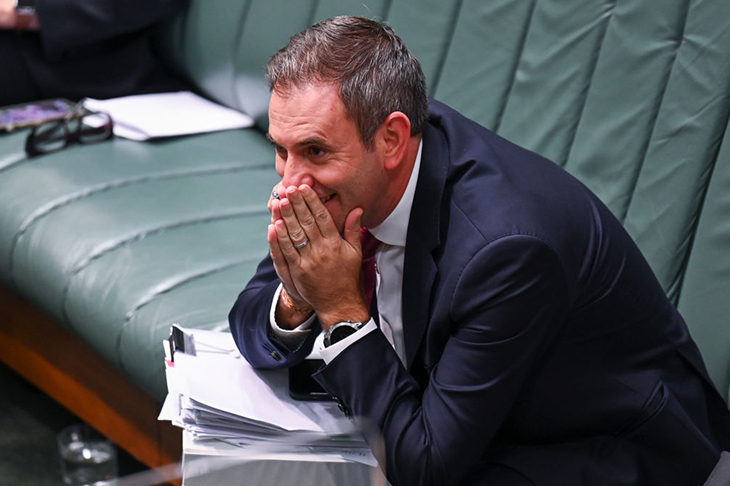
There was a time, around two years ago, when it was still possible to debate whether Jim Chalmers would go down as the worst treasurer in Australia’s history. There were pauses, doubts, caveats. That debate is over.
But the competition is tough. Jim Cairns was treasurer for only eight months, beginning in November 1974, and is credited with generating 17 per cent inflation and a substantial increase in unemployment. He gave carte blanche to the funny-money man, Tirath Khemlani. When Treasury Secretary Sir Frederick Wheeler revealed what Khemlani was up to, Whitlam announced Wheeler’s dismissal but was unable to carry out the order. The short-lived tenure of Cairns’ successor, Bill Hayden, undid much of the damage.
Chalmers has a strong advantage because his tenure is much longer and his international achievement greater. Since Covid, Australia has suffered the largest fall in living standards of any OECD economy.
What makes his achievements even more remarkable is that Chalmers has presided over the most favourable revenue conditions a treasurer could reasonably hope for. Commodity prices surged. Inflation delivered a tax windfall. The fiscal weather could hardly have been sunnier. And yet here we are. Deeper in the hole and digging faster.
The latest Mid-Year Economic and Fiscal Outlook (MYEFO), delivered late last year, reads less like a sober assessment of the nation’s finances and more like the George Costanza theory of macroeconomics: if you believe it hard enough, it must be true.
According to the Treasurer, the budget is improving, the economy is on the mend, and everything is basically fine. This is not technically a lie because Chalmers appears to believe it. Strip away the spin, however, and MYEFO confirms the defining feature of the Albanese government’s economic management: any increase in revenue is immediately exceeded by an increase in spending. The structural fiscal deficit is not being repaired; it is being embedded.
The numbers are unambiguous. Close to $100 billion in spending has been pushed off-budget over the forward estimates, allowing the government to claim discipline while practising anything but. Gross debt continues to climb and is now expected to reach around $1.2 trillion within three years, if not sooner. Interest payments are the fastest-growing line item in the budget, rising at an average of nearly 11 per cent per annum.
The major spending programs continue to balloon. The non-means-tested NDIS is projected to grow at close to eight per cent per annum, well above the growth rate of the economy. Childcare subsidies are growing at around six per cent per annum. Each may be politically popular; neither is remotely sustainable on its current trajectory. Meanwhile, the economy is expected to limp along at an anaemic yet wishful growth rate of 2.5 per cent.
The inevitable result is that government will consume an ever-larger share of the economy, creeping steadily toward European levels of public spending, along with European-style regulation, economic sclerosis, and social disharmony.
This is not accidental. It is the logical consequence of policy choices that prioritise redistribution, intervention, mass immigration, and the expansion of the state over productivity, investment, and growth.
And what of workers, the supposed beneficiaries of all this largesse? They continue to go backwards. Inflation is projected to increase by around 3.75 per cent per annum, while wages grow by roughly 3.25 per cent, locking in yet another real wage cut. At the same time, bracket creep quietly does its work, dragging more income into higher tax brackets. Australians are earning less, paying more, and being told they should be grateful.
Chalmers and his partner in profligacy, Finance Minister Katy Gallagher, continue to insist that they are ‘reducing debt’. This is a remarkable claim given that debt is rising and projected to continue growing. It is a spectacular achievement, considering that net debt was essentially nil less than two decades ago. Apparently, words now matter more than arithmetic.
MYEFO claims around $20 billion in ‘savings’ over the forward estimates. Roughly $6.8 billion is said to come from using fewer consultants, while $6.7 billion is attributed to changes in Labor’s home battery subsidies. The consultancy savings have a familiar ring. Like the last two years, they will almost certainly reappear as higher public service head counts and rising departmental costs. It is not saving money; it is changing the business card.
Home battery subsidies are even more instructive. Originally costed at $2.3 billion, projections blew out to an astonishing $13.9 billion. One could assume such a blowout came courtesy of NBN or Snowy 2.0-style planning failures. Instead, it is the result of yet another experiment in central planning: government attempting to dictate consumer behaviour without bearing the consequences.
The scheme has now been ‘capped’ at $7.2 billion, but anyone familiar with recent budget history would be unwise to treat that figure as anything other than aspirational, perhaps even delusional. By the time the next budget is delivered, the number will almost certainly have crept higher again.
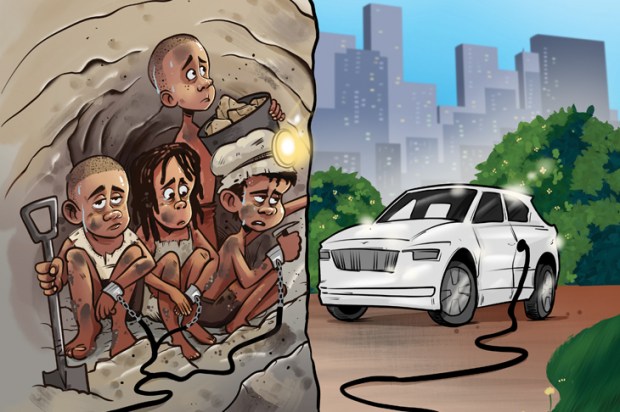
Electric vehicle subsidies, battery schemes, and similar interventions all share the same fatal conceit: bureaucrats believe they can allocate capital better than markets, while taxpayers absorb the costs and risk.
The tragedy is not merely that Jim Chalmers is Australia’s worst treasurer in a tight contest, but that he has squandered an extraordinary opportunity. With strong revenues and a post-pandemic reset, there was a chance to repair the budget, restrain spending, and restore confidence in the economy. Instead, Australia has higher debt, higher taxes, weaker growth, millions attached to the government teat, and a government addicted to spending.
When the Albanese government finally reaches its overdue end, it will leave behind an economy more indebted, more centralised, less productive, and less resilient than it inherited. The bill will not be paid by ministers or advisers but by workers, businesses, and future governments forced to clean up the mess.
History will record that Chalmers did not merely mismanage the economy; he misread it. He mistook temporary revenue for structural strength, belief for discipline, and press releases for policy.
The reckoning will not arrive with a single crisis but with a grinding loss of opportunity, living standards, and resilience. Hope may animate political speeches, but it does not balance budgets. Reality, as ever, will collect its debt, with interest.
Got something to add? Join the discussion and comment below.
You might disagree with half of it, but you’ll enjoy reading all of it. Try your first month for free, then just $2 a week for the remainder of your first year.